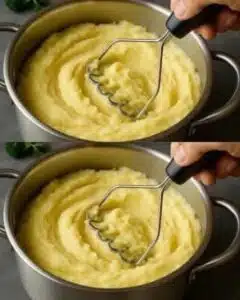
This Creamy Homemade Mashed Potatoes Recipe is the kind of classic side dish that never goes out of style.
It is smooth, buttery, fluffy, rich, and comforting.
It is made with simple ingredients, but the final result tastes like something served at a family holiday table or a cozy restaurant dinner.
This recipe is inspired by the image, where tender potatoes are being mashed in a pot until they become soft, silky, and creamy. That simple moment is exactly where great mashed potatoes begin.
Good mashed potatoes are not just boiled potatoes mixed with milk.
They need the right potato.
They need the right amount of butter.
They need warm milk or cream.
They need proper seasoning.
Most importantly, they need gentle mashing so the texture stays light instead of gluey.
These homemade mashed potatoes are perfect with roast chicken, turkey, beef tips, steak bites, meatloaf, pork chops, mushroom gravy, onion gravy, fried chicken, baked salmon, or roasted vegetables.
They are also perfect for Thanksgiving, Christmas, Sunday dinner, family gatherings, potlucks, and simple weeknight meals.
Recipe Overview
Recipe Name: Creamy Homemade Mashed Potatoes
Prep Time: 15 minutes
Cook Time: 20 minutes
Total Time: About 35 minutes
Servings: 6 to 8
Course: Side Dish
Cuisine: American Comfort Food
Difficulty: Easy
Main Ingredients: Potatoes, butter, milk, cream
Texture: Smooth, fluffy, creamy
Flavor: Buttery, savory, rich, lightly seasoned
Best Served With: Gravy, chicken, turkey, beef, steak, meatloaf, or vegetables
Why This Creamy Homemade Mashed Potatoes Recipe Works
This Creamy Homemade Mashed Potatoes Recipe works because it focuses on texture first.
The potatoes are boiled until fork-tender, drained well, dried slightly in the hot pot, then mashed gently with butter before adding warm milk and cream.
That order matters.
Adding butter first helps coat the potatoes and gives them a richer flavor.
Adding warm milk slowly helps control the texture.
Draining the potatoes well keeps them from becoming watery.
Gentle mashing keeps them from turning sticky.
The result is a bowl of mashed potatoes that feels creamy but still light.
They hold gravy beautifully.
They taste rich without being too heavy.
They are simple enough for everyday cooking but good enough for a holiday table.
What Are Creamy Homemade Mashed Potatoes?
Creamy homemade mashed potatoes are boiled potatoes mashed with butter, milk, cream, salt, pepper, and sometimes sour cream, cream cheese, garlic, or herbs.
They can be smooth and elegant or rustic and chunky.
This version is made to be soft, smooth, fluffy, and buttery.
The goal is a balanced texture.
Not too loose.
Not too thick.
Not too sticky.
Not too dry.
A perfect spoonful should be creamy enough to melt in your mouth but firm enough to hold its shape on the plate.
Ingredients
For the Mashed Potatoes:
3 pounds Yukon Gold potatoes or Russet potatoes
6 tablespoons unsalted butter
3/4 cup warm whole milk
1/4 cup warm heavy cream
1 1/2 teaspoons salt, plus more for boiling water
1/2 teaspoon black pepper
1/2 teaspoon garlic powder, optional
2 tablespoons sour cream, optional
2 tablespoons cream cheese, optional
Fresh chives or parsley for garnish
Optional Flavor Add-Ins:
Roasted garlic
Parmesan cheese
Cheddar cheese
Brown butter
Caramelized onions
Fresh rosemary
Fresh thyme
Green onions
Crispy bacon
Mushroom gravy
Chicken gravy
Beef gravy
Best Potatoes for Mashed Potatoes
The best potatoes for mashed potatoes are Yukon Gold potatoes, Russet potatoes, or a mix of both.
Yukon Gold potatoes are naturally creamy and buttery. They create mashed potatoes with a rich, smooth texture.
Russet potatoes are fluffy and light. They are great if you want airy mashed potatoes that feel soft and classic.
A mix of Yukon Gold and Russet potatoes gives the best result. You get creaminess from the Yukon Gold potatoes and fluffiness from the Russet potatoes.
Avoid very waxy potatoes if you want smooth mashed potatoes. Red potatoes can work, but they usually make a more rustic mash.
Ingredient Notes
Potatoes
Potatoes are the base of the whole recipe, so the type you choose matters.
For the creamiest texture, use Yukon Gold.
For the fluffiest texture, use Russet.
For the best balance, use half Yukon Gold and half Russet.
Peel them if you want a smooth restaurant-style texture.
Leave some skins on if you prefer rustic mashed potatoes.
Butter
Butter gives mashed potatoes their rich, comforting flavor.
Use unsalted butter so you can control the salt.
Add the butter while the potatoes are hot.
This helps it melt evenly and blend into the potatoes before the milk is added.
Milk
Warm milk is one of the secrets to creamy mashed potatoes.
Cold milk can cool the potatoes too quickly and make the texture heavy.
Whole milk gives a richer taste, but 2% milk can also work.
Add it slowly because every potato absorbs liquid differently.
Heavy Cream
Heavy cream makes mashed potatoes extra silky.
You do not need a lot.
A small amount gives the potatoes a smooth, rich texture.
For lighter mashed potatoes, replace the cream with more milk.
Sour Cream
Sour cream is optional, but it adds a slight tang and extra creaminess.
It works especially well for loaded mashed potatoes or holiday mashed potatoes.
Cream Cheese
Cream cheese makes mashed potatoes thicker, richer, and smoother.
It is also helpful when making mashed potatoes ahead of time because it helps them reheat well.
Step-by-Step Instructions
Step 1: Peel and Cut the Potatoes
Peel the potatoes and cut them into even chunks.
Try to keep the pieces similar in size.
Even pieces cook at the same speed.
If some pieces are too small and others are too large, the small pieces may become watery before the large pieces are done.
Step 2: Rinse the Potatoes
Rinse the cut potatoes under cold water.
This removes extra surface starch.
Removing some of the starch helps prevent the potatoes from becoming gluey.
After rinsing, place the potatoes in a large pot.
Step 3: Start with Cold Water
Cover the potatoes with cold water.
The water should cover the potatoes by about 1 inch.
Starting with cold water helps the potatoes cook evenly from the inside out.
If you add potatoes directly to boiling water, the outside may cook faster than the center.
Step 4: Salt the Water
Add salt to the water before boiling.
This seasons the potatoes while they cook.
Potatoes need seasoning from the beginning.
If you only add salt at the end, the flavor may taste flat.
Step 5: Boil Until Fork-Tender
Bring the water to a boil.
Reduce the heat slightly and simmer for 15 to 20 minutes.
The potatoes are ready when a fork slides through easily.
Do not undercook them.
Undercooked potatoes create lumps.
Do not overcook them too much.
Overcooked potatoes can absorb excess water.
Step 6: Drain Very Well
Drain the potatoes completely.
Return them to the hot pot.
Let them sit for 1 to 2 minutes so extra moisture evaporates.
This small step makes a big difference.
Dry potatoes absorb butter and milk better.
Wet potatoes can turn loose and watery.
Step 7: Add Butter First
Add the butter to the hot potatoes.
Mash gently until the butter melts.
Adding butter before milk gives the mashed potatoes a richer flavor and smoother texture.
The potatoes should begin to look soft and golden.
Step 8: Add Warm Milk and Cream Slowly
Warm the milk and cream before adding them.
Pour in a little at a time.
Mash gently after each addition.
Stop when the potatoes reach the texture you like.
Some potatoes need more liquid.
Some need less.
Do not pour everything in at once.
Step 9: Season and Taste
Add salt, black pepper, and garlic powder if using.
Stir gently.
Taste the potatoes.
Add more salt if needed.
Add more butter if you want more richness.
Add more warm milk if they are too thick.
Good mashed potatoes should taste flavorful on their own, even before gravy.
Step 10: Serve Warm
Spoon the mashed potatoes into a serving bowl.
Add a small pat of butter on top.
Sprinkle with fresh parsley, chives, or black pepper.
Serve hot with gravy or your favorite main dish.
How to Make Mashed Potatoes Smooth
For the smoothest mashed potatoes, use a potato ricer or food mill.
A potato ricer breaks the potatoes into tiny, fluffy pieces without overworking them.
This creates a silky texture.
A hand masher also works well if you like a slightly rustic texture.
Avoid using a blender or food processor.
Those tools overwork the starch and can make mashed potatoes gluey.
How to Make Mashed Potatoes Fluffy
For fluffy mashed potatoes, use Russet potatoes or a mix of Russet and Yukon Gold.
Drain the potatoes well.
Let steam escape before mashing.
Add butter first.
Use warm milk.
Mash gently.
Do not overmix.
Fluffy mashed potatoes should feel light, not dense.
How to Avoid Gluey Mashed Potatoes
Gluey mashed potatoes happen when potatoes are overmixed.
Potatoes contain starch, and too much mixing activates that starch.
To avoid gluey potatoes:
Do not use a blender.
Do not use a food processor.
Do not whip for too long.
Do not overwork the potatoes.
Use a masher, ricer, or food mill.
Add warm liquid slowly.
Stop mixing once the potatoes are creamy.
How to Make Mashed Potatoes Taste Better
Mashed potatoes need enough seasoning and fat to taste good.
Add salt to the boiling water.
Use real butter.
Use warm milk or cream.
Taste before serving.
Add garlic powder for depth.
Add sour cream for tang.
Add Parmesan for savory flavor.
Add herbs for freshness.
Add gravy for comfort.
A small amount of seasoning can turn plain potatoes into a rich side dish.
Garlic Mashed Potatoes Variation
Garlic mashed potatoes are perfect with steak, chicken, turkey, and beef.
For a quick version, add garlic powder.
For a deeper flavor, use roasted garlic.
To roast garlic, cut the top from a garlic bulb, drizzle with olive oil, wrap in foil, and bake until soft.
Squeeze the roasted garlic into the potatoes and mash with butter.
The flavor becomes sweet, mellow, and rich.
Cheesy Mashed Potatoes Variation
Cheesy mashed potatoes are rich and comforting.
Add shredded cheddar, Parmesan, mozzarella, Gruyère, or Monterey Jack while the potatoes are still hot.
Stir gently until melted.
Cheddar gives sharp flavor.
Parmesan gives salty depth.
Mozzarella gives stretch.
Cream cheese gives smoothness.
This version is perfect with meatloaf, baked chicken, barbecue beef, or roasted vegetables.
Loaded Mashed Potatoes Variation
Loaded mashed potatoes taste like a loaded baked potato in a bowl.
Add cheddar cheese, sour cream, crispy bacon, green onions, and extra black pepper.
Top with more cheese and a little melted butter.
This version is great for potlucks, holiday dinners, and comfort food meals.
Brown Butter Mashed Potatoes Variation
Brown butter gives mashed potatoes a nutty, rich flavor.
Melt butter in a small pan over medium heat.
Cook until it turns golden and smells nutty.
Pour it over the mashed potatoes before serving.
This simple step makes the dish taste special and elegant.
Make-Ahead Mashed Potatoes
Mashed potatoes can be made ahead.
Prepare them as directed.
Let them cool slightly.
Store in an airtight container in the refrigerator for up to 2 days.
When ready to serve, reheat gently with extra milk and butter.
For holidays, you can keep mashed potatoes warm in a slow cooker.
Set the slow cooker to warm and stir occasionally.
Add a splash of milk if they become too thick.
What to Serve with Creamy Homemade Mashed Potatoes
Mashed potatoes are one of the most flexible side dishes.
Serve them with roast chicken.
Serve them with turkey.
Serve them with steak bites.
Serve them with beef tips.
Serve them with meatloaf.
Serve them with pork chops.
Serve them with fried chicken.
Serve them with baked chicken thighs.
Serve them with salmon.
Serve them with mushroom gravy.
Serve them with onion gravy.
Serve them with roasted carrots.
Serve them with green beans.
Serve them with corn.
Serve them with dinner rolls.
They are especially delicious with saucy main dishes because they soak up gravy beautifully.
Best Gravy for Mashed Potatoes
Mashed potatoes and gravy are a classic combination.
The best gravy options include chicken gravy, turkey gravy, beef gravy, brown gravy, mushroom gravy, onion gravy, or garlic butter gravy.
For a quick homemade gravy, melt butter in a saucepan.
Whisk in flour.
Slowly add broth.
Simmer until thick.
Season with salt, pepper, garlic powder, and Worcestershire sauce.
Pour over hot mashed potatoes.
Simple gravy can make the whole meal feel complete.
Storage
Store leftover mashed potatoes in an airtight container.
Keep them in the refrigerator for 3 to 4 days.
Let them cool before storing.
Do not leave mashed potatoes at room temperature for too long because they contain dairy.
If you have gravy, store it separately if possible.
This helps keep the potatoes from becoming too loose.
Reheating
Stovetop Method
Place mashed potatoes in a pot over low heat.
Add a splash of milk or cream.
Stir gently until warm.
Add butter if needed.
Microwave Method
Place mashed potatoes in a microwave-safe bowl.
Add a little milk.
Cover loosely.
Heat in short intervals, stirring between each one.
Oven Method
Place mashed potatoes in a baking dish.
Cover with foil.
Bake at 325°F / 160°C until warm.
Stir in butter before serving.
Slow Cooker Method
Place mashed potatoes in a slow cooker.
Add butter and a splash of milk.
Keep on warm.
Stir occasionally.
This method is perfect for holidays and family gatherings.
Freezing
Mashed potatoes can be frozen.
They freeze best when they contain butter and cream.
Let the potatoes cool completely.
Place them in freezer-safe containers or bags.
Freeze for up to 2 months.
Thaw overnight in the refrigerator.
Reheat gently with extra milk and butter.
The texture may change slightly, but stirring slowly while reheating helps make them creamy again.
Common Mistakes to Avoid
Using the Wrong Potatoes
Very waxy potatoes can make mashed potatoes dense.
Use Yukon Gold, Russet, or a mix of both.
Not Salting the Water
Salted water gives the potatoes better flavor.
Do not wait until the end to add all the salt.
Overcooking the Potatoes
Overcooked potatoes can absorb too much water.
Cook only until fork-tender.
Not Drying the Potatoes
After draining, let the potatoes sit in the hot pot for a minute.
This removes extra moisture.
Adding Cold Milk
Cold milk can make the potatoes heavy.
Always use warm milk or warm cream.
Overmixing
Overmixing makes potatoes sticky.
Mash gently and stop when the texture is creamy.
Troubleshooting Guide
My Mashed Potatoes Are Gluey
They were likely overmixed.
Next time, use a potato masher or ricer and avoid a blender or food processor.
My Mashed Potatoes Are Lumpy
The potatoes may not have cooked long enough.
Cook until completely fork-tender before mashing.
My Mashed Potatoes Are Too Thick
Add warm milk, cream, or melted butter a little at a time.
Mix gently until creamy.
My Mashed Potatoes Are Watery
Place them back in the pot over low heat and stir gently to remove moisture.
You can also add cream cheese, Parmesan, or a small amount of instant potato flakes.
My Mashed Potatoes Taste Bland
Add more salt, butter, black pepper, garlic powder, sour cream, or cheese.
Potatoes need proper seasoning.
My Mashed Potatoes Turned Cold
Reheat gently with warm milk and butter.
Do not overmix while reheating.
Leftover Mashed Potato Ideas
Leftover mashed potatoes are very useful.
Use them to make potato cakes.
Use them for shepherd’s pie.
Use them to thicken soup.
Use them for loaded mashed potato bowls.
Use them for croquettes.
Use them in breakfast bowls.
Use them as a casserole topping.
Use them in homemade potato bread.
This makes mashed potatoes a great recipe for meal prep and family cooking.
Food Safety Tips
Use clean utensils when preparing the potatoes.
Do not leave cooked mashed potatoes at room temperature for too long.
Refrigerate leftovers in an airtight container.
Reheat until hot before serving.
If serving during a holiday meal, keep mashed potatoes warm in a slow cooker instead of leaving them uncovered on the counter.
Do not reheat the same batch many times.
Nutrition Estimate
Calories: 230 to 380 per serving
Protein: 4 to 8 g
Carbohydrates: 32 to 48 g
Fat: 10 to 20 g
Fiber: 3 to 5 g
Sugar: 2 to 5 g
Sodium: 320 to 700 mg
Serving Size: About 1 cup
Nutrition values are approximate and depend on potato type, butter, milk, cream, cheese, sour cream, toppings, and serving size.
Frequently Asked Questions
What are the best potatoes for mashed potatoes?
Yukon Gold and Russet potatoes are the best choices. Yukon Gold potatoes are creamy and buttery, while Russet potatoes are fluffy and light.
Should I peel potatoes before mashing?
Peel them if you want smooth mashed potatoes. Leave some skins on if you prefer rustic mashed potatoes.
Why are my mashed potatoes gluey?
They were probably overmixed. Avoid using a blender or food processor.
Can I make mashed potatoes ahead of time?
Yes. You can make them up to 2 days ahead and reheat with warm milk and butter.
How do I make mashed potatoes extra creamy?
Use butter, warm milk, heavy cream, sour cream, or cream cheese. Add the liquid slowly and mash gently.
Can I use milk instead of heavy cream?
Yes. Milk works well. Heavy cream makes the potatoes richer, but milk keeps them lighter.
Can I make mashed potatoes without butter?
Yes. You can use olive oil, but butter gives the best classic flavor.
How do I keep mashed potatoes warm for dinner?
Keep them covered in a warm pot or slow cooker on the warm setting. Stir occasionally and add milk if needed.
Can mashed potatoes be frozen?
Yes. Freeze them for up to 2 months. Reheat gently with milk and butter.
How do I fix watery mashed potatoes?
Heat them gently to remove moisture or add cream cheese, Parmesan, or a small amount of instant potato flakes.
How do I fix dry mashed potatoes?
Add warm milk, cream, butter, or sour cream and stir gently.
Can I add garlic?
Yes. Garlic powder, sautéed garlic, or roasted garlic all work beautifully.
Can I add cheese?
Yes. Cheddar, Parmesan, mozzarella, Gruyère, and cream cheese all work well.
What can I serve with mashed potatoes?
Serve them with gravy, chicken, turkey, steak, meatloaf, beef tips, pork chops, vegetables, or stew.
How long do leftovers last?
Leftover mashed potatoes last 3 to 4 days in the refrigerator.
Final Thoughts
This Creamy Homemade Mashed Potatoes Recipe is simple, classic, and comforting.
The potatoes are tender.
The butter makes them rich.
The warm milk makes them smooth.
The cream makes them silky.
The seasoning brings everything together.
This is the kind of side dish that works with almost any meal, from everyday dinners to holiday feasts.
The secret is to choose the right potatoes, salt the water, drain well, add butter first, use warm milk, and mash gently.
Serve them with gravy, steak, chicken, turkey, meatloaf, beef tips, vegetables, or dinner rolls.
They are creamy, fluffy, buttery, and homemade.