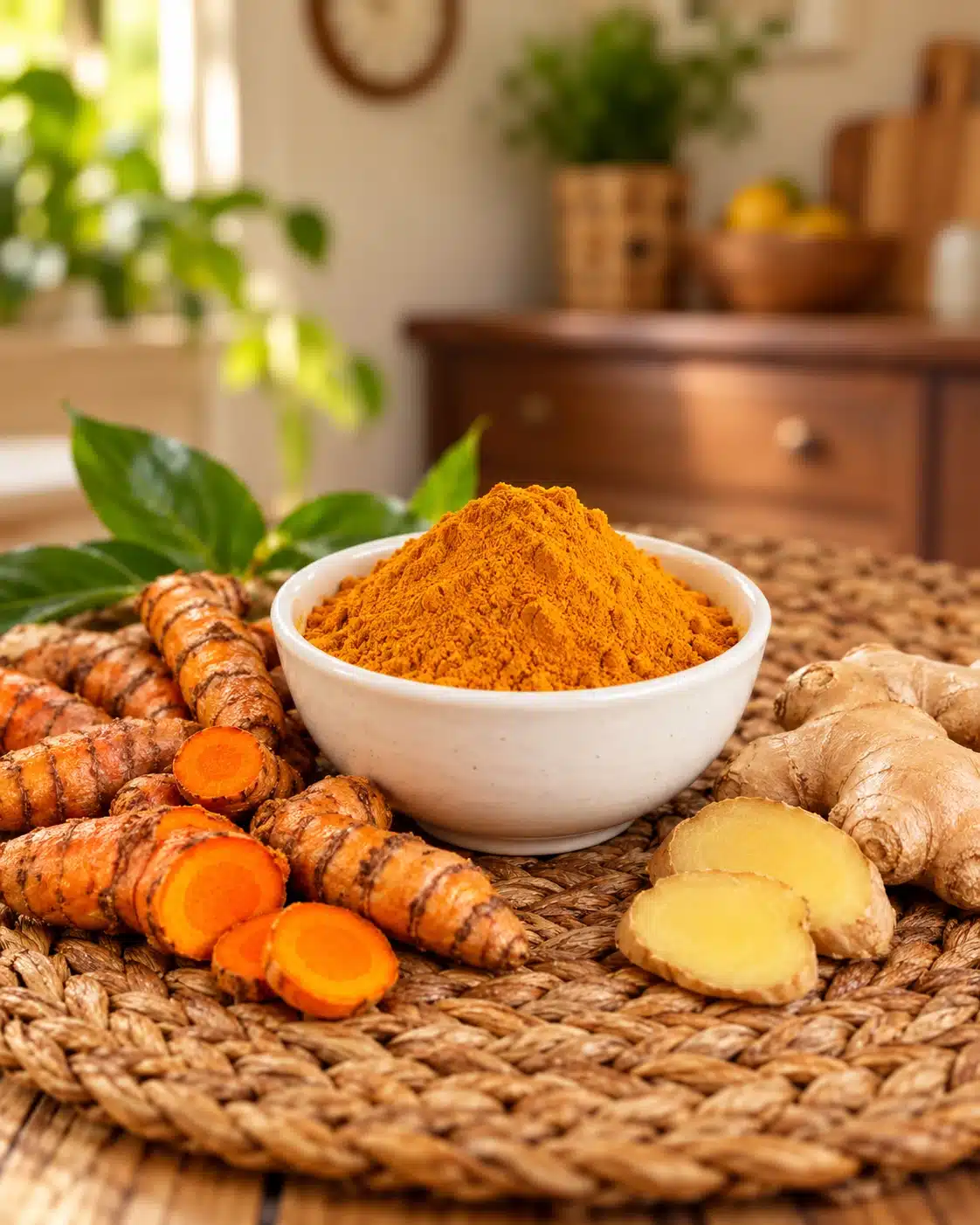
If you have seen viral posts claiming that leg pain and bone pain always mean your body is missing one specific vitamin, the reality is more complicated. One nutrient that genuinely matters for bones and muscles is vitamin D, and severe deficiency can contribute to bone pain and muscle weakness—but symptoms alone cannot tell you whether you are deficient.
The image also shows turmeric, which can make the message confusing. Turmeric is a spice, not a vitamin, and it does not replace vitamin D. Curcumin, a compound in turmeric, has been studied for inflammatory and osteoarthritis-related symptoms, but current evidence is not strong enough to say turmeric reliably treats musculoskeletal pain or corrects the underlying cause of bone pain.
Leg discomfort can come from many different problems—including muscles, joints, nerves, injuries, circulation, or nutritional deficiencies. That is why persistent or unexplained pain deserves proper evaluation rather than automatically reaching for a supplement or home remedy.
This article explains what vitamin D actually does, how deficiency may affect bones and muscles, where to get vitamin D, what turmeric can and cannot do, and when leg pain needs medical attention.
Quick Overview
| Topic | Key Point |
|---|---|
| Nutrient most associated with bone health | Vitamin D |
| Can vitamin D deficiency cause bone pain? | Yes, especially when deficiency becomes significant |
| Can it cause muscle symptoms? | It can contribute to muscle weakness and pain |
| Does leg pain prove vitamin D deficiency? | No |
| Is turmeric a vitamin? | No |
| Does turmeric correct vitamin D deficiency? | No |
| Best way to assess vitamin D status | Blood test when clinically appropriate |
| Main vitamin D sources | Fatty fish, fortified foods, some mushrooms, supplements when needed |
| Should everyone take high-dose vitamin D? | No |
| Can too much vitamin D be harmful? | Yes |
What the Viral Claim Gets Right—and Wrong
There is a small piece of truth behind the viral message.
Vitamin D is essential for normal bone mineralization because it helps the body absorb calcium. Inadequate vitamin D can eventually contribute to weak bones, and true deficiency in adults can cause osteomalacia, a condition associated with bone pain and muscle weakness.
What the viral claim gets wrong is suggesting that leg or bone pain automatically identifies the deficiency.
Pain is a symptom, not a laboratory diagnosis.
Someone with vitamin D deficiency may have aches or weakness.
Another person with low vitamin D may have few obvious symptoms.
And someone with perfectly adequate vitamin D can still experience leg pain for an entirely unrelated reason.
Why Vitamin D Is So Important
Vitamin D helps regulate calcium and phosphorus—two minerals needed for maintaining normal bone structure.
Without enough vitamin D, calcium absorption is impaired.
Over time, this can interfere with normal bone mineralization.
Vitamin D also has roles in muscle and nerve function. The NIH notes that inadequate vitamin D can adversely affect muscle strength and contribute to muscle weakness or pain.
This is why vitamin D is important throughout life, not just during childhood.
Can Vitamin D Deficiency Really Cause Bone Pain?
Yes.
Severe or prolonged deficiency can lead to osteomalacia in adults.
Osteomalacia means the bones do not mineralize properly and become softer than they should be.
Bone pain and muscle weakness can occur with this condition.
However, occasional knee pain, calf pain, foot discomfort, or aching after activity should not automatically be labeled vitamin D deficiency.
The pattern, severity, duration, medical history, medications, physical examination, and sometimes laboratory testing all matter.
What Does Vitamin D-Related Pain Feel Like?
There is no single sensation that confirms vitamin D deficiency.
When symptoms do occur, they can include more generalized bone discomfort or muscle weakness rather than one uniquely identifiable type of pain.
Clinical guidance also recognizes chronic widespread pain, muscle aches, weakness, and bone pain as possible features that can justify considering vitamin D status in the right clinical context.
That still does not make those symptoms specific to vitamin D.
Many conditions can produce similar complaints.
Leg Pain Has Many Possible Causes
Leg pain can originate from different tissues and systems.
Possible causes include muscle strain, overuse, joint problems, arthritis, nerve irritation, injuries, circulation problems, some medications, and certain nutritional deficiencies.
Age can also make multiple causes more likely to overlap.
For example, someone may have arthritis and low vitamin D at the same time, but correcting the vitamin D level would not necessarily eliminate pain caused by arthritis.
This is why simply taking a vitamin based on an online image can delay finding the actual explanation.
How Vitamin D Deficiency Is Checked
A blood test can measure 25-hydroxyvitamin D, often written as 25(OH)D.
According to the NIH consumer guidance, levels of 20 ng/mL (50 nmol/L) or above are adequate for most people for bone and overall health, while levels below 12 ng/mL (30 nmol/L) are considered too low.
Your healthcare professional may interpret results alongside symptoms, medical conditions, medications, calcium levels, and other factors.
This is much more reliable than trying to diagnose deficiency from pain alone.
Who Is More Likely to Have Low Vitamin D?
Some people have greater difficulty getting enough vitamin D.
The NIH identifies higher-risk groups including older adults, people with limited sun exposure, people with darker skin, individuals with conditions that interfere with fat absorption, and some people with obesity or a history of gastric bypass surgery.
Older adults are particularly relevant because the skin becomes less efficient at producing vitamin D with age.
That does not mean everyone in these groups is deficient.
It means vitamin D status may deserve more attention when other risk factors or symptoms are present.
How Much Vitamin D Do Adults Need?
NIH recommendations vary by age.
| Age Group | Recommended Daily Amount |
|---|---|
| Adults 19–70 | 15 mcg / 600 IU |
| Adults 71+ | 20 mcg / 800 IU |
| Pregnancy & breastfeeding | 15 mcg / 600 IU |
These amounts represent recommended total daily intake rather than a treatment dose for an established deficiency.
People being treated for confirmed deficiency may receive different instructions from their clinician.
Best Food Sources of Vitamin D
Vitamin D is unusual because relatively few foods naturally contain substantial amounts.
Some of the best natural sources are fatty fish such as salmon, trout, tuna, and mackerel. Fortified milk and many fortified plant milks can also contribute meaningful amounts. UV-exposed mushrooms can provide vitamin D as well.
| Food | Vitamin D Contribution |
|---|---|
| Salmon | One of the best natural sources |
| Trout | Excellent natural source |
| Tuna | Provides some vitamin D |
| Fortified milk | Common dietary source |
| Fortified plant milk | Can provide similar amounts to fortified dairy milk |
| UV-exposed mushrooms | Useful non-animal source |
| Egg yolks | Small amount |
| Cheese | Small amount |
Checking nutrition labels is useful because fortification varies between brands and countries.
Can You Get Vitamin D from Sunlight?
Yes.
The skin can make vitamin D after exposure to ultraviolet B radiation.
However, vitamin D production varies significantly with season, latitude, time of day, age, skin pigmentation, clothing, and other factors.
The NIH also emphasizes that excessive UV exposure increases skin-cancer risk, so deliberately pursuing large amounts of unprotected sun exposure is not a good strategy for correcting a suspected deficiency.
Food, fortified products, testing when indicated, and properly selected supplements are more controlled approaches.
Should You Take a Vitamin D Supplement?
A supplement can be useful for some people, particularly when diet, lifestyle, health conditions, or laboratory testing suggest inadequate vitamin D.
But more is not automatically better.
Vitamin D is fat-soluble, which means the body can store it.
Very high supplemental intakes can cause vitamin D toxicity and lead to dangerously high calcium levels. NIH lists 4,000 IU (100 mcg) per day as the adult tolerable upper intake level for routine intake, although clinicians may prescribe different amounts temporarily when treating a diagnosed deficiency.
Avoid taking megadoses simply because of muscle or leg pain.
Can Too Much Vitamin D Be Dangerous?
Yes.
Excessive vitamin D—usually from supplements rather than food or sunlight—can cause hypercalcemia, meaning too much calcium in the blood.
Severe toxicity can affect the kidneys and other organs.
This is another reason not to assume that if some vitamin D is good, extremely high doses must be better.
Supplement dosage should match actual need.
Vitamin D and Calcium Work Together
Vitamin D helps your body absorb calcium.
That means healthy bones depend on more than vitamin D alone.
Adequate calcium, protein, physical activity, and overall nutrition are also important.
Taking vitamin D without considering the rest of your diet is not a complete bone-health strategy.
Good calcium-containing foods can include dairy products, fortified plant milks, certain fish with edible bones, and other fortified foods.
What About Magnesium?
Magnesium is frequently mentioned online alongside vitamin D.
It is an essential mineral involved in many biological processes, including muscle and nerve function.
But just like vitamin D, magnesium should not be assumed to be the cause of every leg cramp or ache.
Persistent symptoms deserve assessment rather than a guessing game involving multiple supplements.
Is Turmeric the Vitamin Shown in the Image?
No.
This is an important correction.
Turmeric is not a vitamin.
Turmeric is a plant in the ginger family whose underground stem is used as a culinary spice.
Curcumin is one of the compounds found in turmeric and is responsible for much of its characteristic yellow-orange color.
Turmeric contains plant compounds, but eating turmeric is not equivalent to taking vitamin D.
It will not correct a vitamin D deficiency.
Can Turmeric Help with Joint Pain?
Turmeric and curcumin have been studied for conditions such as osteoarthritis.
Some reviews have found promising results for knee osteoarthritis pain and function, but the evidence remains inconsistent, formulations differ significantly, and better-quality research is still needed before firm conclusions can be made.
So turmeric may be perfectly reasonable as a culinary spice, but it should not be advertised as a guaranteed cure for bone, joint, or leg pain.
And it should never replace medical evaluation when symptoms are persistent or concerning.
Turmeric Is Food—not a Treatment for Vitamin D Deficiency
Adding turmeric to soups, curries, rice, vegetables, or drinks can be part of a normal diet.
That is very different from claiming:
“Turmeric restores your bones.”
“Turmeric replaces vitamin D.”
“Turmeric cures leg pain.”
Those claims are not supported.
If someone is truly vitamin D deficient, the treatment needs to address the vitamin D deficiency itself.
A Simple Turmeric Golden Milk Recipe
If you enjoy turmeric, you can still use it as a flavorful beverage without presenting it as a cure.
Ingredients
- 1 cup milk or unsweetened fortified plant milk
- 1/2 teaspoon ground turmeric
- 1/4 teaspoon ground cinnamon
- Small pinch ground ginger
- 1 teaspoon honey, optional
- Tiny pinch black pepper, optional
Instructions
Warm the milk gently in a saucepan.
Add turmeric, cinnamon, and ginger.
Whisk until smooth.
Keep the mixture below a hard boil.
Remove from the heat.
Sweeten lightly with honey if desired.
Serve warm.
Using a vitamin D-fortified milk or plant milk may contribute some dietary vitamin D, whereas the turmeric itself is not the source of vitamin D.
Important Note About Turmeric Supplements
Culinary turmeric and concentrated turmeric supplements are not the same thing.
NCCIH reports that standard oral turmeric can cause digestive side effects such as nausea, reflux, stomach upset, diarrhea, or constipation. Some highly bioavailable curcumin products have also been associated with liver injury.
Turmeric supplements may not be appropriate for everyone, especially when medications, pregnancy, or medical conditions are involved.
Food-level use and concentrated supplements should not be treated as interchangeable.
What Else Supports Healthy Bones?
Bone health is a long-term project rather than a one-ingredient fix.
Important factors include adequate vitamin D, enough calcium and protein, regular weight-bearing activity when appropriate, avoiding smoking, limiting excessive alcohol intake, and addressing medical conditions that affect bone health.
For older adults, maintaining muscle strength and balance is also important because reducing falls can help reduce fracture risk.
Easy Vitamin D-Focused Breakfast Idea
A simple breakfast can combine several useful nutrients.
Try:
- Fortified milk or fortified plant milk
- Eggs
- Whole-grain toast
- UV-exposed mushrooms sautéed with eggs
- Fruit on the side
No single breakfast will correct a serious deficiency, but regularly choosing foods that provide vitamin D, calcium, protein, and other nutrients can contribute to overall bone health.
Vitamin D-Focused Lunch Idea
Try a salmon bowl made with:
- Cooked salmon
- Brown rice or quinoa
- Leafy vegetables
- Roasted mushrooms
- Yogurt-based dressing
Fatty fish such as salmon is among the best natural food sources of vitamin D.
Vitamin D-Focused Dinner Idea
A simple dinner might include:
- Grilled trout or salmon
- Roasted potatoes
- Broccoli
- Mushrooms
- Fortified yogurt-based sauce
The goal is not to turn every meal into a supplement.
It is to build a diet that consistently provides the nutrients your bones and muscles need.
When Leg Pain Should Not Be Blamed on Vitamins
Some symptoms need prompt medical assessment.
A blood clot in a deep vein can cause pain or tenderness, swelling, warmth, and redness or discoloration in one leg. A pulmonary embolism can cause difficulty breathing, chest pain, coughing up blood, lightheadedness, or fainting.
If leg pain is accompanied by sudden one-sided swelling, warmth, or discoloration, seek medical attention promptly.
If you develop sudden shortness of breath, significant chest pain, coughing up blood, or fainting, seek emergency medical care.
Those are not symptoms to treat with turmeric or vitamins at home.
When to Talk to a Healthcare Professional
Consider seeking medical advice if pain is persistent, worsening, unexplained, interfering with walking or sleep, or accompanied by significant weakness.
Also get evaluated after an injury if you cannot bear weight or think a bone may be fractured.
If vitamin D deficiency is a realistic possibility, a healthcare professional can decide whether testing is appropriate rather than relying on symptoms alone.
Common Myths About Vitamin D and Pain
| Claim | What We Actually Know |
|---|---|
| Every leg pain means vitamin D deficiency | False |
| Bone pain can occur with severe vitamin D deficiency | True |
| Turmeric is a vitamin | False |
| Turmeric corrects vitamin D deficiency | False |
| More vitamin D is always better | False |
| A blood test can help assess vitamin D status | True |
| Food can contribute vitamin D | True |
| High-dose supplements are risk-free | False |
| Persistent pain should be evaluated | True |
Common Mistakes to Avoid
One common mistake is starting several supplements at once because of a viral post. If symptoms improve or worsen, it becomes difficult to know what actually changed.
Another mistake is assuming normal-looking food ingredients cannot have side effects. Concentrated herbal supplements can behave very differently from the amounts used in cooking.
And perhaps the biggest mistake is assuming every ache must have a nutritional explanation.
Nutrition matters—but so do muscles, joints, nerves, blood vessels, injuries, and medical conditions.
Frequently Asked Questions
Which vitamin deficiency can cause bone pain?
Vitamin D deficiency can cause osteomalacia in adults, which is associated with bone pain and muscle weakness.
Does leg pain automatically mean low vitamin D?
No. Leg pain has many possible causes.
Can low vitamin D make muscles hurt?
Inadequate vitamin D can be associated with muscle weakness and pain.
How do I know if my vitamin D is low?
Vitamin D status can be assessed with a blood test measuring 25-hydroxyvitamin D when a healthcare professional considers testing appropriate.
Is turmeric vitamin D?
No. Turmeric is a spice derived from a plant.
Does turmeric contain enough vitamin D to treat a deficiency?
No. Turmeric is not a treatment for vitamin D deficiency.
Can turmeric cure bone pain?
There is not enough evidence to claim turmeric cures bone pain. Research into curcumin for osteoarthritis symptoms is promising in some studies but not definitive.
What foods are highest in vitamin D?
Fatty fish such as salmon and trout are among the best natural sources. Fortified milk and some plant milks are also important dietary sources.
Do eggs contain vitamin D?
Egg yolks contain a small amount.
Do mushrooms contain vitamin D?
Some mushrooms provide vitamin D, particularly varieties exposed to ultraviolet light.
Does milk contain vitamin D?
Many milks are fortified with vitamin D, although fortification practices depend on the product and country.
How much vitamin D do adults need?
NIH recommendations are 600 IU daily for adults ages 19–70 and 800 IU for adults age 71 and older.
Can I take 10,000 IU every day?
That is above the adult tolerable upper intake level of 4,000 IU per day for routine intake. High doses may sometimes be used medically, but they should not be self-prescribed for unexplained pain.
Can too much vitamin D cause problems?
Yes. Excessive supplementation can cause hypercalcemia and, in severe cases, kidney and other complications.
Is sunlight enough for vitamin D?
Sun exposure can contribute, but production varies considerably and excessive UV exposure is not recommended as a vitamin D strategy.
Can older adults become deficient more easily?
Yes. The skin becomes less efficient at producing vitamin D with age.
Does dark skin affect vitamin D production?
Greater skin pigmentation reduces the amount of vitamin D produced from the same amount of sunlight exposure.
Can intestinal conditions affect vitamin D?
Conditions that impair fat absorption can make vitamin D absorption more difficult.
Should I take calcium with vitamin D?
Vitamin D and calcium work together in bone health, but whether you need supplements depends on your diet, health status, and medical advice.
Can vitamin D fix arthritis?
Vitamin D is important for bone health, but it is not a universal treatment for arthritis.
Can turmeric replace pain medication?
It should not be assumed to replace prescribed or recommended treatment. Evidence for turmeric in musculoskeletal pain remains limited.
Is turmeric safe every day?
Normal culinary use is generally very different from concentrated supplementation. Supplements can cause side effects, and some highly bioavailable products have been linked with liver injury.
What should I do if one leg suddenly becomes swollen and painful?
Seek prompt medical attention, especially if the area is warm or discolored, because these can be signs of a blood clot.
What if leg pain occurs with shortness of breath?
Seek emergency medical care. Difficulty breathing or chest symptoms together with possible DVT symptoms can indicate pulmonary embolism.
A Better Way to Think About Viral Health Posts
Viral posts usually work because they offer one simple explanation for a common symptom.
“Your legs hurt because you lack this vitamin.”
“Drink this spice and your pain disappears.”
Real health information is rarely that simple.
Vitamin D is genuinely important.
Deficiency can genuinely affect bones and muscles.
Turmeric is genuinely interesting to researchers.
But none of those facts justify diagnosing every person with leg pain from a social-media photograph.
Good health content should preserve the useful part of the message without turning uncertainty into a cure claim.
Final Thoughts
Vitamin D is one nutrient worth knowing about when discussing bones, muscles, and persistent aches. It helps the body absorb calcium and supports normal bone and muscle function. Significant deficiency can cause osteomalacia, bone pain, and muscle weakness.
But leg pain by itself does not prove that vitamin D is low.
And the turmeric shown in viral posts should not be confused with a vitamin.
Turmeric is a culinary spice. Research into curcumin and joint symptoms continues, but it is not a proven replacement for medical care and it does not correct vitamin D deficiency.
If you want to support bone health, focus on the bigger picture: adequate nutrition, vitamin D and calcium intake, appropriate physical activity, and professional evaluation when symptoms persist.
And if you suspect a deficiency, the safest approach is not guessing from symptoms—it is discussing whether testing or supplementation is appropriate for you.