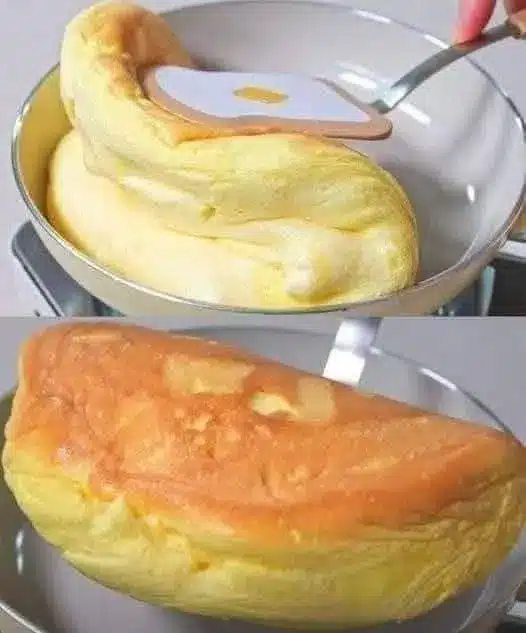
This Fluffy Japanese Soufflé Omelette Recipe creates an incredibly tall, soft, airy omelette with a delicate golden exterior and a light, cloud-like center. Made with just a few simple ingredients, it transforms ordinary eggs into a restaurant-style breakfast that looks dramatic, feels luxurious, and tastes wonderfully tender.
Inspired by the omelette in the image, this version is cooked slowly in a covered nonstick skillet until the whipped egg mixture rises into a thick, pillow-like shape. The bottom becomes beautifully golden while the inside stays moist, fluffy, and almost soufflé-like.
The secret is not complicated equipment or expensive ingredients. The dramatic height comes from separating the eggs, whipping the whites until they hold stable peaks, then gently folding them back into the yolks without knocking out the trapped air.
Low heat is equally important. A soufflé omelette needs enough time for the egg structure to set around those tiny air bubbles. Cooking too quickly can brown the bottom while leaving the center wet, while cooking too slowly without steam can dry out the exterior.
This breakfast is ideal for weekend brunch, Mother’s Day, holiday mornings, birthdays, special breakfasts, or anytime you want to serve something more impressive than ordinary scrambled eggs. Once you understand the basic technique, you can customize it with cheese, herbs, mushrooms, spinach, ham, smoked salmon, or even sweet toppings.
Recipe Overview
| Recipe Details | Information |
|---|---|
| Recipe Name | Fluffy Japanese Soufflé Omelette |
| Focus Keyword | Fluffy Japanese Soufflé Omelette Recipe |
| Prep Time | 10 minutes |
| Cook Time | 8–12 minutes |
| Total Time | About 20 minutes |
| Servings | 1–2 |
| Course | Breakfast, Brunch |
| Cuisine | Japanese-Inspired |
| Difficulty | Intermediate |
| Main Ingredient | Eggs |
| Texture | Tall, airy, soft, fluffy |
| Cooking Method | Covered skillet |
| Best Served | Immediately |
| Make-Ahead Friendly | No |
| Freezer Friendly | No |
Why You’ll Love This Soufflé Omelette
The texture is completely different from a standard omelette. Instead of being flat and firm, the inside is filled with tiny air pockets that make every bite feel light, soft, and almost cloud-like.
It also looks impressive without requiring expensive ingredients. Eggs, butter, salt, and a few optional seasonings can create a breakfast that feels much more special than its ingredient list suggests.
The recipe is naturally high in protein and can be served on its own for a light breakfast or paired with avocado, toast, potatoes, smoked salmon, fruit, or salad for a larger brunch.
Another advantage is flexibility. Once you master the basic whipped-egg technique, you can use the same method to create cheese omelettes, herb omelettes, mushroom versions, sweet berry versions, or high-protein breakfast plates.
The dramatic appearance also makes this recipe highly shareable on social media. A tall folded omelette that jiggles slightly when served has strong visual appeal for Facebook, Pinterest, Instagram, and short-form recipe videos.
Ingredients
For the Basic Soufflé Omelette
- 3 large eggs
- 1 tablespoon whole milk or heavy cream, optional
- 1/4 teaspoon fine salt
- 1 teaspoon granulated sugar, optional
- 1 teaspoon unsalted butter
- 1 teaspoon neutral cooking oil
- 1 tablespoon water for steaming
- Freshly ground black pepper to taste
Optional Finishing Ingredients
- Fresh parsley
- Chopped chives
- Grated Parmesan
- Shredded cheddar
- Fresh basil
- Smoked paprika
- Hot sauce
- Sliced avocado
- Microgreens
Best Ingredient Choices
Eggs
Fresh large eggs provide the foundation of the recipe. The yolks add richness and color, while the whites provide the structure that creates the tall soufflé effect.
Separate the eggs carefully. Even a small amount of yolk in the whites can interfere with whipping because egg yolk contains fat.
Sugar
A small amount of sugar is optional, especially for a savory omelette. However, it can slightly stabilize the whipped whites and encourage a tender texture.
The quantity is small enough that the omelette will not taste noticeably sweet.
Milk or Cream
Milk loosens the yolks and helps them fold more easily into the whites.
Heavy cream produces a richer result, but use only a small amount. Too much liquid can weigh down the foam and reduce the height.
Butter
Butter gives the bottom of the omelette a rich, slightly nutty flavor as it browns.
Combining butter with a little neutral oil helps reduce the chance of the butter scorching during the longer low-heat cooking time.
Kitchen Equipment
| Equipment | Why It Helps |
|---|---|
| 8–10 inch nonstick skillet | Helps maintain height and prevents sticking |
| Electric hand mixer | Makes whipping egg whites faster |
| 2 mixing bowls | Keeps yolks and whites separate |
| Silicone spatula | Gentle folding |
| Balloon whisk | Mixing the yolks |
| Skillet lid | Traps steam |
| Wide spatula | Helps fold without breaking |
| Egg separator | Optional convenience tool |
Best Skillet Size for a Tall Soufflé Omelette
Pan size directly affects the finished height.
An 8-inch skillet creates a taller omelette because the egg mixture is concentrated in a smaller area. A 10-inch skillet produces a wider, slightly flatter omelette.
For three eggs, an 8- to 9-inch nonstick skillet usually gives the most dramatic presentation.
A heavy-bottomed pan is also helpful because it distributes heat more evenly. Thin pans can create hot spots that brown one section before the center cooks.
This is one of the most important pieces of kitchen equipment for this recipe, particularly if you plan to make omelettes frequently.
Step-by-Step Instructions
Step 1: Separate the Eggs
Separate the yolks from the whites while the eggs are still cold.
Cold eggs are usually easier to separate cleanly.
Place the whites in a completely clean, dry mixing bowl and the yolks in another bowl.
Avoid getting any yolk into the whites.
Step 2: Prepare the Yolks
Add salt, black pepper, and the optional milk or cream to the egg yolks.
Whisk until smooth and slightly lighter in color.
Do not add large quantities of liquid because this can weaken the soufflé structure.
Step 3: Begin Whipping the Egg Whites
Using an electric mixer, beat the egg whites at medium speed until they become foamy.
At this stage, the bubbles will still be relatively large.
Continue whipping until the foam begins turning white and thicker.
Step 4: Add the Sugar
If using sugar, add it gradually rather than all at once.
Continue beating until the whites become glossy and form firm peaks.
When you lift the beaters, the peak should remain mostly upright.
Do not continue beating long after this stage because over-whipped whites can become dry and difficult to fold.
Step 5: Lighten the Yolks
Add about one-third of the whipped egg whites to the yolks.
Fold gently until the yolk mixture becomes lighter.
This first addition makes it easier to incorporate the remaining whites without aggressively mixing them.
Step 6: Fold in the Remaining Whites
Add the remaining whites in two additions.
Use a silicone spatula and scoop from the bottom of the bowl upward.
Rotate the bowl slightly after each fold.
Avoid circular stirring motions.
Stop folding as soon as the color looks mostly uniform.
A few tiny streaks are better than overmixing and losing the trapped air.
Step 7: Preheat the Skillet
Place the nonstick skillet over low to medium-low heat.
Add butter and neutral oil.
Swirl to coat the surface evenly.
If the butter immediately turns dark brown, the skillet is too hot.
Step 8: Add the Egg Mixture
Spoon the mixture into the center of the skillet.
Pile it upward rather than spreading it completely flat.
Use the spatula only to gently shape the outside edges.
The thicker the mixture remains, the more dramatic the final omelette will look.
Step 9: Add Steam
Pour approximately one tablespoon of water around the edge of the skillet.
Do not pour the water directly onto the eggs.
Cover immediately.
The steam helps cook the upper surface without requiring the omelette to be flipped.
Step 10: Cook Slowly
Cook for approximately 5 to 7 minutes over low heat.
Avoid repeatedly opening the lid because each opening releases heat and steam.
The omelette should gradually puff and become noticeably taller.
Step 11: Check for Doneness
Remove the lid carefully.
The surface should appear mostly dry and set, although the omelette may still jiggle slightly.
Lift the edge gently with a spatula.
The bottom should be golden rather than dark brown.
If the surface remains visibly wet, add another teaspoon of water around the edge, cover, and cook for another 1 to 2 minutes.
Step 12: Fold the Omelette
Slide a wide spatula underneath one side.
Fold the omelette gently in half.
Do not press down.
The goal is to preserve as much height and internal air as possible.
Step 13: Serve Immediately
Transfer the omelette to a warm plate.
Finish with parsley, chives, Parmesan, pepper, or another desired topping.
Serve immediately because all soufflé-style omelettes gradually lose height as they cool.
The Science Behind a Fluffy Soufflé Omelette
Understanding the basic science makes this recipe much easier to repeat successfully.
Whipping egg whites introduces thousands of tiny air bubbles into the protein structure. Egg-white proteins unfold during whipping and form a delicate network around those bubbles.
When the omelette is heated, the trapped air expands.
At the same time, the egg proteins coagulate and create enough structure to hold the expanded shape.
Steam also contributes to the rise. Moisture inside the egg mixture turns into vapor, expanding further and helping create the fluffy interior.
This is why gentle heat is so important. If the outside cooks too quickly, the center may not have enough time to build a stable structure.
Why Your Soufflé Omelette May Deflate
Some deflation is normal.
A soufflé omelette contains hot air and steam, both of which contract as they cool.
However, excessive collapse may indicate that the whites were under-whipped, the mixture was overmixed, or the omelette was removed before the egg proteins had fully set.
Another possible cause is rough handling.
Pressing the omelette with a spatula or aggressively folding it can push out the trapped air almost instantly.
The best strategy is to serve immediately after cooking.
How to Get Maximum Height
Use room-temperature egg whites after separating them.
Make sure the mixing bowl is completely clean and grease-free.
Whip until the whites form stable glossy peaks.
Use a smaller skillet.
Keep the batter thick and concentrated.
Fold as little as necessary.
Use low heat.
Cook with a lid.
Avoid pressing the omelette.
Serve immediately.
These small details have a much bigger impact than adding extra ingredients.
Pro Tips for Perfect Results
Use three eggs for an 8- to 9-inch skillet.
Separate eggs while cold because it is easier, then allow the whites to warm slightly before whipping.
Use a clean metal or glass bowl for the whites.
Avoid plastic bowls if they have absorbed traces of grease.
Add sugar gradually if using it.
Stop whipping when the whites are glossy and firm.
Fold rather than stir.
Cook slowly.
Keep the lid closed.
Wait until the bottom is properly set before folding.
Serve immediately.
Delicious Variations
Cheese Soufflé Omelette
Add a small amount of grated Gruyère, Parmesan, mozzarella, or cheddar shortly before folding.
Avoid overfilling because heavy cheese can compress the delicate omelette.
Garlic Parmesan Soufflé Omelette
Add a tiny pinch of garlic powder to the yolks.
Finish with grated Parmesan and chopped parsley.
This simple variation works especially well for brunch.
Mushroom and Herb Omelette
Cook sliced mushrooms separately until browned and their moisture has evaporated.
Add a small spoonful before folding the omelette.
Never add wet raw mushrooms directly because they can make the inside watery.
Spinach and Feta Soufflé Omelette
Wilt spinach separately and squeeze away excess moisture.
Add a small amount of spinach and crumbled feta before folding.
Ham and Cheese Soufflé Omelette
Use finely chopped cooked ham with cheddar, Swiss, or Gruyère.
Keep the filling light so the omelette remains tall.
Smoked Salmon Soufflé Omelette
Serve the finished omelette with smoked salmon, chives, black pepper, and a small spoonful of crème fraîche.
This variation works especially well for an elegant brunch.
Sweet Soufflé Omelette
Increase the sugar slightly and omit savory pepper.
Serve with berries, honey, maple syrup, jam, powdered sugar, or yogurt.
What to Serve with a Soufflé Omelette
| Side Dish | Pairing Benefit |
|---|---|
| Avocado toast | Creamy and filling |
| Breakfast potatoes | Adds crispy texture |
| Fresh berries | Light and refreshing |
| Smoked salmon | Elegant brunch option |
| Roasted tomatoes | Savory contrast |
| Bacon | Classic breakfast pairing |
| Sausage | Makes the meal heartier |
| Green salad | Light lunch option |
| Sourdough toast | Crunchy contrast |
| Greek yogurt | Adds protein |
Build a Complete Brunch Plate
A soufflé omelette can become the centerpiece of a beautiful brunch plate.
Serve it with avocado toast, roasted tomatoes, berries, and breakfast potatoes for a colorful meal.
For a higher-protein option, add smoked salmon, turkey sausage, Greek yogurt, or cottage cheese.
For a lighter brunch, pair it with a green salad, fresh fruit, and tea.
The omelette is mild enough to work with many different side dishes.
Best Kitchen Tools for Making Soufflé Omelettes
A good nonstick skillet is the most important tool because the delicate omelette needs to release easily without tearing.
An electric hand mixer saves significant time when whipping egg whites and usually creates a more consistent foam than hand-whisking.
A flexible silicone spatula is useful for folding because it can scrape the bowl clean while minimizing deflation.
A properly fitting skillet lid is also important. Trapped steam allows the center to cook without requiring a difficult flip.
For readers who prepare breakfast recipes frequently, these tools are useful far beyond this single recipe and can also be used for pancakes, scrambled eggs, crêpes, sauces, and baking.
Make-Ahead Instructions
This recipe is not ideal for complete advance preparation.
The whipped egg mixture should be cooked relatively soon after it is prepared because the foam slowly loses stability over time.
However, fillings can be prepared in advance.
Cook mushrooms, spinach, onions, ham, or other additions and refrigerate them separately.
You can also measure seasonings and prepare side dishes before starting the omelette.
That way, the omelette can be served immediately after cooking without waiting for other parts of the meal.
Storage
Soufflé omelettes are best eaten immediately.
If necessary, allow leftovers to cool and place them in an airtight container.
Refrigerate and consume within about one day for the best texture.
The omelette will lose most of its dramatic height during storage.
This does not necessarily mean it is spoiled; the trapped air has simply escaped.
Reheating
A covered skillet over low heat is the best reheating method.
Place the omelette in the skillet and heat gently until warmed through.
You can also use the microwave in short intervals, but the texture will become denser.
Avoid overheating eggs because prolonged high heat makes them rubbery.
For presentation and texture, freshly cooked soufflé omelette is significantly better than reheated leftovers.
Freezing
Freezing is not recommended.
The whipped egg structure does not survive freezing and thawing particularly well.
After thawing, the omelette may release water and become dense or rubbery.
Because the recipe takes approximately 20 minutes from start to finish, preparing it fresh is the better option.
Common Mistakes and How to Avoid Them
Egg Whites Refuse to Whip
Fat or egg yolk may be present in the bowl.
Wash and dry the bowl thoroughly and use clean beaters.
Omelette Becomes Flat
The whites may have been under-whipped or overmixed after whipping.
Fold carefully.
Bottom Burns
The skillet is too hot.
Reduce the heat and allow more cooking time.
Center Remains Raw
The omelette may be too thick for the cooking time.
Cover and steam for another minute or two.
Omelette Sticks
Use a good-quality nonstick skillet and enough butter or oil to lightly coat the surface.
Omelette Tears During Folding
The bottom may not be sufficiently set.
Allow it to cook a little longer.
Omelette Becomes Rubbery
It has likely been overcooked.
Use lower heat and remove it when just set.
Troubleshooting Guide
| Problem | Likely Cause | Solution |
|---|---|---|
| Whites stay liquid | Greasy bowl | Clean thoroughly |
| Whites look dry | Over-whipped | Stop at glossy peaks |
| Omelette is flat | Foam lost during folding | Fold gently |
| Bottom is too dark | Heat too high | Lower temperature |
| Center is liquid | Needs more steam | Cover and cook longer |
| Omelette sticks | Pan surface or fat issue | Use nonstick skillet |
| Omelette tears | Base undercooked | Cook slightly longer |
| Texture becomes tough | Overcooked | Shorten cooking time |
| Height disappears quickly | Under-set structure | Cook center more fully |
Nutrition Estimate
| Nutrition | Approximate Amount |
|---|---|
| Calories | 220–290 |
| Protein | 18–21 g |
| Carbohydrates | 2–5 g |
| Fat | 15–20 g |
| Sugar | 1–3 g |
| Sodium | 350–550 mg |
| Serving Size | 1 omelette |
Nutrition varies depending on cream, cheese, butter, fillings, and toppings.
Frequently Asked Questions
What is a Japanese soufflé omelette?
It is a fluffy omelette made by whipping egg whites separately and folding them into the yolks before gentle cooking.
Why does it rise so much?
Air trapped inside the whipped whites expands when heated.
Do I need an electric mixer?
No, but an electric mixer makes the process faster and more consistent.
Can I whip the whites by hand?
Yes, although it requires more time and effort.
What should stiff peaks look like?
When the whisk is lifted, the peak should remain mostly upright rather than collapsing immediately.
Can I make it without sugar?
Yes. Sugar is optional for savory versions.
Can I use cream instead of milk?
Yes, but use only a small quantity.
What size skillet should I use?
An 8- to 9-inch skillet works especially well for three eggs.
Why does my omelette flatten after cooking?
Some deflation is normal as air and steam cool.
Why did mine collapse completely?
The whites may have been under-whipped, the mixture overfolded, or the center undercooked.
Can I add cheese?
Yes, but avoid excessive amounts.
Can I add vegetables?
Yes. Cook vegetables first and remove excess moisture.
Can I add meat?
Cooked ham, bacon, sausage, chicken, or smoked salmon can all work in small amounts.
Can I make it spicy?
Yes. Add chili flakes, hot sauce, Pepper Jack cheese, or sliced chilies.
Can I make it sweet?
Yes. Add slightly more sugar and serve with fruit, jam, honey, or powdered sugar.
Do I need to flip it?
No. Covered cooking and steam allow the top to set without fully flipping.
Why add water to the skillet?
The water creates steam, helping cook the thick upper portion.
Can I make two omelettes at once?
For maximum height and even cooking, it is usually better to make them individually.
Can I prepare the batter ahead?
Not recommended. Whipped egg whites gradually lose air.
How long does the omelette take to cook?
Usually around 8 to 12 minutes depending on thickness and heat level.
Can I refrigerate leftovers?
Yes, but the omelette will lose its soufflé height.
Can I freeze it?
Freezing is not recommended.
Is a center jiggle normal?
A slight jiggle can be normal, but the center should not look liquid.
What toppings are best?
Parmesan, chives, parsley, avocado, smoked salmon, hot sauce, and herbs all work well.
What should I serve with it?
Toast, potatoes, fruit, tomatoes, avocado, salad, bacon, sausage, or smoked salmon are good options.
Final Thoughts
This Fluffy Japanese Soufflé Omelette Recipe proves that a few ordinary eggs can become an impressive restaurant-style breakfast when the technique is handled correctly. The combination of whipped whites, rich yolks, gentle folding, low heat, and trapped steam produces the tall, airy structure shown in the image.
The most important step is protecting the air in the whipped egg whites. Whip them until firm and glossy, then fold them gently into the yolks rather than aggressively stirring.
Temperature is equally important. A low to medium-low skillet gives the omelette enough time to set internally while the bottom gradually develops a golden crust.
Use a lid to trap steam, avoid pressing down while folding, and serve immediately once the omelette leaves the skillet.
After mastering the basic version, experiment with Parmesan, cheddar, mushrooms, spinach, ham, herbs, smoked salmon, or even berries and maple syrup.
This recipe works beautifully for weekend breakfast, Mother’s Day brunch, Valentine’s breakfast, birthdays, holiday mornings, or anytime you want a simple meal to look considerably more impressive.