Introduction
This Hearty Vegetable Soup with Potatoes, Carrots and Celery is warm, nourishing, colorful, and packed with simple ingredients that come together in one comforting bowl. Tender potatoes, sweet carrots, celery, onion, garlic, herbs, and a flavorful broth create an easy homemade soup that works beautifully for lunch, dinner, meal prep, or cold-weather cooking.
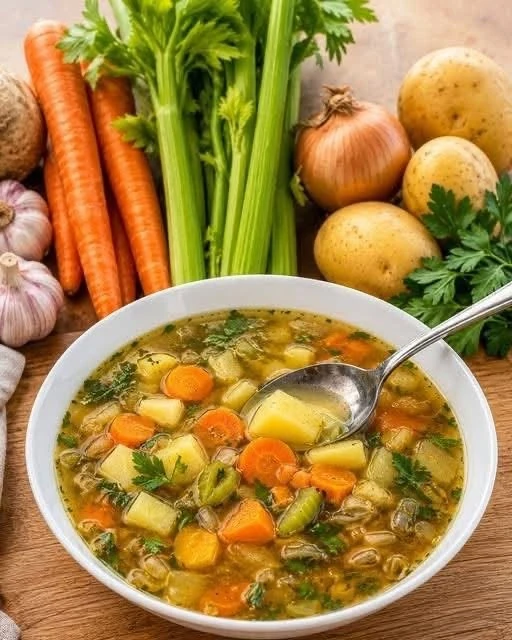
Inspired by the bowl in the image, this soup is filled with chunky vegetables and plenty of fresh herbs, giving it the rustic look of a classic homemade vegetable soup. The potatoes make it filling, the carrots add natural sweetness, the celery gives freshness, and the garlic and herbs build a savory broth without requiring complicated ingredients.
This is the kind of recipe that is easy enough for beginners but flexible enough to become a regular part of your weekly meal plan. You can keep it completely vegetable-based, add beans for extra protein, stir in pasta or rice, or include leftover chicken if you want a heartier version.
The best part is that the soup tastes even better after the flavors have had time to develop. It stores well, reheats beautifully, and can be made ahead for busy weekdays.
Serve it with crusty bread, garlic toast, crackers, grilled cheese, or a simple green salad for a complete comforting meal.
Recipe Overview
| Detail | Information |
|---|---|
| Recipe Name | Hearty Vegetable Soup with Potatoes, Carrots and Celery |
| Prep Time | 20 minutes |
| Cook Time | 35–45 minutes |
| Total Time | About 1 hour |
| Servings | 6–8 |
| Course | Soup, Lunch, Dinner |
| Cuisine | Homemade Comfort Food |
| Difficulty | Easy |
| Cooking Method | Stovetop |
| Main Ingredients | Potatoes, carrots, celery, onion |
| Texture | Chunky vegetables in savory broth |
| Flavor | Herby, savory, comforting |
| Best For | Family meals, cold weather, meal prep |
| Make-Ahead Friendly | Yes |
| Freezer Friendly | Yes |
| Best Served | Hot |
Why You’ll Love This Vegetable Soup
This soup is easy, practical, and made with ingredients that are usually affordable and widely available.
The vegetables create a naturally comforting flavor without needing heavy cream or complicated sauces. Because the potatoes add body to the broth, the finished soup feels satisfying while still being light enough for lunch.
It is also one of the easiest recipes to customize.
You can add more vegetables.
You can add beans.
You can add pasta.
You can use chicken broth or vegetable broth.
You can make it spicy.
You can make it thicker.
You can even blend a small portion if you prefer a creamier texture.
Another advantage is that vegetable soup is excellent for using produce that needs to be cooked before it goes to waste.
Ingredients
Main Soup Ingredients
| Ingredient | Amount |
|---|---|
| Potatoes, peeled and cubed | 4 medium |
| Carrots, sliced | 3 large |
| Celery, sliced | 3 stalks |
| Yellow onion, diced | 1 large |
| Garlic cloves, minced | 4 |
| Olive oil | 2 tablespoons |
| Vegetable or chicken broth | 6 cups |
| Water | 1–2 cups as needed |
| Fresh parsley, chopped | 1/4 cup |
Seasonings
| Ingredient | Amount |
|---|---|
| Salt | To taste |
| Black pepper | 1 teaspoon |
| Garlic powder | 1 teaspoon |
| Onion powder | 1/2 teaspoon |
| Dried thyme | 1 teaspoon |
| Dried parsley | 1 teaspoon |
| Paprika | 1/2 teaspoon |
| Bay leaves | 2 |
| Red pepper flakes | Optional |
Optional Add-Ins
You can easily make this soup larger or more filling by adding:
- Green beans
- Peas
- Corn
- Zucchini
- Tomatoes
- Spinach
- Kale
- Cabbage
- White beans
- Chickpeas
- Lentils
- Rice
- Small pasta
- Barley
- Shredded chicken
Ingredient Notes
Potatoes
Potatoes are what make this vegetable soup feel hearty.
Yukon Gold potatoes work especially well because they have a naturally buttery texture and hold their shape nicely in broth.
Russet potatoes can also be used, but they soften more and may slightly thicken the soup.
Cut the potatoes into similar-sized cubes so they cook evenly.
If some pieces are very small and others are very large, the small pieces can fall apart before the larger ones are tender.
Carrots
Carrots add sweetness and bright color to the soup.
Slice them into medium-thick pieces rather than very thin slices.
Thin carrots can become overly soft after simmering.
Carrots also pair beautifully with thyme, parsley, garlic, and onion.
Celery
Celery gives the broth a fresh, savory flavor and is one of the classic ingredients in homemade soups.
Use both the stalks and a few tender leaves if available.
Celery leaves have excellent flavor and can be chopped with the parsley.
Onion
Yellow onion is a great choice because it becomes slightly sweet as it cooks.
White onion also works.
The onion should be sautéed before the broth is added because this develops a deeper flavor than simply boiling it.
Garlic
Fresh garlic gives the soup warmth and savory depth.
Add it after the onion, carrots, and celery have started to soften.
Garlic cooks quickly, so it only needs about 30 seconds before adding the broth.
Equipment Needed
| Equipment | Purpose |
|---|---|
| Large soup pot | Cooking the soup |
| Cutting board | Preparing vegetables |
| Sharp knife | Chopping |
| Wooden spoon | Stirring |
| Measuring cups | Measuring broth |
| Measuring spoons | Seasonings |
| Ladle | Serving |
| Vegetable peeler | Preparing potatoes and carrots |
| Airtight containers | Storing leftovers |
Step-by-Step Instructions
Step 1: Prepare the Vegetables
Wash all vegetables thoroughly.
Peel the potatoes and carrots if desired.
Cut the potatoes into medium cubes.
Slice the carrots.
Slice the celery.
Dice the onion.
Mince the garlic.
Try to keep the vegetables relatively even in size so they cook at the same rate.
Step 2: Sauté the Onion, Carrots and Celery
Heat olive oil in a large soup pot over medium heat.
Add the diced onion, carrots, and celery.
Cook for approximately 6–8 minutes, stirring occasionally.
The onion should become translucent and the vegetables should begin to soften.
This step creates the flavor base for the soup.
Step 3: Add the Garlic
Add the minced garlic.
Cook for approximately 30 seconds.
Stir constantly.
The garlic should become fragrant but should not brown heavily.
Burnt garlic can make the soup bitter.
Step 4: Add the Seasonings
Add:
- Black pepper
- Garlic powder
- Onion powder
- Thyme
- Dried parsley
- Paprika
Stir for about 30 seconds.
Letting the seasonings briefly cook in the oil helps release more aroma and flavor.
Step 5: Add the Potatoes
Add the cubed potatoes.
Stir so they become coated with the seasoned vegetables.
Cook for approximately 1–2 minutes.
This gives the potatoes an early layer of flavor before the broth goes in.
Step 6: Add the Broth
Pour in the vegetable broth or chicken broth.
Add enough extra water to cover the vegetables comfortably.
Add the bay leaves.
Stir everything together.
Bring the soup to a gentle boil.
Step 7: Simmer
Once the soup begins to boil, reduce the heat to medium-low.
Cover partially.
Simmer for approximately 25–35 minutes.
The potatoes and carrots should become tender but not completely fall apart.
Stir occasionally.
Step 8: Add Quick-Cooking Vegetables
If using peas, corn, spinach, kale, zucchini, or green beans, add them near the end.
Frozen peas and corn usually only need 5 minutes.
Spinach may only need 2–3 minutes.
Zucchini generally needs around 8–10 minutes.
Adding these ingredients later keeps them from becoming mushy.
Step 9: Taste and Adjust
Remove the bay leaves.
Taste the broth.
Add salt if needed.
Add extra black pepper, garlic powder, thyme, or parsley according to your preference.
If the flavor needs brightness, add a small squeeze of lemon juice.
Step 10: Finish with Fresh Herbs
Stir in chopped fresh parsley.
Turn off the heat.
Let the soup rest for approximately 5 minutes before serving.
This gives the herbs time to release their flavor.
How to Make the Broth More Flavorful
A good vegetable soup depends heavily on the broth.
There are several easy ways to make it taste richer.
Use good-quality broth.
Sauté the vegetables first.
Do not skip the garlic.
Add herbs early enough to flavor the soup.
Use bay leaves.
Taste before serving.
A small splash of lemon juice or vinegar at the end can brighten the entire pot.
For a richer version, add a small spoonful of butter before serving.
How to Make Vegetable Soup Thicker
If you prefer a thicker soup, try one of these methods.
Mash Some Potatoes
Remove a few potato pieces.
Mash them with a fork.
Stir them back into the soup.
This naturally thickens the broth.
Blend a Small Portion
Blend approximately 1–2 cups of soup.
Return it to the pot.
This creates a slightly creamy texture while still keeping most vegetables chunky.
Add Beans
White beans naturally add body to soup.
Mash a few beans into the broth for extra thickness.
How to Make the Soup More Filling
For a heartier meal, add one or more of the following:
- White beans
- Chickpeas
- Lentils
- Rice
- Barley
- Pasta
- Shredded chicken
- Ground turkey
- Quinoa
These additions can turn a simple vegetable soup into a complete main course.
Vegetable and White Bean Soup
Add 2 cans of drained white beans during the final 15 minutes.
Cannellini or Great Northern beans work especially well.
The beans add protein, fiber, and a creamy texture.
Mash a small portion of the beans if you want a thicker broth.
Vegetable Chicken Soup
Add approximately 2–3 cups cooked shredded chicken.
Add it during the final 10 minutes.
Rotisserie chicken is an easy shortcut.
This variation is excellent when you want something more filling without changing the basic soup recipe.
Vegetable Noodle Soup
Cook small pasta separately.
Good options include:
- Ditalini
- Small shells
- Orzo
- Elbow macaroni
- Egg noodles
Add the cooked pasta to individual bowls rather than directly to the whole pot if you plan to store leftovers.
This prevents the pasta from absorbing too much broth.
Vegetable Rice Soup
Add cooked rice to each bowl before serving.
White rice, brown rice, and wild rice all work.
Cooking rice separately keeps the broth from becoming too thick during storage.
Slow Cooker Method
This soup can also be made in a slow cooker.
Add:
- Potatoes
- Carrots
- Celery
- Onion
- Garlic
- Broth
- Seasonings
- Bay leaves
Cook on LOW for 6–7 hours or HIGH for 3–4 hours.
Add quick-cooking vegetables during the final 30 minutes.
Stir in fresh parsley before serving.
How to Avoid Mushy Vegetables
Do not cut the vegetables too small.
Do not boil aggressively.
Use a gentle simmer.
Add softer vegetables later.
Check the potatoes toward the end of cooking.
Vegetable soup should have tender vegetables that still retain some shape.
Delicious Variations
Tomato Vegetable Soup
Add:
- 1 can diced tomatoes
- 1 tablespoon tomato paste
This gives the broth a richer color and slightly tangy flavor.
Italian Vegetable Soup
Add:
- Italian seasoning
- Diced tomatoes
- White beans
- Small pasta
- Parmesan cheese
This variation has flavors similar to minestrone.
Spicy Vegetable Soup
Add:
- Red pepper flakes
- Cayenne
- Chili powder
- Hot sauce
Start with a small amount and adjust gradually.
Lemon Herb Vegetable Soup
Add extra parsley, dill, and lemon juice.
This creates a lighter, fresher flavor.
Creamy Vegetable Soup
Once the vegetables are tender, blend approximately half of the soup.
Add a small amount of cream or milk.
Return everything to the pot.
This produces a creamy texture without completely losing the vegetable pieces.
What to Serve with Vegetable Soup
| Side Dish | Why It Works |
|---|---|
| Crusty bread | Perfect for dipping |
| Garlic bread | Adds buttery flavor |
| Grilled cheese | Classic soup pairing |
| Dinner rolls | Soft and comforting |
| Side salad | Adds freshness |
| Crackers | Quick and easy |
| Cornbread | Hearty option |
| Toasted sourdough | Great texture |
| Cheese toast | Adds richness |
| Baked sandwich | Makes a complete meal |
Best Bread for Vegetable Soup
Bread is one of the easiest ways to make vegetable soup feel more satisfying.
Excellent choices include:
- French bread
- Sourdough
- Garlic bread
- Dinner rolls
- Homemade biscuits
- Cornbread
- Whole-grain toast
Warm bread is especially good for soaking up the flavorful broth.
Make-Ahead Instructions
Vegetable soup is excellent for making ahead.
Prepare the entire recipe.
Let it cool.
Refrigerate overnight.
The flavor often becomes even better the next day because the herbs and vegetables continue to season the broth.
If adding pasta or rice, store it separately.
Add it when reheating.
This keeps the soup from becoming overly thick.
Storage
Store leftover soup in an airtight container.
Refrigerate for up to 4 days.
The potatoes may absorb some liquid while the soup sits.
Add a splash of broth or water when reheating if needed.
Reheating
Stovetop Method
Pour the soup into a pot.
Heat over medium-low heat.
Stir occasionally.
Add extra broth if the soup has thickened.
Heat until steaming throughout.
Microwave Method
Place one serving in a microwave-safe bowl.
Cover loosely.
Heat for approximately 1–2 minutes.
Stir.
Continue heating until hot.
Freezing
Vegetable soup can be frozen for up to approximately 3 months.
Let it cool completely.
Transfer it to freezer-safe containers.
Leave some space at the top for expansion.
Thaw overnight in the refrigerator before reheating.
Potatoes may become slightly softer after freezing, but the soup will still taste good.
If you plan specifically to freeze the soup, Yukon Gold potatoes usually hold their texture better than very starchy potatoes.
Common Mistakes to Avoid
Adding Everything at the Same Time
Different vegetables cook at different speeds.
Add softer vegetables later.
Cutting Vegetables Unevenly
Uneven pieces cook unevenly.
Try to keep pieces similar in size.
Boiling Too Aggressively
A gentle simmer gives better texture.
Hard boiling can cause potatoes to break apart.
Underseasoning the Broth
Potatoes absorb a lot of flavor.
Taste before serving and adjust salt and herbs.
Adding Too Much Water
Start with enough liquid to cover the vegetables.
Add more only if needed.
Too much water can make the soup taste weak.
Skipping the Sauté Step
Sautéing onion, carrots, and celery develops much better flavor than simply boiling everything together.
Troubleshooting Guide
| Problem | Likely Cause | Solution |
|---|---|---|
| Soup tastes bland | Not enough seasoning | Add salt, herbs, garlic |
| Broth is too thin | Too much liquid | Mash some potatoes |
| Soup is too thick | Vegetables absorbed broth | Add extra broth |
| Potatoes are falling apart | Cooked too long | Reduce cooking time |
| Carrots are hard | Pieces too large | Simmer longer |
| Celery is too firm | Added too late | Add earlier |
| Soup tastes heavy | Needs acidity | Add lemon juice |
| Soup is too salty | Too much salt | Add water or unsalted broth |
Nutrition Estimate
| Nutrition | Approximate Amount |
|---|---|
| Calories | 160–250 per serving |
| Protein | 4–7 g |
| Carbohydrates | 30–42 g |
| Fat | 4–8 g |
| Fiber | 5–8 g |
| Sodium | Varies by broth |
| Serving Size | 1 large bowl |
Nutrition values are approximate and depend on broth, vegetables, oil, and optional additions.
Frequently Asked Questions
What vegetables are best for vegetable soup?
Potatoes, carrots, celery, onions, green beans, peas, corn, zucchini, spinach, cabbage, and tomatoes all work very well.
Can I use frozen vegetables?
Yes.
Frozen vegetables are convenient and can be added directly to the soup.
Add them later because many frozen vegetables cook quickly.
Can I make this soup without potatoes?
Yes.
Replace potatoes with beans, rice, pasta, sweet potatoes, or extra vegetables.
Can I add chicken?
Yes.
Cooked shredded chicken is an excellent addition.
Can I add beans?
Yes.
White beans, chickpeas, kidney beans, or mixed beans all work.
Can I use chicken broth?
Yes.
Chicken broth gives the soup a rich savory flavor.
Can I keep it vegetarian?
Yes.
Use vegetable broth and avoid meat.
Can I make vegetable soup in a slow cooker?
Yes.
Cook on low for 6–7 hours or high for 3–4 hours.
Can I make it ahead?
Yes.
The flavor is often even better the next day.
How long does vegetable soup last?
Approximately 4 days in the refrigerator when stored properly.
Can I freeze it?
Yes.
Freeze for up to approximately 3 months.
Why is my vegetable soup bland?
It may need more salt, herbs, garlic, broth, or acidity.
A little lemon juice can make a big difference.
How can I make vegetable soup creamy?
Blend part of the soup and stir it back in.
You can also add a small amount of cream.
Can I add pasta?
Yes.
For leftovers, cook pasta separately and add it to individual servings.
Can I add rice?
Yes.
Cooked rice works especially well and makes the soup more filling.
How do I keep potatoes from falling apart?
Use medium-sized cubes and avoid overcooking.
Yukon Gold potatoes tend to hold their shape well.
Can I use sweet potatoes?
Yes.
Sweet potatoes add natural sweetness and beautiful color.
Can I add cabbage?
Yes.
Add chopped cabbage during the final 15–20 minutes.
Can I use fresh herbs?
Absolutely.
Parsley, thyme, rosemary, dill, and basil can all work depending on the flavor you want.
Final Thoughts
This Hearty Vegetable Soup with Potatoes, Carrots and Celery is one of those simple recipes that proves comfort food does not need to be complicated.
A handful of basic vegetables, aromatic herbs, garlic, and a flavorful broth come together to create a warm, filling soup that works for almost any day of the week.
The potatoes make the soup hearty, the carrots provide sweetness, the celery and onion build flavor, and fresh parsley gives the finished bowl a bright homemade touch.
The recipe is also incredibly flexible. Keep it simple, add beans for more protein, add chicken for a heartier meal, or use pasta and rice to stretch the soup for a larger family.
For the best result, sauté the vegetables before adding the broth, simmer gently rather than boiling aggressively, and adjust the seasoning at the end.
Serve it hot with crusty bread, garlic toast, grilled cheese, or a simple salad and enjoy a classic bowl of homemade comfort food.