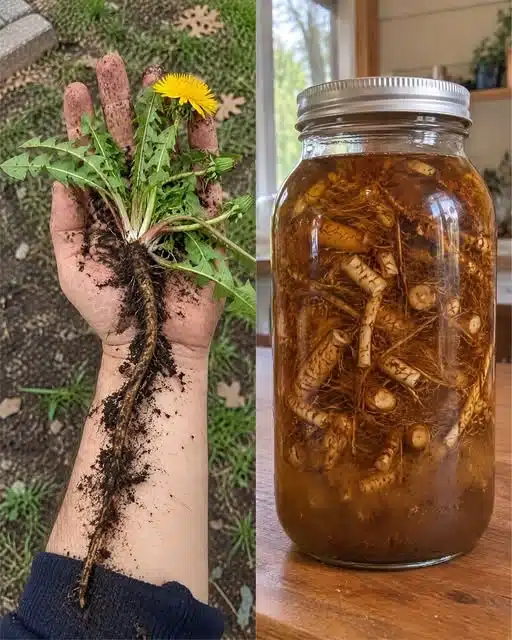
A Dandelion Root Tincture is a traditional herbal preparation made by steeping cleaned dandelion roots in alcohol for several weeks. The long infusion extracts flavor and plant compounds from the roots, creating the deep amber liquid often seen in homemade herbal preparations like the jar in the image.
Dandelion is much more than a common lawn plant. Its leaves, flowers, and roots have all been used as foods or traditional herbal ingredients. The roots have an earthy, slightly bitter flavor and can also be roasted for tea, chopped into recipes, or infused into other liquids.
It is important, however, to separate traditional use from medical claims. Dandelion tincture should not be promoted as a cure for liver disease, kidney problems, diabetes, cancer, rapid weight loss, or any other medical condition. Herbal preparations can also interact with medications, so frequent or concentrated use deserves extra caution.
This guide explains how to identify and clean dandelion roots, prepare a traditional tincture, make an alcohol-free alternative, store it correctly, and use dandelion in more everyday culinary ways.
Recipe Overview
| Recipe Details | Information |
|---|---|
| Recipe Name | Dandelion Root Tincture |
| Focus Keyword | Dandelion Root Tincture |
| Prep Time | 20–30 minutes |
| Infusion Time | 4–6 weeks |
| Active Work | About 30 minutes |
| Difficulty | Easy |
| Main Ingredient | Fresh dandelion root |
| Traditional Liquid | Vodka or similar spirit |
| Alcohol-Free Option | Apple cider vinegar |
| Flavor | Earthy, bitter, herbal |
| Storage | Cool, dark place |
| Best For | Traditional herbal preparation |
| Important Note | Not a medical treatment |
What Is Dandelion Root?
Dandelion, commonly known as Taraxacum officinale, is a familiar flowering plant with bright yellow flowers and a long taproot.
The entire plant is edible when correctly identified and harvested from a clean location.
Young leaves can be added to salads or cooked like other bitter greens.
Flowers can be used in syrups, jellies, teas, or other traditional recipes.
The root is the part used for this infusion.
Dandelion roots are usually thickest in mature plants and can extend surprisingly deep into the soil, which is why the root shown in the image is so long.
Why People Make Dandelion Root Tincture
A tincture is a concentrated herbal infusion traditionally made by soaking plant material in alcohol.
Alcohol acts as both an extracting liquid and a preservative.
Over several weeks, the roots release color, aroma, flavor, and various naturally occurring compounds into the liquid.
Dandelion preparations have a long history of traditional herbal use, particularly in digestive and bitter-herb preparations.
That history does not mean a tincture has been proven to treat medical conditions.
For most people interested in homemade herbal recipes, it is better to think of this as a traditional botanical preparation rather than a medicine.
Important Foraging Safety
The most important part of this recipe happens before anything reaches the jar.
Only harvest plants that you can confidently identify as dandelion.
Do not rely only on a yellow flower.
Several plants can look similar.
Classic dandelion characteristics include a basal rosette of deeply toothed leaves, hollow flower stems, a single flower per stem, milky sap, and a long taproot.
If you are uncertain about identification, do not use the plant.
Buying dried dandelion root from a reputable food or herbal supplier is a safer alternative for beginners.
Where Not to Harvest Dandelions
Do not harvest plants growing:
- Beside heavily trafficked roads
- On chemically treated lawns
- In areas sprayed with herbicides
- Near industrial sites
- In contaminated soil
- In places regularly visited by pets
- On land where harvesting is prohibited
Dandelion roots absorb substances from the soil.
A beautiful plant is not automatically a clean plant.
When possible, harvest from untreated soil that you know has not been exposed to pesticides or other contaminants.
Best Time to Harvest Dandelion Roots
Roots can technically be harvested at different times of year.
Many traditional foragers prefer either spring or fall.
Spring roots are collected while the plant is actively growing.
Fall roots tend to be larger after the plant has spent the growing season storing energy underground.
Use a narrow garden trowel or digging fork.
Loosen the soil deeply around the plant rather than simply pulling the leaves.
The taproot breaks easily.
Even if the entire root does not come out, the usable portion can still be cleaned and prepared.
Ingredients
Traditional Dandelion Root Tincture
- 1–2 cups fresh dandelion roots
- Enough 80-proof vodka to completely cover the roots
- 1 clean glass jar with a tight-fitting lid
Optional Flavor Additions
- Small piece of fresh ginger
- Cinnamon stick
- A few strips of orange peel
- Lemon peel
For a classic preparation, use only dandelion root and alcohol.
Alcohol-Free Alternative
If you do not want to use alcohol, you can make a dandelion root vinegar infusion instead.
Use:
- 1–2 cups cleaned dandelion roots
- Raw or regular apple cider vinegar
- Clean glass jar
- Non-reactive plastic lid or parchment barrier
Vinegar is acidic and can react with some metal lids.
If your jar has a metal lid, place parchment or wax paper between the vinegar and lid.
An alcohol-free vinegar infusion does not have exactly the same extraction or shelf life as an alcohol tincture, but it can be used as a culinary herbal preparation.
Equipment
| Equipment | Purpose |
|---|---|
| Garden fork or trowel | Harvesting roots |
| Vegetable brush | Cleaning roots |
| Sharp knife | Chopping |
| Cutting board | Preparation |
| Glass jar | Infusion |
| Fine-mesh strainer | Straining |
| Cheesecloth | Optional finer filtering |
| Dark glass bottle | Long-term storage |
| Label | Recording ingredients and date |
Step-by-Step Instructions
Step 1: Identify the Plant Carefully
Make absolutely sure the plant is true dandelion.
If you are not experienced with plant identification, use commercially purchased dandelion root instead.
Correct identification is more important than any other step.
Step 2: Dig Up the Root
Loosen the soil around the plant.
Dig downward alongside the taproot.
Try to remove as much of the root as possible without breaking it.
Shake off excess soil outdoors.
Step 3: Remove the Leaves
Cut the leaves from the root crown.
You can save clean young leaves for cooking if desired.
Discard damaged or questionable plant material.
Step 4: Wash Thoroughly
Dandelion roots can hold a surprising amount of soil.
Rinse them under cool running water.
Use a vegetable brush to clean the grooves and rough surfaces.
Repeat until the rinse water is clear.
Avoid using roots that appear rotten, moldy, or damaged.
Step 5: Chop the Roots
Cut the clean roots into thin coins or small pieces.
Smaller pieces expose more surface area to the liquid.
You do not need to peel the roots if they have been cleaned thoroughly.
For the jar appearance shown in the image, some longer root pieces can be left intact, although chopped pieces generally extract more efficiently.
Step 6: Fill the Jar
Place the chopped roots into a clean glass jar.
Fill it approximately halfway to two-thirds full with fresh root.
Do not compress the roots tightly.
Leave enough room for liquid to circulate between the pieces.
Step 7: Add the Alcohol
Pour vodka over the roots until they are completely submerged.
Leave approximately one inch of space at the top of the jar.
All plant material should remain beneath the liquid.
Exposed roots can deteriorate.
Step 8: Seal the Jar
Close the jar tightly.
Label it with:
- Dandelion root
- Type of liquid used
- Starting date
- Approximate finishing date
Labels are important because several jars of herbal infusions can quickly become difficult to distinguish.
Step 9: Store in a Dark Place
Place the jar in a cool, dark cupboard.
Avoid direct sunlight.
Let the roots steep for approximately 4–6 weeks.
Some traditional preparations are infused longer.
Step 10: Shake Regularly
Shake the jar gently every day or every few days.
This redistributes the plant material and liquid.
Check occasionally to ensure the roots remain submerged.
If necessary, add a little more alcohol.
Step 11: Strain
After the infusion period, place a fine-mesh strainer over a clean bowl or measuring jug.
Pour the contents through the strainer.
For a clearer liquid, line the strainer with cheesecloth.
Press gently to extract remaining liquid from the roots.
Discard or compost the spent roots.
Step 12: Bottle
Transfer the strained liquid to a clean bottle.
Dark amber glass is useful because it limits light exposure.
Label the bottle again with the name and date.
Store it in a cool, dark location.
What Does Dandelion Root Tincture Taste Like?
The flavor is naturally bitter and earthy.
Fresh dandelion root has a slightly vegetal quality.
Alcohol makes the preparation sharper.
Orange peel or cinnamon can soften the bitterness somewhat, but they also change the traditional flavor.
If you strongly dislike bitter herbs, roasted dandelion root tea may be a better starting point.
Roasting gives the root a deeper, almost coffee-like flavor.
Dandelion Root Tea Instead of Tincture
If you want a simple beverage rather than a concentrated tincture, make dandelion root tea.
Use:
- 1 tablespoon chopped dried dandelion root
- 2 cups water
Add the root and water to a saucepan.
Bring to a gentle boil.
Reduce the heat and simmer for approximately 10–15 minutes.
Strain.
Serve warm.
Add lemon, cinnamon, or a small amount of honey if desired.
This is much more like an everyday drink than an alcohol tincture.
Roasted Dandelion Root Tea
Roasting changes the flavor dramatically.
Clean and chop fresh roots into small pieces.
Dry them thoroughly.
Spread the pieces over a baking sheet.
Roast at about 300°F / 150°C until dry, brown, and fragrant, stirring occasionally.
Watch carefully toward the end.
The pieces should smell toasted rather than burned.
Use the roasted root to prepare tea in the same way you would use dried herbal roots.
The flavor is dark, earthy, and slightly bitter.
Dandelion Root Coffee-Style Drink
Roasted dandelion root is sometimes brewed as a caffeine-free coffee-style beverage.
It does not taste exactly like coffee, but roasting creates caramelized, toasted flavors.
Combine roasted dandelion root with chicory for an even deeper flavor.
Serve with warm milk or a dairy-free alternative.
Cinnamon can add natural sweetness without much added sugar.
Can Dandelion Root “Detox” the Liver?
This is one of the most common claims surrounding dandelion.
It is better not to describe dandelion tincture as a liver detox.
Your liver already performs essential metabolic and detoxification functions continuously.
Eating or drinking a particular herb does not simply “flush toxins” from the liver.
Dandelion contains plant compounds of nutritional and scientific interest, but that is different from proving that a homemade tincture treats liver disease.
People with liver problems should seek appropriate medical care rather than relying on herbal detox products.
Can Dandelion Root Clean the Kidneys?
Dandelion should not be used as a substitute for medical treatment of kidney conditions.
Fluid intake and normal kidney function are responsible for filtering blood and producing urine.
A homemade herbal preparation cannot be assumed to clean or repair the kidneys.
Anyone with kidney disease, electrolyte problems, or medications affecting kidney function should be especially cautious with concentrated herbal products.
Does Dandelion Root Help Digestion?
Bitter herbs have traditionally been consumed before or after meals in many food cultures.
Some people enjoy dandelion because of that bitter flavor.
However, ongoing digestive problems can have many causes.
A tincture should not be used to delay medical evaluation for severe abdominal pain, persistent vomiting, blood in the stool, unexplained weight loss, or major changes in digestion.
For everyday culinary use, roasted dandelion tea is a simpler option than concentrated tincture.
Does Dandelion Root Cause Weight Loss?
There is no reason to expect dandelion root tincture to produce major or targeted fat loss.
Changes in body fat depend much more on overall food intake, physical activity, sleep, health conditions, and long-term consistency.
Some herbal products can change water balance temporarily.
A change in body water is not the same thing as losing body fat.
Avoid claims that dandelion rapidly melts belly fat or permanently reduces weight.
Dandelion and Medication Interactions
Herbs can interact with medications even when they are natural.
Extra caution may be appropriate for people using medicines that influence:
- Blood sugar
- Blood pressure
- Fluid balance
- Blood clotting
- Lithium levels
Dandelion may also be unsuitable for some people with certain gallbladder, kidney, or digestive conditions.
If you regularly take prescription medication and want to use concentrated dandelion preparations, check with a physician or pharmacist who can evaluate your specific medications.
Allergy Considerations
Dandelion belongs to the Asteraceae plant family.
This family also includes plants such as ragweed, daisies, chrysanthemums, and marigolds.
People with significant allergies to plants in this family may be more likely to react to dandelion.
Stop using the preparation and seek medical help for signs of a serious allergic reaction, such as difficulty breathing, facial swelling, or rapidly spreading hives.
Fresh Root vs. Dried Root
| Fresh Dandelion Root | Dried Dandelion Root |
|---|---|
| Higher moisture content | Lower moisture |
| Must be cleaned carefully | Usually ready to use |
| Seasonal | Available year-round |
| Mild earthy flavor | More concentrated flavor |
| Good for tinctures | Good for tea and tinctures |
| Requires safe harvesting | Easier for beginners |
If you are new to herbal preparations, purchased dried root is often more convenient.
It also removes the uncertainty of foraging.
How to Make a Dandelion Vinegar Infusion
For an alcohol-free culinary preparation, clean and chop the dandelion roots.
Fill a glass jar approximately halfway with root.
Cover completely with apple cider vinegar.
Seal using a non-reactive lid.
Store in a cool, dark location for approximately 2–4 weeks.
Shake occasionally.
Strain and refrigerate.
The finished vinegar can be used in salad dressings, marinades, or other recipes where you would normally use flavored vinegar.
Do not treat the vinegar infusion as a replacement for medical treatment.
Dandelion Root Salad Dressing
One practical way to use a dandelion vinegar infusion is in dressing.
Whisk together:
- 2 tablespoons dandelion-infused vinegar
- 4 tablespoons olive oil
- 1 teaspoon Dijon mustard
- 1 teaspoon honey
- Black pepper
- Small pinch of salt
Use it over green salads, roasted vegetables, beans, or grain bowls.
This turns the herbal preparation into a normal culinary ingredient rather than relying on exaggerated health claims.
How to Store Fresh Dandelion Roots
If you cannot prepare them immediately, wash only enough to remove heavy soil.
Wrap the roots loosely in a slightly damp towel.
Place in a refrigerator container or bag.
Use relatively soon for the best quality.
For longer storage, roots can be cleaned, chopped, dried, and stored in an airtight container once completely dry.
Any moisture remaining during storage can encourage mold.
How to Dry Dandelion Roots
Wash thoroughly.
Cut into small pieces.
Spread in a single layer.
Dry using a food dehydrator according to its instructions or use a very low oven with good airflow.
The pieces should become completely dry and hard.
Do not store partially damp roots in a sealed jar.
Once dry, keep in an airtight container away from heat, humidity, and direct light.
Common Mistakes and How to Avoid Them
Harvesting an Unidentified Plant
Never consume a wild plant unless you are confident about identification.
Harvesting from Treated Lawns
Herbicides and pesticides make these plants unsuitable for culinary use.
Not Cleaning the Roots Thoroughly
Taproots hold a great deal of soil.
Scrub carefully.
Leaving Roots Above the Liquid
Keep all plant material submerged during infusion.
Forgetting the Date
Label the jar when you begin.
Using a Dirty Jar
Clean equipment helps protect the quality of the preparation.
Making Medical Claims
Traditional use does not equal proof that the tincture cures disease.
Using Huge Quantities
Concentrated herbal products should not be treated like unlimited beverages.
Make-Ahead and Storage
The tincture itself is naturally a make-ahead preparation because it requires several weeks of maceration.
Keep the jar away from direct heat and sunlight during this period.
After straining, store the finished tincture in a tightly closed dark glass bottle.
For vinegar infusions, refrigeration after straining is a prudent approach.
Always discard any homemade preparation that develops unexpected mold, unusual fermentation, off odors, or other signs of spoilage.
Frequently Asked Questions
What is dandelion root tincture?
It is a traditional herbal preparation made by soaking dandelion root in alcohol for several weeks and then straining the liquid.
Can I use fresh dandelion roots?
Yes, provided the plant is correctly identified and harvested from uncontaminated soil.
Can I use dried roots?
Yes. Dried root is often more convenient.
How long should the roots steep?
About 4–6 weeks is a common traditional preparation period.
Do I need to peel the roots?
No. Thorough washing and scrubbing are usually more important.
Can I use vodka?
Yes. Standard 80-proof vodka is commonly used for simple home tinctures.
Can I make it without alcohol?
Yes. Apple cider vinegar can be used to make a culinary herbal vinegar instead.
Is vinegar exactly the same as an alcohol tincture?
No. Different liquids extract and preserve plant components differently.
Can I make dandelion tea instead?
Yes. Simmer chopped dried root in water for about 10–15 minutes.
Can I roast the roots?
Yes. Roasting creates a darker, more coffee-like flavor.
Does dandelion contain caffeine?
Dandelion itself does not contain caffeine.
Can roasted dandelion replace coffee?
It can be used as a caffeine-free coffee-style beverage, although the flavor is different.
Does dandelion detox the liver?
It should not be promoted as a proven liver detox treatment.
Does it clean the kidneys?
No herbal drink should be assumed to clean or treat the kidneys.
Does it cause weight loss?
It is not a reliable weight-loss treatment.
Can it reduce belly fat?
No herb selectively burns abdominal fat.
Can it cure digestive problems?
No. Persistent digestive symptoms deserve proper medical evaluation.
Can dandelion interact with medication?
Yes, herbal products can interact with medications. People taking prescription drugs should discuss concentrated use with a healthcare professional.
Can people with plant allergies react to dandelion?
Yes. Dandelion belongs to the same broad plant family as ragweed and several other common allergens.
Can I harvest dandelions from my lawn?
Only if you know the lawn has not been chemically treated and the plant is correctly identified.
Should I harvest near a road?
No. Avoid areas potentially contaminated by vehicle pollution or other chemicals.
Can I eat the leaves too?
Young dandelion leaves are edible when properly identified and harvested safely.
Can I eat the flowers?
Yes, dandelion flowers are also traditionally used in food preparations.
Why is my tincture bitter?
Dandelion root naturally has a bitter, earthy flavor.
Can I add cinnamon?
Yes, although it changes the flavor of the traditional preparation.
Can I add ginger?
Yes. Ginger pairs well with dandelion.
How should I store the finished preparation?
Keep tightly sealed and protected from heat and direct sunlight; vinegar-based preparations are best refrigerated.
Final Thoughts
A Dandelion Root Tincture is one of the classic ways people have traditionally preserved and extracted the earthy, bitter character of dandelion roots.
The process itself is simple: correctly identify the plant, harvest from clean soil, scrub the root thoroughly, chop it, cover it completely with the chosen liquid, allow it to infuse, and strain.
The most important parts are safety and realistic expectations.
Wild plants must be correctly identified. Harvesting locations matter. Clean equipment matters. And a homemade tincture should never be promoted as a miracle treatment for the liver, kidneys, diabetes, weight loss, cancer, or other illnesses.
If you prefer a gentler everyday option, dandelion root can also be roasted and brewed as tea. If you want an alcohol-free culinary preparation, an apple cider vinegar infusion is another possibility.
Used thoughtfully, dandelion can be an interesting ingredient that connects ordinary backyard plants with traditional food preparation and modern home cooking.