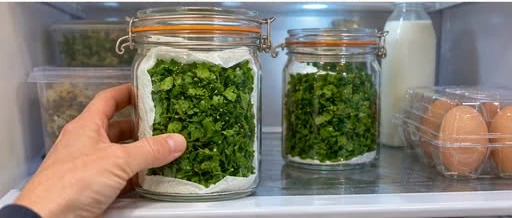
Fresh parsley is one of the most useful ingredients to keep in your kitchen. It adds beautiful color, fresh flavor, and a delicious herbal aroma to countless recipes, including roasted chicken, homemade soups, pasta, salads, sauces, vegetables, and meat dishes. However, keeping parsley fresh can be surprisingly difficult, especially when you purchase a large bunch and only need a small amount at a time.
One of the biggest problems with fresh parsley is that it can quickly become wilted, yellow, or slimy when stored incorrectly. Sometimes, a bunch that looks perfectly fresh at the grocery store starts losing its quality after just a few days in the refrigerator.
The good news is that you can make your fresh parsley last longer with a simple preparation and refrigerator storage method. By cleaning the leaves, removing excess moisture, and using suitable airtight glass containers, you can keep parsley organized, convenient, and ready for everyday cooking.
This easy method is perfect for busy households, meal preparation, and anyone who wants to reduce food waste while getting more value from their grocery shopping.
In this complete guide, you’ll learn how to select fresh parsley, wash it properly, chop it, dry it, and store it correctly. You’ll also discover the best containers to use, common mistakes to avoid, and several practical ways to use your preserved parsley in everyday meals.
Recipe Overview: Fresh Parsley Storage Method
| Category | Details |
|---|---|
| Method | Refrigerator storage |
| Main ingredient | Fresh parsley |
| Preparation time | 15–20 minutes |
| Storage time | Approximately 5–7 days for chopped parsley |
| Storage location | Refrigerator |
| Difficulty | Easy |
| Equipment | Knife, cutting board, bowl, glass jars |
| Special supplies | Paper towels |
| Best for | Soups, salads, sauces, chicken, vegetables |
| Cooking required | No |
Important: Storage time depends on the freshness of the parsley, how thoroughly it is dried, refrigerator temperature, and container conditions. Always inspect herbs before using them.
Why You’ll Love This Fresh Parsley Storage Method
There are many reasons to prepare and store parsley ahead of time instead of leaving an entire bunch untouched in its original packaging.
1. Helps Reduce Food Waste
Fresh herbs are often purchased in larger quantities than a recipe requires. Instead of allowing the remaining parsley to wilt in the refrigerator, you can prepare it for easier storage.
2. Saves Time During Meal Preparation
Once your parsley is washed, dried, and chopped, you can add it directly to your favorite recipes. This is particularly helpful when preparing quick dinners after a busy day.
3. Makes Your Refrigerator More Organized
Storing prepared parsley in glass jars keeps it neatly contained and makes it easier to see how much you have available.
4. Helps Maintain Fresh Flavor
Removing excess moisture and keeping parsley refrigerated helps protect its quality, aroma, and natural green color.
5. Makes Everyday Cooking Easier
You can use prepared parsley in homemade sauces, roasted potatoes, chicken marinades, rice dishes, soups, and many other meals without washing and chopping a new bunch every time.
6. An Affordable Kitchen Organization Trick
You don’t need expensive herb-preserving equipment. Basic kitchen supplies, clean jars, and paper towels are usually enough.
Ingredients and Supplies You’ll Need
This storage technique uses simple ingredients and equipment that most households already have.
| Ingredient or Supply | Quantity | Purpose |
|---|---|---|
| Fresh parsley | 1 large bunch | Main ingredient |
| Cool water | As needed | Washing |
| Paper towels | 3–4 sheets | Removing moisture |
| Clean glass jars | 1–2 | Storage |
| Airtight lids | As needed | Covering jars |
| Sharp kitchen knife | 1 | Chopping |
| Cutting board | 1 | Preparation |
| Large mixing bowl | 1 | Washing |
How to Choose the Best Fresh Parsley
The quality of your parsley before storage makes a big difference in how long it remains usable.
Look for bunches with:
- Bright, vibrant green leaves.
- Firm, fresh-looking stems.
- A pleasant herbal aroma.
- No visible mold.
- No slimy or damaged sections.
- Leaves that are not excessively wilted.
Flat-leaf parsley and curly parsley can both be stored using this method.
Flat-leaf parsley is particularly convenient for chopping and adding to sauces, marinades, and cooked dishes.
How to Store Fresh Parsley in the Refrigerator Step by Step
The secret to keeping parsley fresh is controlling moisture while protecting the leaves from unnecessary damage.
Follow these steps carefully for the best results.
Step 1: Inspect and Sort the Parsley
Begin by removing the parsley from its original packaging.
Spread the bunch over a clean kitchen counter or cutting board. Separate the leaves and inspect the stems carefully.
Remove any yellow, brown, damaged, or slimy leaves. Discard any portions showing mold or signs of spoilage.
Keep only the healthy green parsley.
This first step is important because damaged leaves can deteriorate quickly and affect the quality of the remaining herbs.
Step 2: Wash the Parsley Thoroughly
Fill a large bowl with cool water and place the parsley inside.
Gently move the leaves around with your hands to remove dirt, dust, and small particles that may be trapped between them.
Lift the parsley out of the water and discard the dirty water. If necessary, repeat the process with fresh water.
You can also rinse the parsley under cool running water.
Avoid using hot water because it can damage the delicate leaves and make them wilt more quickly.
Step 3: Remove the Thick Stems
After washing, separate the leaves from any thick stems you don’t want to use.
You can keep the thinner stems because they contain plenty of flavor and work well in soups, stocks, and sauces.
If you prefer finely chopped parsley for everyday cooking, remove the thicker portions before chopping.
Step 4: Chop the Fresh Parsley
Place the clean parsley on a cutting board.
Using a sharp kitchen knife, chop the leaves into small pieces.
You can choose a fine or medium chop depending on your cooking preferences.
For salads and garnishes, slightly larger pieces may be preferable. For sauces, soups, and marinades, finely chopped parsley is often more convenient.
Avoid repeatedly crushing or chopping the leaves because excessive handling can bruise them and release moisture.
Step 5: Dry the Parsley Completely
This is one of the most important steps in the entire process.
Spread the chopped parsley over a clean kitchen towel or several layers of paper towels.
Gently pat the parsley to remove visible moisture.
You can also use a salad spinner before chopping to remove water from the whole leaves.
If necessary, allow the parsley to air-dry for several additional minutes.
Do not place visibly wet parsley into a sealed storage jar. Trapped moisture can encourage spoilage and make the leaves slimy.
Step 6: Prepare Your Glass Jars
Choose clean glass jars with suitable airtight lids.
Wash the jars thoroughly and make sure they are completely dry before using them.
If you are storing a large quantity of parsley, divide it between two smaller jars rather than packing everything into one container.
This makes it easier to access the parsley without repeatedly exposing the entire batch to air and moisture.
Step 7: Add the Parsley to the Jars
Carefully transfer the completely dry chopped parsley into the prepared jars.
Do not press the parsley down too firmly. Leave enough space so that the leaves are not crushed.
Place a small piece of clean, dry paper towel inside the jar if needed to absorb minor amounts of residual moisture.
Close the lid and place the container in the refrigerator.
Step 8: Check and Maintain the Parsley
Check the parsley regularly during storage.
If the paper towel becomes damp, replace it with a fresh one.
Remove any leaves that begin deteriorating, and discard the entire batch if there are signs of mold, slime, or an unpleasant smell.
Always use a clean, dry spoon or fork when removing parsley from the container.
These simple habits help maintain quality and reduce unnecessary contamination.
The Best Way to Keep Parsley Fresh Longer
Although the glass-jar method is convenient, there are several other storage techniques worth knowing.
The best method depends on whether you want to keep whole parsley sprigs, chopped parsley, or herbs for long-term storage.
Method 1: Store Whole Parsley Like Fresh Flowers
If you prefer keeping parsley unchopped, trim a small amount from the bottom of the stems.
Place the stems upright in a glass containing a little fresh water.
Cover the leaves loosely with a clean bag and refrigerate.
Change the water regularly and remove any deteriorating leaves.
This method can help whole parsley remain fresh longer than leaving it loose in its original grocery packaging.
Method 2: Store Chopped Parsley in Glass Jars
This is the convenient method described in this guide.
Wash, chop, and thoroughly dry the parsley before transferring it into clean containers.
Keep the jars refrigerated and check them regularly.
This method is particularly useful when you frequently prepare meals and want parsley ready to use.
Method 3: Freeze Parsley for Longer Storage
If you have more parsley than you can reasonably use within a week, freezing is an excellent alternative.
Wash the parsley, remove excess moisture, and chop it into small pieces.
Divide it into freezer-safe containers or small freezer bags.
You can also freeze chopped parsley in an ice cube tray with a little water or olive oil, depending on how you plan to use it.
Once frozen, transfer the cubes into a labeled freezer bag.
Frozen parsley is best used in cooked dishes because its texture becomes softer after thawing.
Common Mistakes to Avoid When Storing Fresh Parsley
Even a simple storage method can fail if a few important details are overlooked.
Here are the most common mistakes to avoid.
Storing Parsley While It Is Still Wet
Excess water can collect inside the container and encourage spoilage.
Always dry the leaves thoroughly before placing them in jars.
Using a Dirty Container
Old food residue and moisture inside a jar can affect the quality of fresh herbs.
Wash and completely dry your containers before use.
Packing the Parsley Too Tightly
Crushing the leaves can damage their texture and make them more likely to deteriorate.
Use containers that provide enough room for the herbs.
Forgetting to Check the Paper Towels
If the paper towels become damp, replace them promptly.
Leaving wet paper towels inside the jar can defeat the purpose of controlling moisture.
Keeping Parsley at Room Temperature
Fresh parsley generally maintains its quality better when refrigerated.
Avoid leaving prepared parsley on the kitchen counter for extended periods.
Using Parsley That Already Shows Signs of Spoilage
Storage cannot restore damaged herbs.
Always begin with fresh parsley and discard anything that becomes moldy, slimy, or unpleasant-smelling.
Best Ways to Use Fresh Parsley in Everyday Cooking
Once your parsley is prepared, you will find countless ways to incorporate it into your meals.
1. Garlic Butter Chicken
Mix chopped parsley with melted butter, minced garlic, lemon juice, and black pepper.
Brush the mixture over chicken before or after cooking for a flavorful finish.
2. Homemade Vegetable Soup
Add parsley near the end of cooking to bring a fresh herbal flavor to vegetable, chicken, and beef soups.
3. Roasted Potatoes
Combine chopped parsley with olive oil, garlic, salt, and pepper.
Toss the mixture with roasted potatoes just before serving.
4. Mediterranean Salad
Mix fresh parsley with chopped tomatoes, cucumber, red onion, lemon juice, and olive oil.
It makes a refreshing side dish for grilled chicken and fish.
5. Homemade Pasta Sauce
Add parsley to tomato sauce, creamy garlic sauce, or olive oil-based pasta dishes.
It provides a fresh finishing touch and complements many different ingredients.
6. Rice and Grain Dishes
Sprinkle parsley over cooked rice, couscous, quinoa, or other grain dishes.
It adds color and a fresh herbal aroma.
Make-Ahead Tips for Busy Kitchens
Preparing parsley in advance is a simple way to make everyday cooking more efficient.
Consider these practical tips:
- Buy fresh parsley when it is in season and looks healthy.
- Prepare only the quantity you expect to use within the next several days.
- Keep whole and chopped parsley in separate containers if you use both.
- Label freezer containers with the preparation date.
- Keep your refrigerator organized so that the parsley is easy to find.
- Freeze any extra parsley that you cannot use before it deteriorates.
You can also prepare other fresh herbs using similar principles, although storage times and ideal conditions may vary.
How to Store Fresh Parsley Safely
Proper food handling is important whenever you prepare fresh herbs in advance.
Follow these storage guidelines:
| Storage Method | Recommended Storage |
|---|---|
| Whole parsley in refrigerator | Approximately 1–2 weeks, depending on condition |
| Chopped parsley in refrigerator | Approximately 5–7 days |
| Frozen chopped parsley | Best quality for approximately 3–6 months |
| Room temperature | Not recommended for extended storage |
Keep your refrigerator at 40°F (4°C) or below.
Use clean utensils when handling stored herbs, and avoid leaving the container open for long periods.
Never rely on appearance alone if parsley develops an unusual odor, sliminess, or mold.
Frequently Asked Questions
1. How long does fresh parsley last in the refrigerator?
Whole parsley can often remain usable for approximately one to two weeks when stored properly. Chopped parsley generally has a shorter storage life, often around five to seven days.
Actual freshness depends on the condition of the herbs and storage conditions.
2. Should I wash parsley before storing it?
You can wash parsley before storage, but it must be dried thoroughly afterward.
Alternatively, you can store whole parsley unwashed in a suitable refrigerator container and wash it just before use.
3. Can I store chopped parsley in a glass jar?
Yes. Clean, completely dry glass jars are convenient for storing chopped parsley.
Make sure the parsley is thoroughly dried before placing it inside, and inspect it regularly.
4. Why does parsley become slimy in the refrigerator?
Excess moisture, damaged leaves, poor ventilation, and unsuitable storage conditions can contribute to sliminess.
Remove damaged portions and avoid storing wet parsley in a tightly sealed container.
5. Can I freeze fresh parsley?
Absolutely. Wash, dry, and chop the parsley before placing it in freezer-safe bags or containers.
Frozen parsley works especially well in soups, stews, sauces, and cooked dishes.
6. Is it better to store parsley whole or chopped?
Whole parsley generally maintains its quality longer because chopping damages the leaves and increases their exposure to air.
However, chopped parsley is more convenient for everyday meal preparation.
7. Can I use paper towels when storing parsley?
Yes. A clean, dry paper towel can help absorb small amounts of excess moisture inside a storage container.
Replace it whenever it becomes damp.
8. Can I store parsley with other fresh herbs?
You can store different herbs in the same refrigerator, but separate containers are usually better.
Different herbs have different moisture requirements and storage lives.
9. Can I use parsley that has started turning yellow?
A few yellow leaves may indicate that the parsley is losing freshness. Remove deteriorating portions and inspect the remaining leaves carefully.
Do not use parsley that is moldy, slimy, or has an unpleasant smell.
10. Does freezing parsley change its texture?
Yes. Frozen parsley usually becomes softer after thawing.
It is therefore better suited to cooked recipes than fresh garnishes and salads.
11. What is the best container for fresh parsley?
Clean glass jars with suitable lids are convenient for chopped, thoroughly dried parsley.
For whole parsley, a refrigerator-safe container or a glass of water around the stems may be more suitable.
12. Can I add salt to fresh parsley before storing it?
Salt is not necessary for ordinary refrigerated parsley storage.
Adding salt does not replace proper washing, drying, refrigeration, and safe storage practices.
Final Thoughts
Fresh parsley is an inexpensive ingredient that can make everyday meals more flavorful and appealing. Unfortunately, it can lose its freshness quickly when stored incorrectly.
The good news is that a little preparation can make a big difference. By selecting healthy leaves, washing them carefully, removing excess moisture, and storing chopped parsley in clean glass jars, you can make your herbs easier to use and help reduce unnecessary food waste.
Whether you use parsley in chicken recipes, homemade soups, pasta sauces, roasted vegetables, or fresh salads, having it prepared and ready in the refrigerator makes cooking much more convenient.
Try this simple storage method the next time you bring home a fresh bunch of parsley. With proper handling and regular checks, you can make better use of your herbs and enjoy their fresh flavor throughout the week.