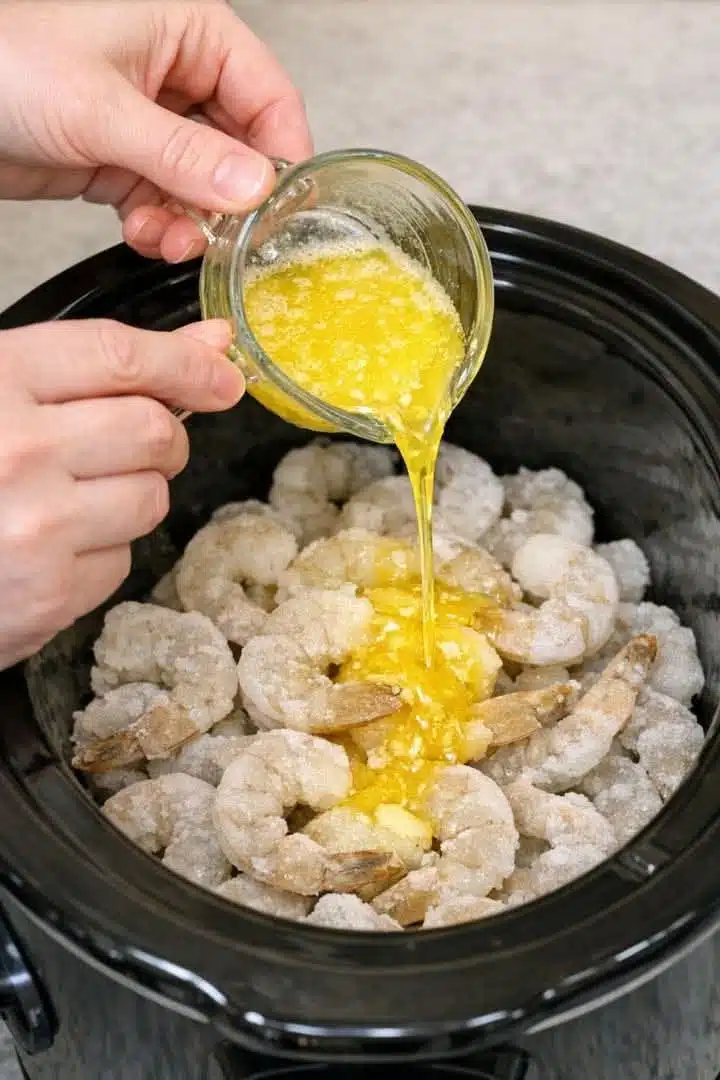
This Slow Cooker Garlic Butter Shrimp is a simple seafood dinner made with tender shrimp, melted butter, fresh garlic, lemon, herbs, and a touch of seasoning. The ingredients come together into a rich garlic-butter sauce that is perfect for spooning over rice, pasta, mashed potatoes, or crusty bread.
Inspired by the shrimp-and-butter slow-cooker preparation shown in the image, this recipe keeps the ingredient list straightforward while focusing on the most important part of cooking shrimp: short cooking time. Shrimp cook much faster than chicken, beef, or pork, so this is not an all-day crockpot recipe.
For the best texture, use thawed raw shrimp and cook only until they turn pink, opaque, and reach a safe internal temperature. Cooking them for several hours will make them rubbery, so this recipe works best when you want the convenience of a slow cooker without leaving dinner unattended all day.
The finished dish is buttery, garlicky, slightly citrusy, and easy to customize with Cajun seasoning, Parmesan, cream, Old Bay-style seasoning, red pepper flakes, or fresh herbs.
Recipe Overview
| Recipe Details | Information |
|---|---|
| Recipe Name | Slow Cooker Garlic Butter Shrimp |
| Focus Keyword | Slow Cooker Garlic Butter Shrimp |
| Prep Time | 10 minutes |
| Cook Time on LOW | About 45–75 minutes |
| Cook Time on HIGH | About 25–40 minutes |
| Total Time | About 1 hour |
| Servings | 4–6 |
| Course | Dinner, Main Dish |
| Cuisine | American Seafood |
| Difficulty | Very Easy |
| Main Ingredient | Shrimp |
| Sauce | Garlic butter lemon sauce |
| Texture | Tender and juicy |
| Best For | Easy dinners, entertaining |
| Make-Ahead Friendly | Partially |
| Freezer Friendly | Best before cooking |
Why You’ll Love This Garlic Butter Shrimp
The biggest advantage of this recipe is how little preparation it requires.
There is no complicated marinade and no long list of ingredients. Shrimp, butter, garlic, lemon, and seasonings create plenty of flavor on their own.
It is also a fast slow-cooker recipe.
Unlike pot roast or pulled pork, shrimp do not need hours to become tender. They are naturally delicate and cook quickly.
That makes this a useful recipe when you want the convenience of one-pot cooking but do not have all day.
The buttery cooking liquid also becomes an instant sauce.
Serve it over rice and the rice absorbs the garlic butter. Toss it with pasta and you have an easy seafood pasta dinner. Add bread and you can soak up every drop of sauce.
Ingredients
For the Garlic Butter Shrimp
- 2 pounds large raw shrimp, peeled and deveined
- 8 tablespoons unsalted butter, melted
- 5 garlic cloves, finely minced
- 2 tablespoons fresh lemon juice
- 1 teaspoon lemon zest
- 1 teaspoon paprika
- 1 teaspoon garlic powder
- 1/2 teaspoon onion powder
- 1/2 teaspoon black pepper
- 1/2 teaspoon salt, or to taste
- 1/4 teaspoon red pepper flakes, optional
- 2 tablespoons chopped fresh parsley
- Lemon wedges for serving
Optional Additions
- 1 teaspoon Cajun seasoning
- 1 teaspoon Old Bay-style seafood seasoning
- 1/2 cup grated Parmesan
- 1/3 cup heavy cream
- 1 tablespoon Worcestershire sauce
- Fresh dill
- Chopped green onions
- Extra garlic
- Hot sauce
Best Shrimp to Use
Large or extra-large shrimp work best because they are less likely to overcook before you notice.
Shrimp labeled around 16/20, 21/25, or 26/30 count per pound are good choices.
Smaller shrimp cook extremely quickly and can turn rubbery in a slow cooker.
Peeled and deveined shrimp are the most convenient.
You can leave the tails on for presentation or remove them for easier eating.
For pasta and rice dishes, tail-off shrimp are usually more practical.
Raw vs. Cooked Shrimp
Use raw shrimp for this recipe.
Pre-cooked shrimp only need reheating, so putting them in the slow cooker for the full cooking period can easily make them tough.
If cooked shrimp are all you have, prepare the garlic-butter sauce first and add the shrimp during only the final few minutes, just long enough to warm through.
Raw shrimp absorb more flavor as they cook and give you better control over texture.
Should Frozen Shrimp Go Straight Into the Slow Cooker?
For best texture and more predictable cooking, thaw frozen shrimp first.
Thaw them overnight in the refrigerator or place the sealed shrimp under cold running water until flexible.
Pat them dry before placing them in the slow cooker.
Thawed shrimp cook much more evenly.
Starting with a solid block of frozen shrimp can make timing unpredictable, with some shrimp overcooking while others are still cold.
Why Butter Works So Well with Shrimp
Butter provides richness without hiding the natural sweetness of shrimp.
As it melts with garlic, lemon, and seasonings, it creates a simple sauce that coats every piece.
Unsalted butter gives you better control over seasoning.
If using salted butter, reduce the additional salt until you taste the finished sauce.
For a lighter version, replace part of the butter with olive oil or seafood broth.
Why Fresh Garlic Matters
Garlic is one of the main flavors in this recipe.
Fresh minced garlic gives the sauce a stronger aroma and more complex flavor than garlic powder alone.
The small amount of garlic powder in the seasoning mixture helps coat the shrimp evenly, while fresh garlic flavors the melted butter.
If you really love garlic, increase the recipe to six or seven cloves.
Just avoid browning or burning the garlic before it reaches the slow cooker.
Why Lemon Makes the Sauce Better
Shrimp and lemon are a classic combination.
The acidity keeps a butter-heavy sauce from tasting too rich.
Fresh lemon juice provides brightness, while lemon zest gives stronger citrus aroma without adding much additional liquid.
Add most of the lemon at the beginning, then taste after cooking.
A final squeeze of fresh lemon right before serving can make the entire dish taste fresher.
Kitchen Equipment
| Equipment | Purpose |
|---|---|
| 4–6 quart slow cooker | Main cooking vessel |
| Mixing bowl | Seasoning shrimp |
| Small bowl or measuring cup | Mixing butter sauce |
| Measuring spoons | Seasonings |
| Garlic press or knife | Preparing garlic |
| Citrus zester | Lemon zest |
| Instant-read thermometer | Checking doneness |
| Slotted spoon | Serving shrimp |
| Ladle | Serving garlic butter sauce |
Step-by-Step Instructions
Step 1: Thaw the Shrimp
If using frozen shrimp, thaw them completely first.
Refrigerator thawing overnight is ideal.
For faster thawing, place the shrimp in a sealed bag and submerge in cold water.
Do not use hot water.
Step 2: Pat the Shrimp Dry
Use paper towels to remove excess surface moisture.
This keeps the garlic butter sauce from becoming overly watery.
It also helps the seasonings adhere better.
Step 3: Season the Shrimp
Place the shrimp in a large bowl.
Add paprika, garlic powder, onion powder, black pepper, salt, and optional red pepper flakes.
Toss gently until evenly coated.
Step 4: Prepare the Garlic Butter
Melt the butter.
Stir in minced garlic, lemon juice, and lemon zest.
If using Cajun or seafood seasoning, add it here.
Step 5: Add Shrimp to the Slow Cooker
Place the seasoned shrimp in the slow cooker.
Spread them into as even a layer as possible.
Do not tightly pack a huge quantity into a small slow cooker.
Even spacing helps the shrimp cook at a similar rate.
Step 6: Pour Over the Garlic Butter
Pour the melted garlic butter evenly over the shrimp, similar to the preparation shown in the image.
Use a spoon to gently move the shrimp so the butter reaches the lower layers.
Step 7: Cover and Cook
Cook on LOW for approximately 45–75 minutes or HIGH for approximately 25–40 minutes.
Cooking time varies significantly between slow cookers and shrimp sizes.
Begin checking early.
Shrimp can move from perfectly tender to overcooked very quickly.
Step 8: Check for Doneness
The shrimp should be pink and opaque.
They should curve into a loose “C” shape rather than becoming extremely tightly curled.
For food safety, cook shrimp to 145°F / 63°C.
Once they reach that point, stop cooking.
Step 9: Add Fresh Parsley
Turn off the slow cooker.
Stir in chopped parsley.
This keeps the herb bright and fresh.
Step 10: Taste the Sauce
Taste a spoonful of the garlic butter.
Add more lemon, black pepper, salt, or red pepper flakes if needed.
If the sauce tastes too rich, additional lemon juice usually balances it nicely.
Step 11: Serve Immediately
Shrimp are best immediately after cooking.
Transfer to plates or bowls and spoon the garlic butter over the top.
Serve with lemon wedges.
The Most Important Rule: Do Not Overcook Shrimp
Shrimp are very different from tougher meats.
Cooking beef chuck for several hours helps break down connective tissue.
Shrimp have no need for that long cooking process.
Once cooked through, additional heat simply makes the proteins tighten further.
The result is rubbery shrimp.
That is why this recipe uses the slow cooker mainly as a gentle cooking vessel rather than an all-day appliance.
Check early.
If the shrimp are ready in 35 or 40 minutes in your machine, remove them.
How to Tell When Shrimp Are Done
Look for three things.
Color
Raw shrimp are translucent.
Cooked shrimp become opaque with pink or reddish areas.
Shape
Properly cooked shrimp usually form a gentle “C.”
Shrimp curled into a very tight “O” are often overcooked.
Temperature
The safest and most reliable check is an instant-read thermometer.
The shrimp should reach 145°F / 63°C.
How to Make the Sauce Creamier
For creamy garlic butter shrimp, wait until the shrimp are nearly finished.
Then stir in:
- 1/3 cup heavy cream
- 1/2 cup grated Parmesan
Cook only long enough for the sauce to warm and the cheese to melt.
Do not add large amounts of dairy at the beginning because it is unnecessary for such a short cook time.
A small amount of cream transforms the butter sauce into something similar to garlic Parmesan Alfredo.
Garlic Parmesan Slow Cooker Shrimp
For a rich Parmesan variation, use the basic recipe and add:
- 1/2 cup Parmesan
- 1/3 cup heavy cream
- 1 teaspoon Italian seasoning
- Extra parsley
Stir the cream and Parmesan in near the end.
Serve over pasta.
Linguine, fettuccine, spaghetti, and angel hair all work well.
Cajun Garlic Butter Shrimp
For extra flavor, add about 1–2 teaspoons Cajun seasoning.
Because Cajun seasoning may contain salt, reduce the additional salt.
Add red pepper flakes or cayenne if you prefer more heat.
Serve with:
- White rice
- Dirty rice
- Corn
- Roasted potatoes
- Garlic bread
A squeeze of lemon at the end balances the spices.
Old Bay-Style Butter Shrimp
Seafood seasoning gives the shrimp a classic coastal flavor.
Add approximately 1 teaspoon seafood seasoning to the garlic butter.
Taste before adding extra salt.
Finish with parsley and lemon.
This version is excellent served with corn, potatoes, or crusty bread.
Lemon Pepper Garlic Shrimp
Increase the lemon zest.
Add one teaspoon lemon-pepper seasoning.
Reduce ordinary black pepper slightly.
Finish with additional lemon juice after cooking.
This variation is especially good when you want a brighter, less creamy seafood dinner.
Spicy Garlic Butter Shrimp
Add:
- 1/2 teaspoon red pepper flakes
- Hot sauce to taste
- Cayenne, optional
Cook normally.
Finish with green onions and fresh lemon.
Serve over plain rice, which helps balance the heat.
Honey Garlic Butter Shrimp
For a sweet-savory variation, add:
- 2 tablespoons honey
- 1 tablespoon soy sauce
- 1 tablespoon lemon juice
to the melted butter.
Reduce added salt.
Garlic, honey, soy sauce, and butter create a glossy sauce that pairs especially well with rice.
Garlic Butter Shrimp and Broccoli
Add broccoli only near the end.
If it cooks for the entire recipe, it may become softer than desired.
Steam or microwave broccoli until almost tender, then stir it into the slow cooker during the final 10–15 minutes.
It absorbs the garlic butter beautifully.
Serve with rice for an easy complete meal.
Garlic Butter Shrimp with Corn
Corn pairs naturally with buttery seafood.
Add drained corn kernels near the end or serve corn on the side.
For a seafood-boil-inspired flavor, add Cajun seasoning or seafood seasoning.
Small cooked potatoes can also be added, but cook them separately because potatoes need much longer than shrimp.
What to Serve with Slow Cooker Garlic Butter Shrimp
Garlic butter shrimp can be served with many different sides.
Rice
White rice is one of the best choices because it absorbs the buttery sauce.
Jasmine rice, basmati, brown rice, or cauliflower rice also work.
Pasta
Toss the shrimp and sauce with linguine, spaghetti, fettuccine, or angel hair.
Add Parmesan for an even richer meal.
Mashed Potatoes
Creamy mashed potatoes work surprisingly well with garlic butter seafood.
Crusty Bread
Bread is perfect for soaking up the sauce.
French bread, garlic bread, or toasted baguette slices all work.
Vegetables
Good choices include:
- Broccoli
- Asparagus
- Green beans
- Zucchini
- Roasted carrots
- Brussels sprouts
- Garden salad
Slow Cooker Garlic Shrimp for Parties
This recipe can work well as an appetizer.
Use large tail-on shrimp.
Cook them until just done and switch the slow cooker off rather than leaving them on heat for hours.
Serve with toothpicks and lemon wedges.
The garlic-butter sauce can be served in a small bowl for dipping.
For longer parties, prepare smaller batches instead of keeping one batch hot all evening, since continued heat can make shrimp tough.
Make-Ahead Instructions
The shrimp should not be fully cooked far in advance if you want the best texture.
However, you can prepare nearly everything else ahead.
Thaw and clean the shrimp.
Keep them refrigerated.
Mix the dry seasoning.
Prepare the garlic.
Zest and juice the lemon.
You can also mix the garlic butter and refrigerate it.
When ready to cook, melt the butter mixture, assemble the recipe, and cook.
This reduces dinner preparation to only a few minutes.
Storage
Cool leftover shrimp promptly.
Store in an airtight container in the refrigerator.
For best quality, eat within approximately 3 days.
Keep some garlic butter sauce with the shrimp so they do not dry out.
Do not leave cooked seafood sitting at room temperature for extended periods.
Reheating
Shrimp can become rubbery when reheated aggressively.
Use gentle heat.
Stovetop
Place the shrimp and sauce in a skillet over low heat.
Warm only until heated through.
Microwave
Heat in short 15–20 second intervals.
Stop as soon as warm.
Avoid Long Reheating
Do not simmer cooked shrimp for several minutes.
The goal is to warm them, not cook them again.
Freezing Instructions
If your shrimp were previously frozen and thawed safely in the refrigerator, cooked leftovers can technically be frozen, but the texture may become firmer after thawing and reheating.
For best results, prepare the sauce ahead and keep uncooked shrimp frozen separately.
Then thaw and cook fresh when needed.
If freezing cooked shrimp, place them in an airtight freezer-safe container with some sauce.
Use within approximately 1–2 months for best quality.
Thaw in the refrigerator before reheating gently.
Common Mistakes and How to Avoid Them
Cooking the Shrimp for Hours
This is the biggest mistake.
Shrimp cook quickly and become rubbery when left in the slow cooker too long.
Using Pre-Cooked Shrimp for the Full Cooking Time
Pre-cooked shrimp only need reheating.
Add them near the end instead.
Starting with a Solid Frozen Block
Thaw shrimp first for more even cooking.
Adding Too Much Salt
Butter, seafood seasoning, Parmesan, and Cajun blends can all contain salt.
Taste before adding more.
Using Too Much Lemon at the Beginning
A little acidity is excellent, but excessive lemon juice can overpower the butter.
Add more after cooking if needed.
Leaving Shrimp on the WARM Setting for Hours
Even low heat continues cooking delicate seafood.
Serve soon after the shrimp are done.
Overcrowding the Slow Cooker
A very deep layer of shrimp can cook unevenly.
Use an appropriately sized cooker.
Nutrition Estimate
| Nutrition | Approximate Amount |
|---|---|
| Calories | 300–390 |
| Protein | 28–35 g |
| Carbohydrates | 2–5 g |
| Fat | 20–28 g |
| Fiber | Less than 1 g |
| Sugar | 1–2 g |
| Sodium | 500–800 mg |
| Serving Size | About 1/6 of recipe |
Nutrition varies according to shrimp size, butter, seasonings, and optional additions.
Frequently Asked Questions
What is Slow Cooker Garlic Butter Shrimp?
It is shrimp gently cooked in a crockpot with melted butter, garlic, lemon, herbs, and seasonings.
Can shrimp really be cooked in a slow cooker?
Yes, but only for a relatively short time because shrimp cook quickly.
Can I cook shrimp for four hours?
No. That would likely make them extremely overcooked.
Can I use frozen shrimp?
Yes, but thaw them first for best results.
Do I need to peel the shrimp?
Peeled shrimp are easiest to eat, but tail-on shrimp look attractive for serving.
Should shrimp be deveined?
Deveined shrimp are generally more convenient and visually appealing.
Can I use cooked shrimp?
Yes, but add them only near the end to warm through.
What size shrimp works best?
Large or extra-large shrimp are easiest to control.
What temperature should shrimp reach?
Cook to 145°F / 63°C.
How do I know when shrimp are done?
They should be opaque, pink, and cooked to the safe temperature.
Why are my shrimp rubbery?
They were probably overcooked.
Can I use salted butter?
Yes. Reduce the additional salt.
Can I use olive oil?
Yes. Replace some of the butter with olive oil if desired.
Can I add Parmesan?
Yes. Parmesan is excellent with garlic butter shrimp.
Can I add cream?
Yes. Add it near the end.
Can I add Cajun seasoning?
Absolutely.
Can I add Old Bay-style seasoning?
Yes.
Can I add lemon pepper?
Yes.
Can I make it spicy?
Yes. Use red pepper flakes, cayenne, or hot sauce.
Can I add vegetables?
Yes. Add quick-cooking vegetables toward the end.
Can I add potatoes?
Potatoes take much longer than shrimp, so cook them separately or mostly cook them before combining.
What rice is best?
Jasmine rice, white rice, basmati, or brown rice all work.
Can I serve it with pasta?
Yes. Garlic butter shrimp is excellent with pasta.
How long do leftovers last?
About 3 days refrigerated for best quality.
What is the best way to reheat shrimp?
Use gentle heat and stop as soon as warmed through.
Is this good for meal prep?
It can be, although shrimp texture is best shortly after cooking.
Final Thoughts
This Slow Cooker Garlic Butter Shrimp proves that a crockpot can be useful even for quick-cooking seafood—as long as you adjust your expectations about cooking time.
Shrimp do not need hours of slow cooking. They need gentle heat, plenty of flavor, and careful timing.
The combination of melted butter, fresh garlic, lemon, parsley, and simple seasonings creates a rich sauce that works with rice, pasta, vegetables, potatoes, or crusty bread.
The biggest secret is simply stopping the cooking at the right moment.
Use large thawed shrimp, begin checking early, and remove them once they become opaque and reach 145°F / 63°C.
From there, customize the dish with Cajun seasoning, Parmesan, cream, honey garlic sauce, seafood seasoning, or extra lemon.
It is fast, flavorful, versatile, and an easy seafood recipe to keep for weeknight dinners, entertaining, or any time you want something richer than plain shrimp without a complicated preparation.