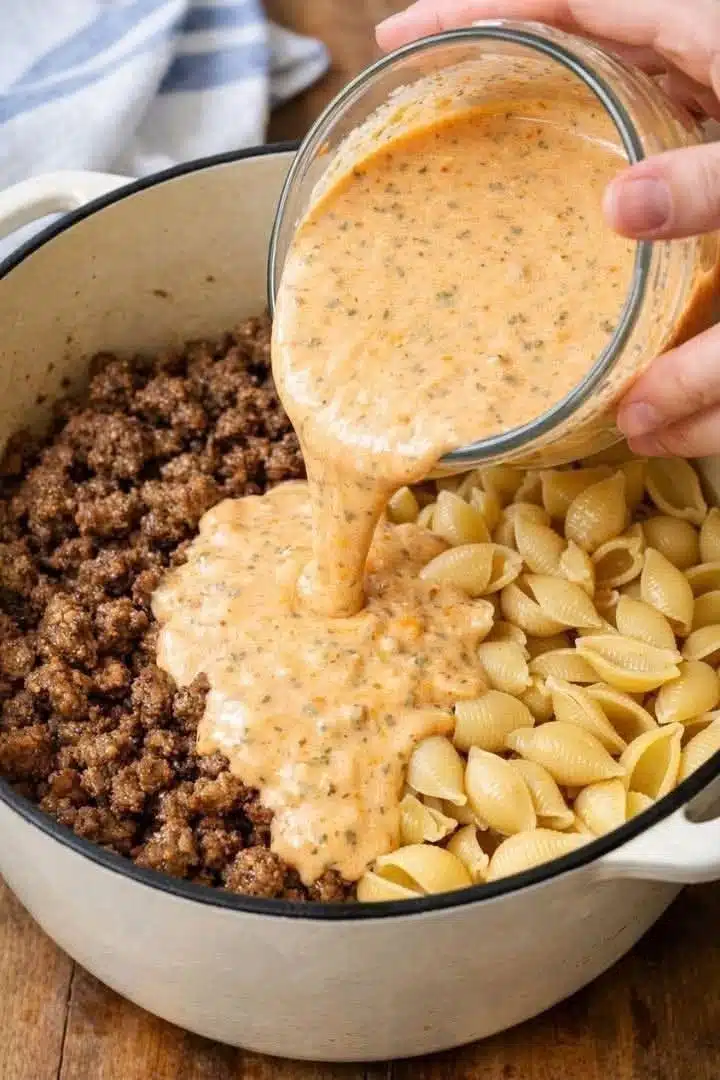
These Creamy Ground Beef Pasta Shells are the ultimate easy comfort-food dinner: tender pasta shells, juicy seasoned ground beef, and a rich, velvety cheese sauce that coats every bite. The sauce settles inside the shells along with little pieces of beef, giving you creamy, cheesy flavor from the first spoonful to the last.
Inspired by the dish shown in the image, this recipe uses browned ground beef, shell pasta, garlic, onion, cream cheese, cheddar, herbs, beef broth, and a touch of tomato to create that beautiful creamy orange sauce. It is rich without being overwhelmingly heavy and flavorful enough to become a regular family dinner.
The best part is that you can have everything ready in about 40 minutes. It is perfect for busy weeknights, Sunday dinner, meal prep, potlucks, or those evenings when you want something satisfying without spending hours in the kitchen.
Serve it with garlic bread, roasted broccoli, green beans, or a crisp salad and you have a complete dinner made with inexpensive everyday ingredients.
Recipe Overview
| Recipe Details | Information |
|---|---|
| Recipe Name | Creamy Ground Beef Pasta Shells |
| Focus Keyword | Creamy Ground Beef Pasta Shells |
| Prep Time | 15 minutes |
| Cook Time | 25 minutes |
| Total Time | About 40 minutes |
| Servings | 6 |
| Course | Dinner, Main Dish |
| Cuisine | American Comfort Food |
| Difficulty | Easy |
| Main Protein | Ground Beef |
| Pasta | Medium Shells |
| Sauce | Creamy Garlic Cheddar Sauce |
| Best For | Weeknight Dinner, Family Meals, Meal Prep |
| Make-Ahead Friendly | Yes |
| Freezer Friendly | Yes |
Why You’ll Love This Creamy Ground Beef Pasta
There are plenty of ground beef pasta recipes, but this one stands out because the sauce is especially creamy and the shell pasta captures so much of it.
Instead of having sauce simply coat the outside of the noodles, the hollow pasta shells collect ground beef and cheese sauce inside. That means nearly every bite has the perfect combination of pasta, meat, and creamy sauce.
It is also a budget-friendly dinner. A pound of ground beef stretches easily into six generous servings when combined with pasta and sauce.
Another advantage is flexibility. You can add vegetables, switch cheeses, make it spicy, turn it into cheeseburger pasta, or give it a taco-inspired flavor without changing the basic method.
It also reheats extremely well, which makes it useful for lunch meal prep.
Ingredients
For the Ground Beef
- 1 pound ground beef
- 1 medium yellow onion, finely diced
- 3 garlic cloves, minced
- 1 tablespoon Worcestershire sauce
- 1 teaspoon smoked paprika
- 1 teaspoon garlic powder
- 1 teaspoon onion powder
- 1/2 teaspoon dried oregano
- 1/2 teaspoon dried parsley
- 1/2 teaspoon freshly ground black pepper
- 1/2 teaspoon salt, or to taste
For the Pasta
- 12 ounces medium pasta shells
- Salt for pasta water
- 1 cup reserved pasta water
For the Creamy Sauce
- 1 cup low-sodium beef broth
- 3/4 cup tomato sauce
- 1 tablespoon tomato paste
- 4 ounces cream cheese, softened
- 1 cup heavy cream or half-and-half
- 1½ cups shredded sharp cheddar cheese
- 1/2 cup shredded Monterey Jack or mozzarella
- 1 teaspoon Dijon mustard, optional
For Garnish
- Fresh chopped parsley
- Parmesan cheese
- Extra cheddar
- Freshly cracked black pepper
- Red pepper flakes, optional
Best Pasta for This Recipe
Medium shell pasta is ideal because the shape holds thick sauces particularly well.
The curved opening captures melted cheese and tiny crumbles of ground beef, which is exactly what makes the pasta in the image look so creamy and satisfying.
If you cannot find medium shells, several other shapes work well:
- Elbow macaroni
- Cavatappi
- Rotini
- Penne
- Small rigatoni
- Orecchiette
Avoid extremely thin pasta such as angel hair because this rich beef sauce is better suited to sturdier shapes.
Best Ground Beef to Use
For the best combination of flavor and moisture, use 85/15 ground beef.
It contains enough fat to brown nicely and stay flavorful without producing excessive grease.
80/20 beef is also excellent, but drain the skillet well before adding the sauce ingredients.
If you prefer leaner meat, 90/10 ground beef will work too.
You can also replace the beef with ground turkey, chicken, pork, or Italian sausage.
A mixture of ground beef and Italian sausage creates an especially rich variation.
Why the Sauce Is So Creamy
The sauce uses several ingredients that work together.
Cream cheese provides thickness and gives the sauce a silky texture.
Heavy cream adds richness.
Cheddar provides the strongest cheese flavor.
Monterey Jack or mozzarella improves the melt and makes the sauce even smoother.
Beef broth adds savory depth while preventing the sauce from becoming too thick.
Finally, the tomato sauce and tomato paste provide acidity and create the warm orange color shown in the image.
The finished sauce is creamy rather than strongly tomato-flavored.
Kitchen Equipment
| Equipment | Purpose |
|---|---|
| Large skillet or Dutch oven | Cooking beef and sauce |
| Large pasta pot | Cooking shells |
| Colander | Draining pasta |
| Wooden spoon | Breaking up beef |
| Silicone spatula | Mixing sauce |
| Cheese grater | Shredding cheese |
| Measuring cups | Liquids |
| Measuring spoons | Seasonings |
Step-by-Step Instructions
Step 1: Cook the Pasta
Bring a large pot of salted water to a boil.
Add the shell pasta and cook until al dente according to the package instructions.
Before draining, reserve about 1 cup of pasta water.
Drain the pasta but do not rinse it. The starch coating the shells helps the creamy sauce cling to them.
Step 2: Brown the Ground Beef
Place a large skillet or Dutch oven over medium-high heat.
Add the ground beef.
Break it into small crumbles with a wooden spoon while it cooks.
Allow some pieces to brown against the bottom of the pan instead of constantly moving the meat. That browning develops deeper flavor.
Cook until no pink remains and the beef reaches 160°F / 71°C.
Step 3: Add the Onion
Add the diced onion directly to the browned beef.
Cook for 3–4 minutes until softened.
The onion should become translucent and slightly sweet.
Step 4: Add the Garlic
Stir in the minced garlic.
Cook for approximately 30–60 seconds.
Garlic burns quickly, so stir continuously.
Step 5: Drain Excess Fat
If the ground beef has released a lot of grease, carefully drain most of it.
Leave a very small amount behind for flavor.
Too much fat can prevent the sauce from feeling creamy and may make it oily.
Step 6: Season the Beef
Add Worcestershire sauce, paprika, garlic powder, onion powder, oregano, parsley, black pepper, and salt.
Mix well.
Cook for another minute so the seasonings become fragrant.
Step 7: Add Tomato Sauce
Stir in the tomato sauce and tomato paste.
Cook for approximately 2 minutes.
The tomato paste will deepen slightly in color and flavor.
Step 8: Add Beef Broth
Pour in the beef broth.
Use your spoon to scrape any browned bits from the bottom of the skillet.
Those caramelized pieces add significant flavor to the sauce.
Allow the mixture to come to a gentle simmer.
Step 9: Add Cream Cheese
Reduce the heat to medium-low.
Add the softened cream cheese in several small pieces.
Stir until completely melted.
The sauce should immediately begin becoming thicker and lighter in color.
Step 10: Add Heavy Cream
Pour in the heavy cream or half-and-half.
Stir until completely combined.
From this point forward, keep the heat gentle.
Avoid a hard boil because high heat can cause dairy sauces to separate.
Step 11: Melt in the Cheese
Add the shredded cheddar a handful at a time.
Stir after each addition.
Once the cheddar has melted, add the Monterey Jack or mozzarella.
Continue stirring until the sauce is smooth and glossy.
Step 12: Add the Pasta
Add the cooked pasta shells.
Fold everything together gently.
The sauce should coat both the outside and inside of the shells.
Small pieces of beef will naturally settle inside the pasta.
Step 13: Adjust the Sauce
If the sauce becomes too thick, add reserved pasta water two tablespoons at a time.
If it looks slightly thin, simmer gently for another 2–3 minutes.
Remember that the pasta will continue absorbing moisture even after the skillet is removed from the heat.
Step 14: Taste Before Serving
Taste the finished pasta.
Add more black pepper, Worcestershire sauce, paprika, garlic powder, or salt if necessary.
Always taste before adding salt because cheese and broth already contain sodium.
Step 15: Garnish
Remove the pan from the heat.
Sprinkle with fresh parsley, Parmesan, extra cheddar, or red pepper flakes.
Serve immediately.
How to Make the Sauce Even Creamier
If you want an extremely rich restaurant-style sauce, increase the cream cheese from 4 ounces to 6 ounces.
You can also add another 1/4 cup heavy cream.
For deeper cheese flavor, add 1/2 cup grated Parmesan.
The best approach is to keep the sauce slightly loose before adding the pasta.
The shells absorb quite a bit of moisture as they sit.
How to Keep the Cheese Sauce Smooth
Do not add shredded cheese while the sauce is aggressively boiling.
High heat can cause cheese proteins to tighten and release fat, producing a grainy or oily sauce.
Reduce the heat first.
Freshly grated cheese also melts more smoothly than many packaged shredded cheeses.
Pre-shredded cheese often contains anti-caking ingredients that can slightly affect melting.
Add cheese gradually instead of all at once.
How to Keep the Pasta from Drying Out
Creamy pasta continues absorbing liquid even after cooking.
For that reason, the sauce should look just slightly looser than your desired final consistency.
Reserved pasta water is extremely useful.
Its starch helps loosen the sauce while maintaining a creamy texture.
When reheating leftovers, add a splash of milk, cream, broth, or water.
Pro Tips for the Best Creamy Beef Pasta
Use pasta shells or another shape that captures sauce.
Cook pasta only until al dente.
Brown the beef properly before adding liquids.
Drain excess grease.
Use softened cream cheese.
Reduce the heat before adding dairy.
Add shredded cheese gradually.
Reserve pasta water.
Make the sauce slightly loose before serving.
Serve shortly after cooking for maximum creaminess.
Cheeseburger Pasta Shells Variation
For an easy cheeseburger version, add:
- 2 tablespoons ketchup
- 1 tablespoon yellow mustard
- Extra Worcestershire sauce
- Extra sharp cheddar
Finish each bowl with chopped dill pickles.
You can also add crispy bacon.
This variation tastes similar to homemade Hamburger Helper but with a much richer sauce.
Bacon Cheeseburger Pasta
Cook 5–6 bacon strips until crispy.
Crumble them.
Stir half of the bacon into the completed pasta.
Use the remaining bacon as a topping with extra cheddar and green onions.
Serve chopped pickles on the side if desired.
Creamy Taco Ground Beef Pasta
Replace the oregano with:
- 1 teaspoon chili powder
- 1 teaspoon ground cumin
- 1 teaspoon smoked paprika
Add a small can of diced green chiles if desired.
Use cheddar and Monterey Jack.
Finish with sour cream, jalapeños, avocado, tomatoes, or green onions.
Cajun Ground Beef Pasta
Add 1–2 teaspoons Cajun seasoning to the ground beef.
Use Pepper Jack cheese instead of mozzarella.
Add diced red or green bell pepper with the onion.
A pinch of cayenne can be added for extra heat.
Finish with parsley and Parmesan.
Mushroom Ground Beef Pasta
Add about 8 ounces sliced mushrooms.
Cook the mushrooms with the onion until golden.
Then continue with the recipe normally.
Mushrooms add a deeper savory flavor that pairs especially well with beef, garlic, cream, and cheese.
Ground Beef and Spinach Pasta
Add 2–3 cups fresh baby spinach to the sauce before adding the pasta.
Cook for about 1–2 minutes until wilted.
Then add the pasta shells.
The spinach blends easily into the creamy sauce and is an easy way to include extra vegetables.
Broccoli Cheddar Beef Pasta
Steam 2 cups broccoli florets until barely tender.
Add them when you combine the pasta and sauce.
Use extra sharp cheddar for a stronger broccoli-cheddar flavor.
Do not overcook the broccoli before adding it because it will continue warming in the sauce.
Garlic Parmesan Beef Pasta
Increase the fresh garlic to five cloves.
Add 3/4 cup Parmesan cheese.
Reduce the cheddar slightly.
Season with Italian herbs.
Finish with parsley and additional grated Parmesan.
This variation creates a more Italian-inspired creamy beef pasta.
Spicy Ground Beef Pasta
For extra heat, add:
- Jalapeños
- Crushed red pepper
- Cayenne pepper
- Hot sauce
- Pepper Jack cheese
Start with a small amount and adjust.
A spoonful of sour cream can be served on top to balance the heat.
One-Pot Ground Beef Pasta Method
If you want fewer dishes, you can cook the pasta directly in the beef mixture.
Brown the beef, onions, and garlic first.
Add approximately:
- 3 cups beef broth
- 1 cup tomato sauce
- 12 ounces uncooked pasta shells
Bring to a gentle simmer.
Cover and cook until the pasta is almost tender, stirring frequently.
Add more broth as needed.
Once the pasta is ready, reduce the heat and stir in cream cheese, heavy cream, cheddar, and Monterey Jack.
Because the starch remains in the pot, the sauce becomes particularly creamy.
What to Serve with Creamy Ground Beef Pasta
This pasta is rich enough to be the main event.
A simple vegetable or salad is usually all you need.
Excellent options include:
- Garlic bread
- Caesar salad
- Garden salad
- Roasted broccoli
- Green beans
- Asparagus
- Brussels sprouts
- Roasted carrots
- Peas
- Cucumber salad
Garlic bread is especially good because it can soak up the creamy sauce remaining on the plate.
Make-Ahead Instructions
The ground beef sauce can be made up to one day in advance.
Prepare everything except the pasta and shredded cheese.
Cool the beef sauce and refrigerate.
When ready to eat, reheat gently.
Add cream and cheese if needed, then combine with freshly cooked pasta.
This gives you better texture than storing pasta in the sauce overnight.
Meal Prep
Creamy Ground Beef Pasta Shells are excellent for meal prep.
Divide the cooked pasta into individual containers.
Add a vegetable such as broccoli or green beans.
Allow everything to cool before sealing and refrigerating.
When reheating, add one or two tablespoons of milk or broth to restore the sauce.
Storage
Store leftovers in airtight containers in the refrigerator.
For the best quality, eat within 3–4 days.
The sauce will look thicker when cold.
That does not mean anything went wrong.
The pasta simply absorbs more liquid during storage.
Reheating
For the best texture, reheat on the stovetop.
Place the pasta in a skillet.
Add a splash of milk, beef broth, cream, or water.
Heat over medium-low while stirring gently.
For the microwave, add a small amount of liquid and heat in short intervals.
Stir between each interval.
Avoid overheating because dairy-based sauces can separate.
Freezing Instructions
For the best freezer results, freeze the beef sauce separately from the pasta.
Allow the sauce to cool completely.
Transfer to freezer-safe containers.
Freeze for approximately 2–3 months for best quality.
Thaw overnight in the refrigerator.
Reheat gently and combine with freshly cooked pasta.
The complete pasta dish can also be frozen, although the shells may become slightly softer after thawing.
Common Mistakes and How to Avoid Them
Overcooking the Pasta
Cook only until al dente.
The pasta continues absorbing liquid in the sauce.
Not Browning the Beef
Proper browning creates much better flavor.
Leaving Too Much Grease
Drain excess beef fat so the sauce stays creamy rather than oily.
Adding Cold Cream Cheese
Softened cream cheese melts much more smoothly.
Boiling the Cheese Sauce
Lower the heat before adding cheese.
Throwing Away Pasta Water
Reserved pasta water is one of the easiest ways to fix a sauce that becomes too thick.
Adding Too Much Salt
Cheese, broth, Worcestershire sauce, and beef seasoning already contribute salt.
Taste first.
Nutrition Estimate
| Nutrition | Approximate Amount |
|---|---|
| Calories | 550–680 |
| Protein | 30–38 g |
| Carbohydrates | 45–55 g |
| Fat | 28–38 g |
| Fiber | 2–4 g |
| Sugar | 5–8 g |
| Sodium | 650–950 mg |
| Serving Size | 1 generous bowl |
Nutrition values are estimates and vary according to the ground beef, pasta, cream, cheese, and serving size.
Frequently Asked Questions
Can I use another pasta shape?
Yes. Macaroni, rotini, penne, cavatappi, and small rigatoni all work.
Can I use ground turkey?
Yes. Ground turkey is an easy substitute.
Can I use ground chicken?
Yes.
Can I use Italian sausage?
Absolutely. Sausage creates a richer and more seasoned dish.
Can I make it without cream cheese?
Yes. Increase the heavy cream slightly and add additional shredded cheese.
Can I use sour cream?
Yes. Stir it in near the end over low heat.
Can I use milk instead of heavy cream?
Yes, but the sauce will be less rich. Whole milk works better than low-fat milk.
Can I use Velveeta?
Yes. It gives the sauce an extremely smooth cheeseburger-style texture.
Can I add bacon?
Absolutely.
Can I add vegetables?
Yes. Mushrooms, broccoli, spinach, peas, peppers, and corn all work.
Can I make it spicy?
Yes. Add jalapeños, Pepper Jack, cayenne, hot sauce, or red pepper flakes.
Can I make it one-pot?
Yes. Cook the pasta directly in beef broth and tomato sauce after browning the meat.
Why is my sauce too thick?
The pasta has probably absorbed the liquid. Add milk, broth, or pasta water.
Why is my sauce grainy?
The heat may have been too high when the cheese was added.
Should I rinse the pasta?
No. The starch helps sauce stick to the shells.
Can I make it ahead?
Yes. The beef sauce can be prepared ahead and combined with freshly cooked pasta.
How long do leftovers last?
Approximately 3–4 days refrigerated.
Can I freeze it?
Yes. Freezing the sauce separately provides the best texture.
What is the best way to reheat it?
Warm gently with a splash of milk or broth.
Final Thoughts
These Creamy Ground Beef Pasta Shells are exactly the kind of dependable recipe you want when you need a filling family dinner without complicated ingredients.
Juicy seasoned ground beef provides savory flavor, while cream cheese, cheddar, garlic, beef broth, and a little tomato create the smooth sauce shown in the image.
The shell pasta is especially important because every piece catches some of the beef and sauce inside.
You can keep the recipe simple or transform it into cheeseburger pasta, taco pasta, Cajun pasta, mushroom beef pasta, or broccoli cheddar pasta.
For the best result, brown the beef well, cook the shells only until al dente, keep the heat low when adding cheese, and always save some pasta water.
Serve it with garlic bread and a fresh salad for an easy weeknight dinner, portion it for meal prep, or make the beef sauce ahead when you know the next evening will be busy.