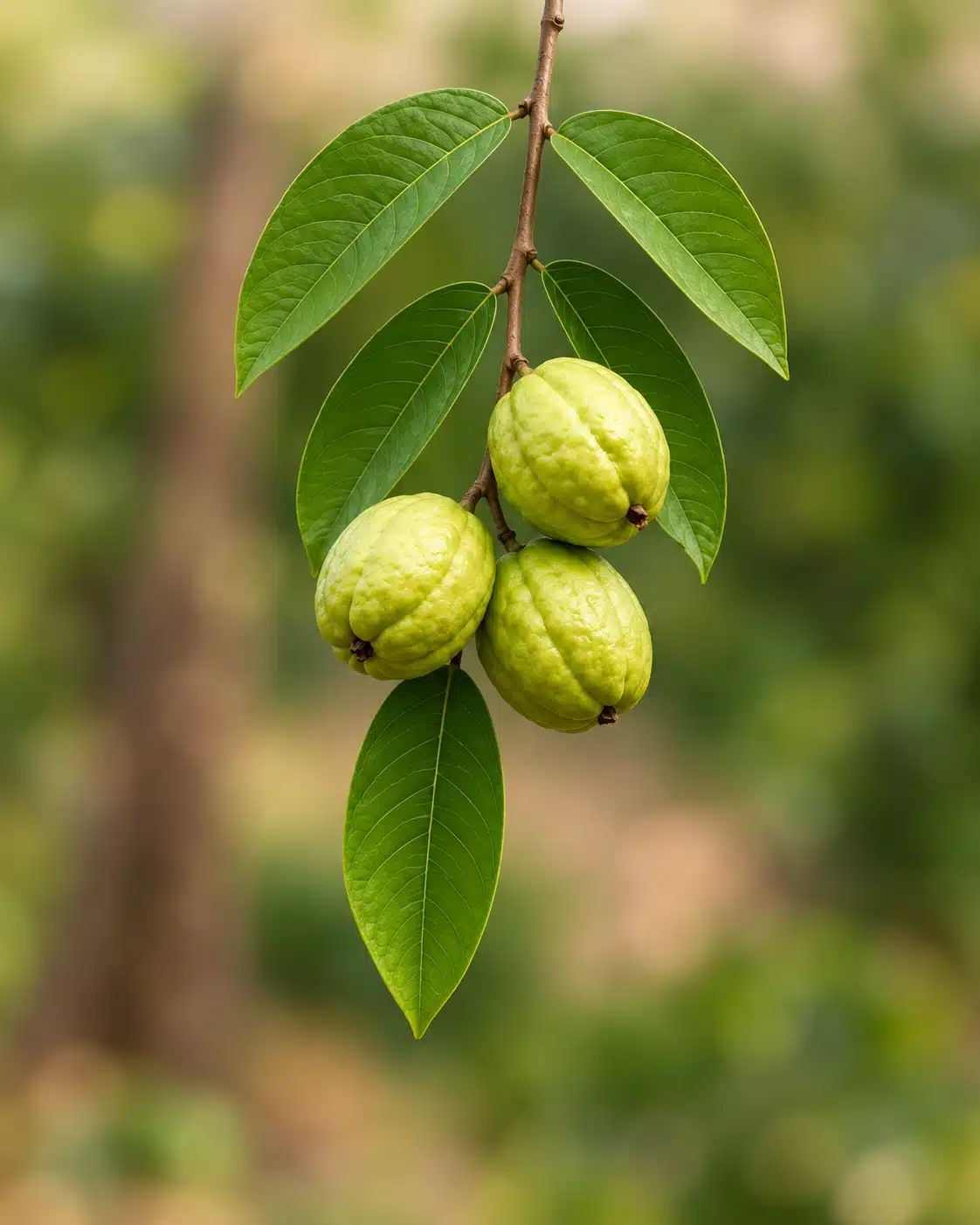
Guava Leaf Tea is a traditional herbal drink prepared by steeping or gently simmering clean guava leaves in water. It has a mild herbal flavor with slightly earthy, astringent notes and is commonly enjoyed plain or with lemon, ginger, cinnamon, or a small amount of honey.
The image makes a much stronger claim, suggesting that guava leaves or seeds can support recovery from numerous types of cancer. That claim should not be presented as established medical fact. Laboratory and animal research has found interesting biological activity in extracts from Psidium guajava, including effects on several cancer cell lines, but those findings are primarily preclinical and do not establish guava leaf tea as a treatment for cancer in people.
For a trustworthy food and wellness article, guava leaves are better presented as a traditional botanical ingredient that can be brewed into tea while clearly explaining what science does—and does not—currently show.
Recipe Overview
| Recipe Details | Information |
|---|---|
| Recipe Name | Guava Leaf Tea |
| Focus Keyword | Guava Leaf Tea |
| Botanical Name | Psidium guajava |
| Prep Time | 5 minutes |
| Simmer Time | 10–15 minutes |
| Total Time | About 20 minutes |
| Servings | 2–3 cups |
| Course | Beverage |
| Difficulty | Easy |
| Main Ingredient | Guava leaves |
| Flavor | Herbal, earthy, mildly astringent |
| Best Served | Warm or chilled |
| Added Sugar | None required |
| Make-Ahead Friendly | Yes |
| Refrigerator Storage | About 1–2 days |
What Is Guava Leaf Tea?
Guava leaf tea is made from the leaves of the guava tree, Psidium guajava.
The plant is best known for its fragrant tropical fruit, but the leaves have also been used traditionally in different parts of the world.
Guava leaves contain naturally occurring plant compounds, including various polyphenols and flavonoids. Research has explored guava leaf extracts in areas such as glucose metabolism, digestion, inflammation, antimicrobial activity, and laboratory cancer models.
However, an extract used in a laboratory study is not automatically equivalent to a cup of homemade guava leaf tea.
The preparation, concentration, dose, and method of extraction can be completely different.
Guava Leaves vs. Guava Seeds
The wording in the image says “Guava Leaf Seed,” but leaves and seeds are different parts of the plant.
For traditional tea, the leaves are normally used.
Guava seeds are contained inside the fruit and may be eaten as part of the fruit, but they are not the ingredient typically meant when people discuss guava leaf tea.
For this recipe, use properly identified guava leaves rather than assuming seeds have the same properties.
Ingredients
Basic Guava Leaf Tea
- 6–8 fresh guava leaves
- 3 cups water
- 1–2 teaspoons fresh lemon juice, optional
- 1 teaspoon honey, optional
Optional Flavor Additions
- 2 thin slices fresh ginger
- 1 small cinnamon stick
- Fresh mint leaves
- Lemon peel
- Orange peel
Keep the first batch simple so you can learn the natural flavor of the leaves.
Choosing Guava Leaves
Use leaves from a guava tree that you can identify confidently.
Look for leaves that are:
- Healthy
- Green
- Free from visible mold
- Free from insect damage
- Not heavily yellowed
- Not sprayed with pesticides
Avoid leaves collected beside heavily trafficked roads, industrial areas, drainage channels, or lawns that may have been treated with chemicals.
If you are uncertain about the plant, purchase dried guava leaves from a reputable food or herbal supplier rather than foraging.
Fresh Guava Leaves vs. Dried Leaves
Both can be used.
Fresh leaves create a lighter, greener flavor.
Dried guava leaves usually produce a somewhat stronger and deeper-tasting tea because the plant material is more concentrated by weight.
For dried leaves, start with approximately:
- 1–2 tablespoons dried guava leaves
- 3 cups water
Adjust future batches according to taste.
How to Make Guava Leaf Tea
Step 1: Wash the Leaves
Rinse fresh guava leaves thoroughly under clean running water.
Rub both sides gently to remove dust and debris.
Discard any damaged or questionable leaves.
Step 2: Bring the Water to a Boil
Add three cups of water to a saucepan.
Bring it to a gentle boil.
Step 3: Add the Guava Leaves
Add six to eight cleaned leaves.
Reduce the heat to low.
The water should gently simmer rather than boil aggressively.
Step 4: Simmer
Let the leaves simmer for approximately 10–15 minutes.
The water will gradually take on a pale golden, greenish, or light brown color depending on the leaves.
Step 5: Turn Off the Heat
Remove the saucepan from the heat.
Cover it.
Let the leaves steep for another 5 minutes if you prefer a stronger tea.
Step 6: Strain
Pour the tea through a fine-mesh strainer.
Discard the leaves.
Step 7: Add Lemon if Desired
A little fresh lemon juice gives the drink a brighter flavor.
Lemon also softens some of the natural astringency.
Step 8: Sweeten Lightly
If desired, add a small amount of honey.
Taste first.
Many people prefer the tea unsweetened.
Step 9: Serve
Serve warm.
For iced guava leaf tea, cool completely, refrigerate, and pour over ice.
Guava Leaf and Ginger Tea
Ginger is one of the easiest additions.
Use:
- 6 guava leaves
- 3 cups water
- 3 thin ginger slices
Simmer for approximately 10–15 minutes.
Strain and add lemon.
The ginger gives the drink more warmth and masks some of the leafy flavor.
Guava Leaf and Cinnamon Tea
Add one small cinnamon stick during simmering.
Cinnamon adds a naturally sweet aroma without requiring much added sugar.
Remove the cinnamon when straining.
This is particularly pleasant during cooler weather.
Guava Leaf, Lemon and Mint Tea
Prepare the basic guava leaf tea.
After turning off the heat, add several fresh mint leaves.
Cover and steep for approximately 3 minutes.
Strain.
Finish with fresh lemon.
This version is especially good chilled.
What Science Actually Says About Guava Leaves
Guava leaves contain multiple plant compounds that have attracted scientific interest.
Research reviews describe antioxidant, antimicrobial, anti-inflammatory, and metabolic activity associated with guava leaf preparations. PubMed Central (PMC)
There has also been human research into guava leaf tea in areas such as post-meal blood glucose control, although that evidence should not be generalized into claims that the tea treats every metabolic disorder. PubMed Central (PMC)
This distinction matters.
A plant can contain biologically active compounds without being a clinically proven treatment for serious diseases.
What About the Cancer Claims in the Image?
This is the most important part of the article.
Research has found that certain guava extracts can affect cancer cells in laboratory experiments.
For example, researchers have investigated guava leaf extracts against prostate, breast, ovarian, lung, colon, and other cancer cell models. Some experiments have reported effects on cell growth, cell survival pathways, or tumor models in animals. PubMed
That is scientifically interesting.
But it does not mean drinking guava leaf tea has been proven to treat those cancers in humans.
The research review literature itself is largely built from in-vitro experiments and animal studies, rather than large clinical trials showing that guava tea improves survival or cures human cancer. PubMed Central (PMC)
So a claim such as “guava leaf supports recovery from 12 types of cancer” goes beyond what the evidence currently establishes.
Laboratory Research Is Not the Same as Human Treatment
This difference is easy to misunderstand.
Researchers can expose cancer cells in a laboratory dish to a concentrated plant extract.
If the cells stop growing, that tells scientists the plant may contain interesting compounds worth studying.
But several additional questions remain:
Can those compounds be absorbed by humans?
Can they reach a tumor at the required concentration?
Would that concentration be safe?
Would it work alongside chemotherapy, radiation, immunotherapy, or surgery?
Would it improve survival?
Those questions require carefully designed human clinical trials.
A cup of tea cannot automatically be assumed to reproduce the concentration used in cell-culture research.
Can Guava Leaf Tea Cure Cancer?
There is currently no good basis for presenting guava leaf tea as a cancer cure.
Anyone diagnosed with cancer should work with an oncology team and should not replace surgery, chemotherapy, radiation therapy, targeted therapy, immunotherapy, hormonal treatment, or other recommended care with an herbal drink.
That does not mean scientists should stop researching guava.
It simply means promising laboratory findings must be separated from treatments proven to help patients.
Can Someone with Cancer Drink Guava Leaf Tea?
That is a different question.
A food or herbal tea may sometimes be compatible with cancer care, but treatment regimens vary enormously.
Cancer medicines can interact with foods, herbs, supplements, and concentrated botanical extracts.
A person undergoing treatment should tell their oncology team about any herbal tea or supplement they use regularly.
This is especially important when using concentrated extracts rather than an occasional weak tea.
Guava Leaf Tea and Blood Sugar
Guava leaf tea has also attracted research interest for glucose metabolism.
Some human and laboratory studies have investigated whether guava leaf polyphenols can reduce carbohydrate absorption or moderate post-meal glucose responses.
That does not mean someone with diabetes should stop medication and substitute guava tea.
People using insulin or glucose-lowering medication should be especially cautious about adding concentrated herbal products specifically for blood sugar control.
Medication changes should be made with a healthcare professional.
Guava Leaf Tea and Digestion
Guava leaf preparations have traditionally been associated with digestive use.
A clinical trial has also investigated a guava leaf decoction in adults with acute infectious diarrhea, although that specific preparation, dose, and medical setting should not be generalized into a universal home treatment.
Severe diarrhea can cause dehydration.
Medical evaluation is particularly important when there is:
- Blood in stool
- High fever
- Severe abdominal pain
- Persistent vomiting
- Significant dehydration
- Symptoms lasting several days
- Illness in infants or frail older adults
An herbal beverage should not delay appropriate treatment.
Guava Leaf Tea and Antioxidants
Guava leaves contain polyphenols and flavonoids.
These plant compounds can display antioxidant activity in laboratory testing.
However, the phrase “high in antioxidants” is sometimes stretched into exaggerated claims that a drink can automatically prevent cancer, reverse aging, or detoxify organs.
Human biology is considerably more complicated.
It is better to enjoy antioxidant-containing plant foods as part of an overall balanced diet than to depend on one tea as a protective medicine.
Does Guava Leaf Tea Detox the Liver?
Guava leaf tea should not be described as a liver detox.
The liver itself performs continuous metabolic and detoxification functions.
There is no need for a specific tea to “flush” it.
If someone has abnormal liver tests, hepatitis, fatty liver disease, cirrhosis, or another liver condition, the correct approach is medical evaluation and appropriate treatment.
Herbal drinks should not be used to postpone diagnosis.
Can Guava Leaf Tea Help with Weight Loss?
Guava leaf tea is naturally very low in calories when served without sugar.
If it replaces soda, sweetened juice, or heavily sweetened coffee, it could indirectly reduce daily calorie intake.
That is useful.
But the tea does not selectively burn abdominal fat.
Meaningful changes in body weight depend largely on overall food intake, physical activity, sleep, medications, health conditions, and long-term habits.
How Much Guava Leaf Tea Should You Drink?
There is no universal medically established daily dose for homemade guava leaf tea.
For ordinary culinary use, a modest cup is more sensible than drinking extremely concentrated preparations throughout the day.
More is not automatically better.
If you have never tried it before, start with a weaker tea.
See how your body tolerates it.
Best Time to Drink Guava Leaf Tea
There is no scientifically established “magic” time.
You can drink it:
- In the morning
- With breakfast
- After meals
- In the afternoon
- In the evening
If herbal teas upset your stomach, consume them with food rather than on an empty stomach.
Does It Need Sugar?
No.
Guava leaf tea can be enjoyed unsweetened.
If the flavor feels too strong, try lemon, mint, cinnamon, or additional water before adding large quantities of sugar.
If you do want sweetness, use a small amount of honey.
Safety and Medication Considerations
Research has specifically examined possible drug interactions with guava leaf tea. One study found relatively weak effects on drug-metabolizing CYP enzymes compared with grapefruit juice and did not find an effect on warfarin activity in the animal model used.
That does not prove that every guava preparation is interaction-free for every person.
Homemade teas, concentrated extracts, powders, and supplements can differ substantially.
If you take prescription medication and plan to use concentrated guava preparations regularly, discussing them with a pharmacist or physician is sensible.
Pregnancy and Breastfeeding
Normal food consumption of guava fruit is different from regular use of concentrated guava leaf preparations.
There is not enough reason to assume that every traditional herbal tea is automatically appropriate during pregnancy or breastfeeding.
For frequent use, discuss it with an appropriate healthcare professional.
Can Children Drink Guava Leaf Tea?
Children are not simply smaller adults when it comes to herbal preparations.
For occasional food-style use, the situation may differ from concentrated medicinal-style use.
If a child is being given guava leaf tea specifically to treat diarrhea, blood sugar, infection, or another medical problem, speak with a pediatric healthcare professional rather than relying on a social-media remedy.
Hot Guava Leaf Tea
For the simplest serving:
- 1 cup freshly brewed guava leaf tea
- Lemon slice
- Optional small amount of honey
Serve warm.
This is the best starting point if you have never tried it before.
Iced Guava Leaf Tea
Prepare the tea slightly stronger.
Cool completely.
Refrigerate.
Serve over ice with:
- Lemon
- Mint
- Orange slices
It makes a refreshing unsweetened alternative to bottled drinks.
Guava Leaf Ginger Lemon Drink
Use:
- 6 guava leaves
- 3 cups water
- 3 ginger slices
- 1 tablespoon fresh lemon juice
Simmer the leaves and ginger.
Strain.
Add lemon after cooking.
Drink warm or chilled.
Make-Ahead Instructions
Prepare the tea normally.
Strain it.
Allow it to cool.
Transfer to a clean covered container.
Refrigerate promptly.
For the freshest flavor, make small batches rather than preparing a large quantity for an entire week.
Storage
Keep prepared guava leaf tea covered in the refrigerator.
For best quality, use within approximately 1–2 days.
Natural sediment may settle at the bottom.
That alone is not necessarily a problem.
Discard the tea if you notice mold, an unpleasant fermented odor, unusual gas production, or other clear signs of spoilage.
Common Mistakes to Avoid
Using Unidentified Leaves
Only use leaves from a plant you can identify confidently.
Harvesting from Sprayed Areas
Avoid leaves exposed to pesticides or roadside contamination.
Making the Tea Extremely Concentrated
Stronger does not automatically mean healthier.
Boiling the Leaves for Hours
A short gentle simmer is sufficient for normal tea.
Adding Large Amounts of Sugar
This turns a low-calorie drink into a sugary beverage.
Believing Laboratory Research Equals a Human Cure
Cell experiments are early-stage research, not proof of clinical cancer treatment.
Replacing Cancer Treatment with Tea
Guava leaf tea should never replace oncology care.
Nutrition Estimate
| Nutrition | Approximate Amount |
|---|---|
| Calories | 0–5 |
| Protein | Minimal |
| Carbohydrates | Minimal |
| Fat | 0 g |
| Added Sugar | 0 g |
| Serving Size | 1 cup |
Values assume no honey or sugar is added.
Frequently Asked Questions
What is Guava Leaf Tea?
It is an herbal drink prepared by steeping or simmering guava leaves in water.
Are guava leaves the same as guava seeds?
No. They are different parts of the plant.
What part is used for tea?
The leaves are commonly used.
Can I use fresh leaves?
Yes, provided they are correctly identified and thoroughly washed.
Can I use dried leaves?
Yes.
How many leaves should I use?
About 6–8 fresh leaves for three cups of water is a practical starting point.
How long should they boil?
A gentle 10–15 minute simmer is enough.
Can I add lemon?
Yes.
Can I add ginger?
Yes.
Can I add cinnamon?
Yes.
Can I add mint?
Absolutely.
Can I sweeten it with honey?
Yes, in small amounts if desired.
Can I drink it cold?
Yes.
Can I prepare it ahead?
Yes. Refrigerate after cooling.
How long does prepared tea keep?
Approximately 1–2 days for best quality.
Does Guava Leaf Tea Cure Cancer?
There is no established human clinical evidence showing that guava leaf tea cures cancer.
Why do some articles say guava kills cancer cells?
Certain concentrated guava extracts have shown activity against cancer cells in laboratory and animal studies, which is scientifically interesting but very different from proving that drinking the tea treats human cancer. PubMed Central (PMC)
Has guava been studied for prostate cancer?
Yes, guava extracts have been studied in prostate cancer cell models, but that is not evidence that homemade guava leaf tea treats prostate cancer in people. PubMed
Has it been studied for breast or ovarian cancer?
Some preclinical research has examined guava-derived compounds in breast and ovarian cancer models. Again, these findings do not establish guava leaf tea as human cancer therapy. PubMed
What about lung or colon cancer?
Guava extracts have also appeared in laboratory research involving multiple cancer cell lines, but clinical treatment claims remain unproven. PubMed Central (PMC)
Can cancer patients drink guava tea?
Possibly in some circumstances, but people undergoing cancer treatment should discuss regular herbal products with their oncology team because individual treatments and interaction risks vary.
Does Guava Leaf Tea Lower Blood Sugar?
Some research has investigated post-meal glucose effects, but the tea should not replace diabetes medication.
Can I drink it for diarrhea?
Guava leaf decoctions have been studied for diarrhea, but significant or persistent symptoms require proper medical care.
Does it detox the liver?
It should not be presented as a proven liver-detox treatment.
Does it burn belly fat?
No.
Is it caffeine-free?
Plain guava leaf tea naturally contains no added caffeine unless mixed with caffeinated tea.
Can I drink it every day?
There is no medical requirement to do so. Moderate food-style use is different from taking concentrated extracts daily.
Is stronger tea better?
No. Higher concentration does not automatically mean greater benefit.
Final Thoughts
Guava Leaf Tea can be a simple and enjoyable herbal drink made from clean guava leaves, water, and optional ingredients such as ginger, lemon, cinnamon, or mint.
Guava leaves are scientifically interesting. Researchers have identified plant compounds and reported biological effects in laboratory, animal, and some human studies. There is also genuine preclinical research exploring guava-derived compounds in cancer models.
But that research needs to be described accurately.
The image’s suggestion that guava leaves or seeds support recovery from numerous cancers is much stronger than current human evidence supports. A laboratory extract slowing cancer cells is not the same as showing that a cup of guava leaf tea cures cancer.
For a trustworthy health and food article, enjoy guava leaf tea for what it is: a traditional herbal beverage with interesting plant compounds and an active area of research.
Use clean, correctly identified leaves, keep the preparation moderate, store it properly, and never use it as a substitute for proven cancer treatment or other essential medical care.