This Milk Thistle Seed Tea is a traditional herbal preparation made from the seeds of the milk thistle plant, scientifically known as Silybum marianum. The plant is recognizable by its purple flower heads, sharp spines, and distinctive green leaves marked with pale white veins.
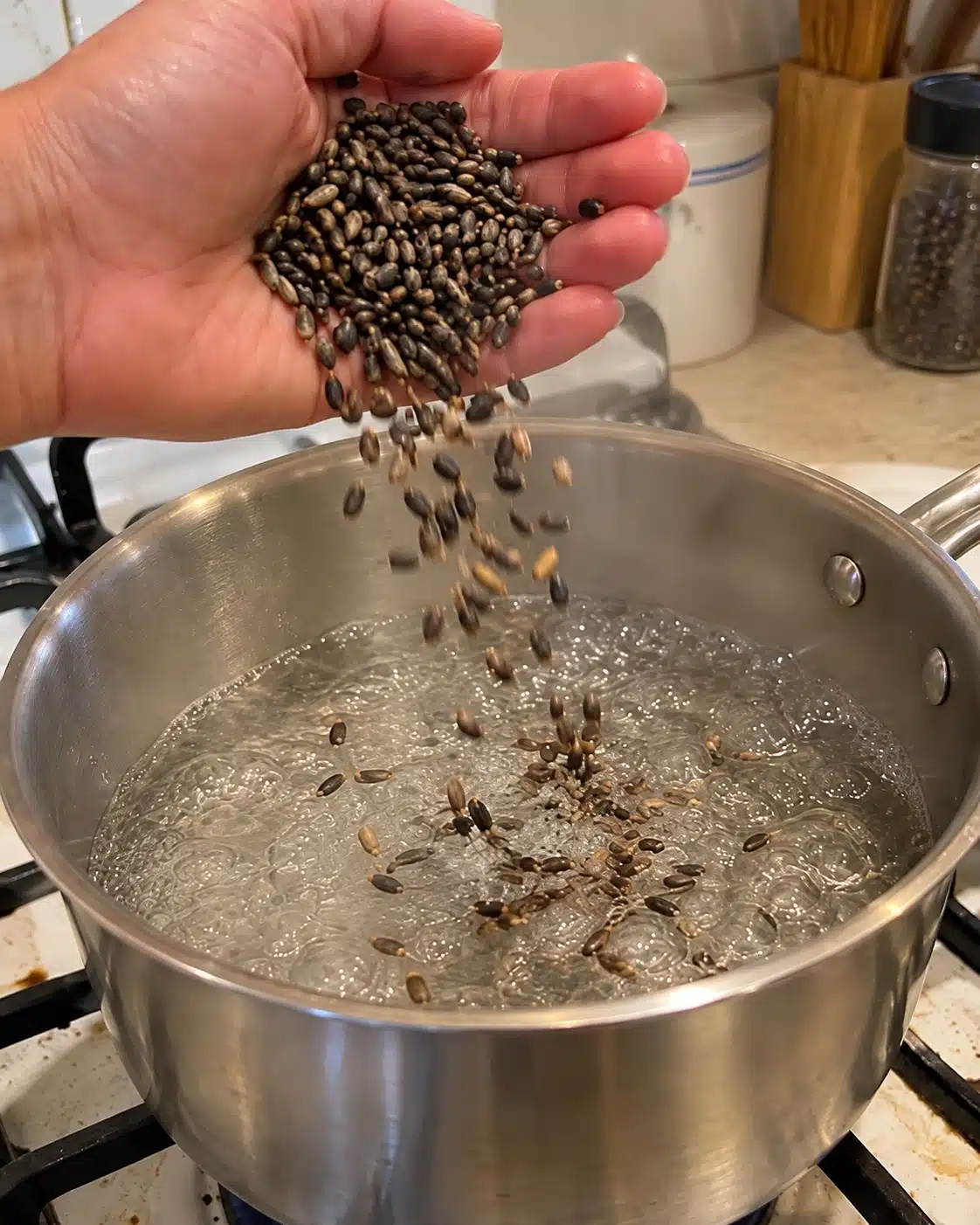
The image shows mature milk thistle seed heads, harvested dark seeds, and seeds being added to hot water. While milk thistle has a long history of herbal use, it is important to keep expectations realistic. Milk thistle tea should not be presented as a cure for liver disease, diabetes, cancer, or other medical conditions.
One interesting point is that silymarin, the group of compounds most often studied in milk thistle extracts, is not highly water-soluble. This means a simple tea or decoction is not equivalent to a standardized milk thistle supplement or extract.
Still, the seeds can be prepared as a traditional herbal beverage with a mild earthy, slightly nutty flavor. This guide explains how to identify the plant carefully, harvest and clean the seeds, make milk thistle seed tea, grind and roast the seeds, store them, and use them responsibly.
Recipe Overview
| Recipe Details | Information |
|---|---|
| Recipe Name | Milk Thistle Seed Tea |
| Focus Keyword | Milk Thistle Seed Tea |
| Botanical Name | Silybum marianum |
| Prep Time | 5–10 minutes |
| Simmer Time | 10–15 minutes |
| Total Time | About 20 minutes |
| Servings | 2 |
| Main Ingredient | Milk thistle seeds |
| Flavor | Mild, earthy, slightly nutty |
| Cooking Method | Gentle decoction |
| Best Served | Warm |
| Difficulty | Easy |
| Make-Ahead Friendly | Yes |
| Important Note | Herbal beverage, not medical treatment |
What Is Milk Thistle?
Milk thistle is a large flowering plant in the daisy family, Asteraceae.
It develops a dramatic purple flower surrounded by sharp green bracts. The leaves are broad, spiny, and usually patterned with striking white veins.
Once the flowers mature, the seed head produces dark seeds attached to fluffy white structures that help them disperse in the wind.
Those dark seeds are the part most often used in traditional preparations.
The seeds are also the source of silymarin-containing extracts used in many commercial milk thistle supplements.
How to Recognize Milk Thistle
Correct plant identification is extremely important before harvesting any wild herb.
Milk thistle commonly has:
- Purple flower heads
- Very sharp spines
- Large glossy green leaves
- Distinctive white marbling on the leaves
- Thick upright stems
- Dark mature seeds
- Fluffy white seed material when fully mature
The lower part of the image shows a plant with the characteristic marbled leaves and purple thistle flower associated with milk thistle.
However, several thistles can look similar.
If you are not completely confident in your identification, use commercially packaged milk thistle seeds from a reputable food or herbal supplier instead of harvesting wild plants.
Important Foraging Safety
Never harvest plants from areas that may have been contaminated.
Avoid plants growing:
- Beside heavily trafficked roads
- On sprayed lawns
- Near industrial areas
- Along chemically treated fields
- Beside drainage ditches with questionable runoff
- In soil treated with herbicides
- In areas where harvesting is prohibited
Even correctly identified plants may not be suitable for consumption if they have been exposed to chemicals or contamination.
Wear thick gloves when harvesting milk thistle because the plant has very sharp spines.
When to Harvest Milk Thistle Seeds
Wait until the flower heads have matured and dried.
A mature seed head usually begins to open and release fluffy white material.
The dark seeds can then be separated from the dried head.
If the seeds are still pale or soft, they may not be fully mature.
Harvest on a dry day whenever possible.
Wet plant material is harder to process and may be more likely to mold during storage.
How to Collect Milk Thistle Seeds
Wear protective gloves.
Cut mature dried flower heads from the plant.
Place them in a paper bag or large bowl.
Allow them to dry further indoors if necessary.
Once completely dry, carefully break the heads apart.
Separate the dark seeds from the fluffy material and remaining plant debris.
A sieve can make this process easier.
How to Clean the Seeds
After separating the seeds, inspect them carefully.
Remove:
- Broken plant pieces
- Fluffy material
- Insects
- Damaged seeds
- Moldy material
- Dirt
If the seeds require washing, rinse quickly and dry them completely before storage.
Never seal damp seeds in a jar.
Moisture can encourage mold.
Ingredients for Milk Thistle Seed Tea
For a simple traditional tea, you will need:
- 2 cups water
- 1–2 teaspoons milk thistle seeds
- Fresh lemon, optional
- Ginger, optional
- Cinnamon stick, optional
- Small amount of honey, optional
Crushing the seeds lightly before simmering helps expose more surface area to the water.
How to Make Milk Thistle Seed Tea
Step 1: Measure the Seeds
Use approximately 1 teaspoon of milk thistle seeds per cup of water.
Start with a modest amount, especially if you have never used the seeds before.
Step 2: Lightly Crush the Seeds
Place the seeds in a mortar.
Crush them lightly.
Do not reduce them completely to flour.
Breaking the seed coat helps water contact more of the interior.
Step 3: Heat the Water
Pour two cups of water into a small saucepan.
Bring to a gentle boil.
Step 4: Add the Seeds
Add the crushed milk thistle seeds.
Reduce the heat.
Step 5: Simmer Gently
Simmer for approximately 10–15 minutes.
Avoid an aggressive rolling boil.
A gentle decoction is enough.
Step 6: Turn Off the Heat
Remove the saucepan from the heat.
Cover.
Allow the mixture to stand for another 5 minutes.
Step 7: Strain
Pour through a fine-mesh strainer.
Discard the spent seeds.
Step 8: Add Optional Flavorings
Add fresh lemon if desired.
Ginger also works well with the earthy seed flavor.
A small amount of honey can soften bitterness, but it is optional.
Step 9: Serve
Serve warm.
If you prefer a chilled drink, cool the tea and refrigerate before serving over ice.
What Does Milk Thistle Tea Taste Like?
Milk thistle seeds have a fairly mild flavor compared with many medicinal herbs.
The tea can taste:
- Earthy
- Slightly nutty
- Mildly bitter
- Toasted if the seeds are roasted first
It is generally not intensely bitter.
Lemon and ginger make the drink brighter.
Cinnamon creates a warmer flavor.
Does Milk Thistle Tea Contain Silymarin?
This is an important distinction.
Milk thistle seeds contain compounds collectively known as silymarin.
However, silymarin is not very soluble in water.
For that reason, a simple tea does not extract the same amount or concentration found in standardized commercial milk thistle extracts.
This is why drinking seed tea and taking a standardized supplement are not equivalent.
If a person is considering milk thistle specifically for a medical reason, that discussion belongs with a qualified healthcare professional rather than relying on homemade tea.
Milk Thistle and Liver Health
Milk thistle is heavily marketed for “liver detox.”
That wording can be misleading.
Your liver already performs essential detoxification and metabolic functions continuously.
Milk thistle compounds have been researched in relation to liver health, but evidence varies depending on the condition, preparation, dose, and study quality.
A homemade seed tea should therefore not be presented as a treatment for:
- Fatty liver disease
- Hepatitis
- Cirrhosis
- Liver failure
- Medication-induced liver injury
Anyone with diagnosed liver disease should follow medical guidance rather than replacing treatment with herbal remedies.
Can Milk Thistle Detox the Body?
Not in the way social media often suggests.
No tea can simply flush unspecified toxins out of the body.
Your body already has organs responsible for processing and eliminating waste, including the liver and kidneys.
Milk thistle tea can be enjoyed as a traditional beverage.
It does not need exaggerated detox claims to be useful.
Can Milk Thistle Help with Weight Loss?
Milk thistle tea is not a proven fat-burning drink.
It will not selectively remove belly fat.
If consumed unsweetened, it is very low in calories and could replace a higher-calorie beverage.
That substitution may fit into a weight-management routine.
But changes in body fat depend mainly on overall energy intake, physical activity, muscle mass, sleep, and individual health factors.
Can Milk Thistle Lower Blood Sugar?
Milk thistle extracts have been studied in metabolic health, but that does not mean homemade milk thistle tea should be used to manage diabetes.
People taking glucose-lowering medication should be especially careful with concentrated herbal products.
Blood sugar that becomes too low can be dangerous.
Do not replace prescribed diabetes medication or medical monitoring with milk thistle.
Milk Thistle Seed Tea with Lemon
For a brighter variation, prepare the basic tea.
After straining, add:
- 1 tablespoon fresh lemon juice
- Thin lemon slice
Lemon helps balance the earthy seed flavor.
Serve warm or chilled.
Milk Thistle and Ginger Tea
Use:
- 2 cups water
- 2 teaspoons lightly crushed milk thistle seeds
- 2–3 thin slices fresh ginger
Simmer together for approximately 10–15 minutes.
Strain and serve.
The ginger adds warmth and makes the drink more aromatic.
Milk Thistle Cinnamon Tea
Add one small cinnamon stick to the saucepan.
Simmer it with the crushed seeds.
Remove before serving.
Cinnamon provides a naturally sweet aroma without requiring large amounts of sugar.
Roasted Milk Thistle Seed Tea
Light roasting gives the seeds a deeper flavor.
Place dry seeds in a skillet over low heat.
Toast for several minutes while stirring continuously.
Remove them as soon as they smell fragrant.
Allow to cool.
Crush lightly.
Then prepare the tea normally.
Be careful not to burn the seeds.
Can Milk Thistle Seeds Be Ground?
Yes.
A coffee grinder or spice grinder can be used.
Grind only small amounts at a time.
Once seeds are ground, their oils are exposed to more oxygen and the flavor can deteriorate faster.
Whole seeds generally store better than ground seeds.
Keep ground material in a tightly sealed container away from heat and light.
Can You Eat Ground Milk Thistle Seeds?
Milk thistle seeds are sometimes incorporated into food in small amounts.
Ground seeds can be mixed into foods such as:
- Oatmeal
- Yogurt
- Smoothies
- Homemade bread
- Granola
However, this is different from treating ground seeds like a concentrated medical supplement.
Start conservatively.
Too much can cause digestive discomfort in some people.
Milk Thistle Seed Coffee-Style Drink
Roasted milk thistle seeds can be ground and brewed into an earthy caffeine-free drink.
For a stronger roasted flavor, combine them with:
- Chicory
- Roasted dandelion root
- Cinnamon
The finished beverage is not identical to coffee, but it can provide a warm roasted flavor without caffeine.
How to Store Milk Thistle Seeds
Store completely dry seeds in an airtight glass container.
Keep them somewhere:
- Cool
- Dry
- Dark
- Away from direct sunlight
Heat and light can accelerate deterioration of natural plant oils.
If the seeds develop an unpleasant rancid odor, visible mold, or unusual moisture, discard them.
How Long Can Dried Seeds Be Stored?
Properly dried whole seeds generally store much better than fresh plant material.
For best flavor and quality, use them while they still smell fresh and nutty.
Label the container with the harvest or purchase date.
Do not mix new seeds into an old batch without checking the older seeds first.
Can You Store Prepared Tea?
Yes.
Allow the tea to cool.
Transfer it to a clean covered container.
Refrigerate.
For best flavor, use within approximately 1–2 days.
Reheat only the amount you plan to drink.
If the tea develops an unusual odor or appearance, discard it.
Important Allergy Warning
Milk thistle belongs to the Asteraceae family.
This plant family includes:
- Ragweed
- Daisies
- Chrysanthemums
- Marigolds
People with allergies to related plants may be more likely to react to milk thistle.
Possible allergic reactions can include itching, rash, swelling, or respiratory symptoms.
Seek urgent medical help for difficulty breathing, facial swelling, or other signs of a serious allergic reaction.
Medication Considerations
Herbal products can interact with medications.
Milk thistle extracts in particular have been studied for possible effects on drug metabolism, although the practical importance varies by medication and preparation.
Use extra caution if you take prescription medicines for conditions such as:
- Diabetes
- Liver disease
- Blood pressure disorders
- Hormone-sensitive conditions
- Other chronic illnesses
If you regularly take prescription medication and plan to use concentrated milk thistle products, discuss it with your doctor or pharmacist.
A weak occasional tea is different from high-dose extracts, but medical conditions still deserve individualized advice.
Pregnancy and Breastfeeding
Pregnancy and breastfeeding require additional caution with herbal preparations.
Traditional use alone does not establish safety.
Food-style culinary use and concentrated herbal supplementation are also not the same thing.
If pregnant or breastfeeding, discuss regular milk thistle use with an appropriate healthcare professional.
Common Mistakes and How to Avoid Them
Harvesting the Wrong Thistle
Correct identification is essential.
Handling the Plant Without Gloves
Milk thistle can be extremely sharp.
Harvesting from Sprayed Areas
Avoid chemically treated locations.
Storing Damp Seeds
Seeds must be fully dry before sealed storage.
Boiling the Seeds Aggressively for Hours
A 10–15 minute gentle decoction is enough for a traditional tea.
Assuming More Is Better
Using huge amounts does not automatically produce greater benefits.
Treating Tea Like a Medical Cure
A homemade herbal drink should not replace evidence-based treatment.
Assuming Tea Equals Standardized Extract
Water does not extract milk thistle compounds in the same way as standardized supplement manufacturing.
Nutrition Estimate
| Nutrition | Approximate Amount |
|---|---|
| Calories | Very low |
| Protein | Minimal |
| Carbohydrates | Minimal |
| Fat | Minimal in strained tea |
| Added Sugar | 0 g if unsweetened |
| Serving Size | 1 cup |
Values vary depending on the amount of seed material and any sweeteners added.
Frequently Asked Questions
What is milk thistle?
Milk thistle is a spiny flowering plant scientifically known as Silybum marianum.
What part is normally used?
The seeds are the part most commonly used in herbal preparations.
What do milk thistle seeds look like?
They are small, dark, elongated seeds that develop inside mature dried flower heads.
Can you make tea from milk thistle seeds?
Yes. The seeds can be lightly crushed and simmered in water.
How much should I use?
A simple culinary starting point is approximately one teaspoon of seeds per cup of water.
How long should the tea simmer?
About 10–15 minutes.
Should I grind the seeds first?
Light crushing helps expose the interior of the seed.
Can I roast them?
Yes. Light roasting gives them a deeper, nuttier flavor.
Can I add lemon?
Yes.
Can I add ginger?
Yes.
Can I add cinnamon?
Yes.
Does milk thistle tea contain silymarin?
The seeds contain silymarin-related compounds, but silymarin is poorly soluble in water, so ordinary tea is not equivalent to standardized extracts.
Does milk thistle detox the liver?
It should not be promoted as a proven liver-detox treatment.
Can it cure fatty liver?
No homemade tea should be used as a substitute for medical treatment of fatty liver disease.
Does it help hepatitis?
People with hepatitis need medical care. Milk thistle tea should not replace prescribed treatment.
Can it cure liver disease?
No.
Does it burn belly fat?
No.
Can it help with diabetes?
Do not use milk thistle as a replacement for diabetes medication or glucose monitoring.
Can I drink the tea every day?
There is no universal requirement to drink it daily. Moderate food-style use is different from concentrated supplementation.
Can milk thistle cause side effects?
Some people may experience digestive discomfort or allergic reactions.
Can I be allergic to it?
Yes, particularly if you are sensitive to related plants in the Asteraceae family.
Can I harvest milk thistle myself?
Yes, but only if you can identify it confidently and know the location has not been contaminated or chemically treated.
Do I need gloves?
Yes. The plant has very sharp spines.
Can I store dried seeds?
Yes. Keep completely dry seeds in an airtight container away from heat and light.
Can I store prepared tea?
Yes. Refrigerate and use within approximately 1–2 days for best quality.
Final Thoughts
This Milk Thistle Seed Tea is a simple traditional way to use the mature seeds of Silybum marianum.
Once the dried seed heads are harvested carefully, the seeds can be cleaned, stored, lightly crushed, and gently simmered in water to make an earthy herbal drink.
The recipe can also be customized with lemon, ginger, cinnamon, or a small amount of honey.
The most important parts are proper plant identification, safe harvesting, complete drying, moderate use, and realistic expectations.
Milk thistle is an interesting traditional herb, but a homemade tea should not be presented as a miracle liver cure or a replacement for medical treatment.
For ordinary kitchen use, keep the preparation simple: clean seeds, water, gentle simmering, and optional natural flavorings.