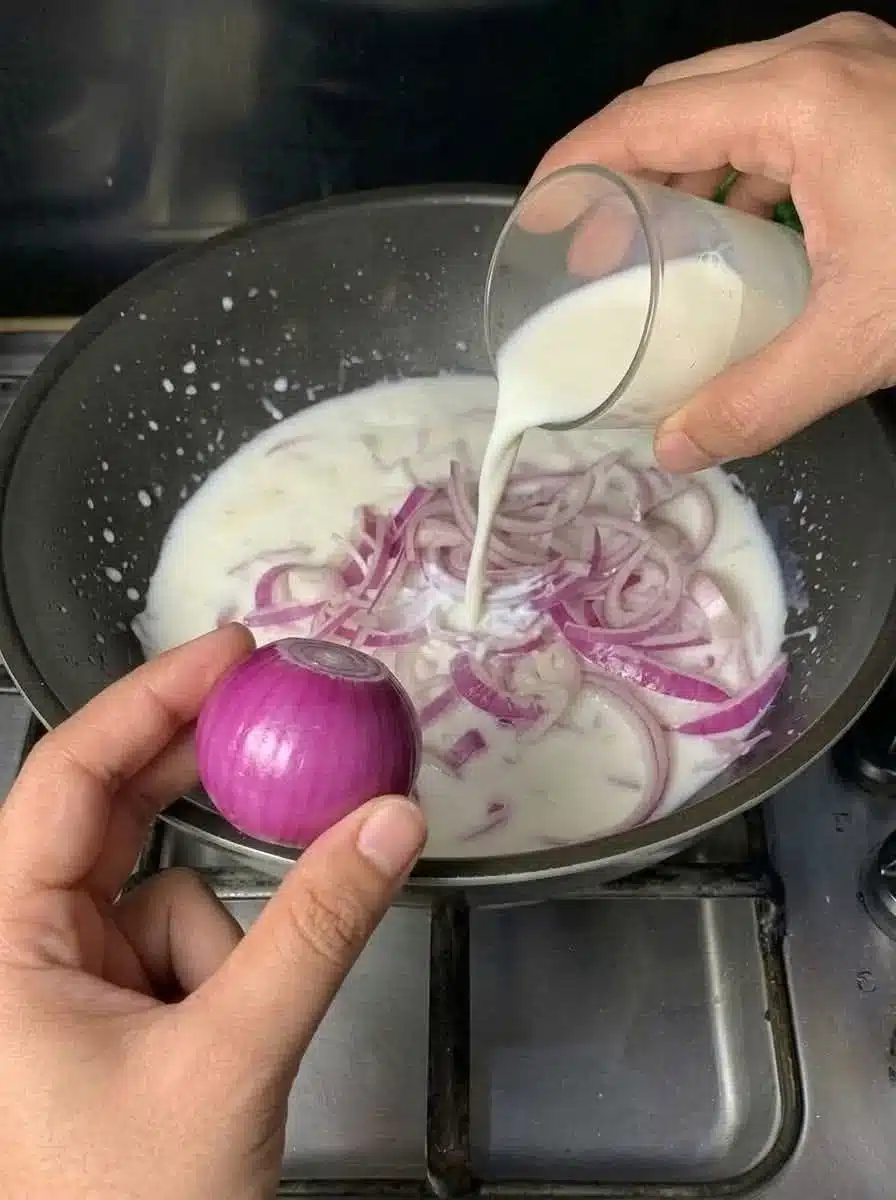
This Creamy Red Onion Milk Skillet turns two very ordinary ingredients—onions and milk—into an unexpectedly rich, savory dish. Thinly sliced red onions are slowly softened in butter until their sharpness disappears, then simmered gently with milk, garlic, herbs, and a small amount of flour until the sauce becomes smooth, velvety, and full of sweet onion flavor.
The recipe is inspired by the simple technique shown in the image: fresh red onions cooking directly in a creamy milk base. The secret to making it taste exceptional is not simply pouring milk over raw onions. The onions need time to soften and develop sweetness first, while the dairy must be cooked gently so the sauce stays smooth rather than separating.
The finished skillet can be served as a side dish, spooned over mashed potatoes, chicken, steak, rice, pasta, roasted vegetables, or thick slices of toasted bread. Add Parmesan or mozzarella and it becomes even richer.
It is inexpensive, flexible, comforting, and perfect when you need a quick dinner idea using ingredients already sitting in the kitchen.
Recipe Overview
| Recipe Details | Information |
|---|---|
| Recipe Name | Creamy Red Onion Milk Skillet |
| Focus Keyword | Creamy Red Onion Milk Skillet |
| Prep Time | 10 minutes |
| Cook Time | 25 minutes |
| Total Time | 35 minutes |
| Servings | 4–6 |
| Course | Side Dish / Sauce / Light Dinner |
| Cuisine | Comfort Food |
| Difficulty | Easy |
| Main Ingredients | Red Onion, Milk, Butter |
| Texture | Creamy, Silky, Tender |
| Cooking Method | Stovetop |
| Best Served With | Chicken, Steak, Potatoes, Pasta, Rice |
| Make Ahead | Yes |
| Refrigerator Life | 3–4 days |
Why This Simple Onion Recipe Works So Well
Onions change dramatically when they are cooked slowly.
Raw red onions are crisp and sharp.
But after several minutes in butter, they soften, lose much of their bite, and begin developing natural sweetness.
Once milk is added, those sweet onion flavors become the base of a creamy sauce.
Garlic adds savory depth.
Black pepper gives the sauce warmth.
Thyme adds a subtle herbal note.
And a little flour gives the milk enough body to coat every onion slice.
It is an excellent example of how simple ingredients can taste completely different depending on how they are cooked.
Why You’ll Love This Creamy Onion Skillet
This recipe has several advantages.
It uses inexpensive ingredients.
It cooks in one pan.
It requires no blender.
It can be ready in about half an hour.
And it can be served in many different ways.
You can keep it simple as a vegetable side dish or transform it into an entire meal by adding chicken, mushrooms, ground beef, pasta, potatoes, or cheese.
It is also a useful recipe when you have several onions that need to be used before they spoil.
What Does Creamy Red Onion Skillet Taste Like?
The flavor is milder than you might expect.
Slow cooking removes much of the harshness from the red onions.
The onions become tender and slightly sweet.
The milk sauce is creamy without being overwhelmingly heavy.
Butter adds richness.
Garlic and black pepper give the dish savory flavor.
Thyme works particularly well because its earthy flavor complements onions.
If Parmesan is added, the dish becomes deeper, saltier, and more luxurious.
The result is somewhere between creamed onions, onion gravy, and a light cream sauce.
Ingredients
For the Onions
- 3 large red onions
- 2 tablespoons unsalted butter
- 1 tablespoon olive oil
- 3 garlic cloves, minced
For the Cream Sauce
- 2 tablespoons all-purpose flour
- 2 cups whole milk
- 1/2 cup heavy cream or half-and-half, optional
- 1 teaspoon salt
- 1/2 teaspoon freshly ground black pepper
- 1/2 teaspoon garlic powder
- 1/2 teaspoon onion powder
- 1/2 teaspoon dried thyme
- 1/4 teaspoon smoked or sweet paprika
- Small pinch of nutmeg, optional
Optional Cheese
- 1/2 cup freshly grated Parmesan
or
- 3/4 cup shredded mozzarella
or
- 1/2 cup white cheddar
For Serving
- Fresh parsley
- Chopped chives
- Extra Parmesan
- Fresh black pepper
Ingredient Guide
| Ingredient | Purpose |
|---|---|
| Red onions | Main flavor and natural sweetness |
| Butter | Adds richness |
| Olive oil | Helps prevent butter from burning |
| Garlic | Adds savory depth |
| Flour | Thickens the milk |
| Whole milk | Forms the creamy sauce |
| Heavy cream | Optional extra richness |
| Thyme | Complements onion flavor |
| Paprika | Adds warmth and color |
| Parmesan | Adds salty, savory flavor |
| Nutmeg | Enhances creamy sauces |
Why Red Onions Are a Great Choice
Red onions are often used raw in salads and sandwiches because of their color and sharp flavor.
But they are also excellent cooked.
As they heat, their strong bite becomes much milder.
Their natural sugars become more noticeable.
And their beautiful purple color softens into a pale pink or brownish tone.
That color change is completely normal.
If red onions are not available, yellow onions are an excellent substitute.
Can You Use Yellow or White Onions?
Absolutely.
Yellow Onions
Yellow onions create the deepest savory flavor.
They become sweeter as they cook and work especially well with butter and cream.
White Onions
White onions have a slightly sharper flavor but become mild after cooking.
Sweet Onions
Sweet onions make the mildest version.
They are especially good if you want a softer, sweeter onion flavor.
Best Milk for This Recipe
Whole milk gives the best balance.
It is creamy enough to make a smooth sauce but not as heavy as cream.
You can also use:
- 2% milk
- Half-and-half
- Evaporated milk
- Heavy cream
If using heavy cream, consider using half milk and half cream rather than replacing all the milk.
Otherwise, the sauce can become extremely rich.
Can You Use Plant-Based Milk?
Yes.
Choose a variety that is both unsweetened and unflavored.
Good choices include:
- Oat milk
- Soy milk
- Cashew milk
Avoid vanilla-flavored milk.
Sweetened plant milk can make the onion sauce taste strange.
Coconut milk can technically work, but it produces a noticeable coconut flavor.
Why Flour Is Important
Milk by itself remains thin.
Flour provides the thickening power needed to create a creamy sauce.
The flour is cooked briefly with the butter-coated onions before the milk is added.
This creates a simplified roux.
Cooking the flour for about one minute also removes its raw taste.
The result should be smooth and creamy rather than floury or pasty.
Equipment Needed
You only need simple kitchen equipment:
- Large skillet
- Cutting board
- Sharp knife
- Wooden spoon
- Whisk
- Measuring cups
- Measuring spoons
- Cheese grater, if using cheese
A wide skillet is better than a small saucepan because onions need enough surface area to soften evenly.
How to Prepare the Red Onions
Peel the onions.
Cut each onion in half from root to stem.
Place the flat side down.
Slice into thin half-moons.
Try to keep the slices approximately the same thickness.
Slices around 1/4 inch thick work very well.
If they are much thicker, they take longer to soften.
If they are extremely thin, they may disappear into the sauce.
How to Make Creamy Red Onion Milk Skillet
Step 1: Heat the Butter
Place a large skillet over medium heat.
Add:
- 2 tablespoons butter
- 1 tablespoon olive oil
Allow the butter to melt.
Do not let it become dark brown.
Step 2: Add the Red Onions
Add all the sliced onions.
The pan may look extremely full.
That is normal.
Onions contain a lot of water and shrink considerably during cooking.
Season them with a small pinch of salt.
Step 3: Slowly Soften the Onions
Cook over medium to medium-low heat for approximately 10–12 minutes.
Stir every couple of minutes.
The onions should become:
- Soft
- Flexible
- Slightly translucent
- Lightly golden around some edges
Do not rush this step.
The longer the onions cook gently, the sweeter the finished sauce becomes.
Step 4: Add Fresh Garlic
Add the minced garlic.
Stir for approximately 30 seconds.
As soon as you smell the garlic strongly, continue to the next step.
Do not brown it heavily because burnt garlic can make the entire sauce bitter.
Step 5: Add the Flour
Sprinkle 2 tablespoons flour evenly over the onions.
Stir thoroughly.
Cook for approximately 1 minute.
The flour should disappear into the butter and onions.
This creates the base that will thicken the milk.
The Most Important Step: Add the Milk Slowly
Reduce the heat to medium-low.
Pour in approximately 1/2 cup of milk.
Stir thoroughly until smooth.
Then add another 1/2 cup.
Continue stirring.
Repeat until all 2 cups have been incorporated.
Adding the milk gradually prevents flour lumps and gives you a smoother sauce.
Add the Seasonings
Once the milk has been added, stir in:
- Salt
- Black pepper
- Garlic powder
- Onion powder
- Thyme
- Paprika
- Optional nutmeg
Bring the mixture to a gentle simmer.
Do not aggressively boil.
Simmer Until Creamy
Cook for another 5–8 minutes.
Stir frequently.
The sauce should slowly thicken around the onions.
As it cooks, it will change from thin milk to a smooth cream sauce.
If using heavy cream or half-and-half, stir it in during the final few minutes.
Add Cheese for an Even Richer Version
Reduce the heat to low.
Add the Parmesan.
Stir until melted.
Freshly grated Parmesan gives the best result.
If using mozzarella, add it slowly and stir until completely melted.
Do not allow the sauce to boil aggressively once cheese has been added.
How to Know When the Sauce Is Ready
The sauce should coat the onions without looking watery.
Dip a spoon into the sauce.
Run your finger through the coating on the back.
If the line remains visible for a moment, the sauce is thick enough.
Remember that dairy sauces thicken further as they cool.
Stop cooking slightly before the sauce reaches its final desired thickness.
The Secret to Sweeter Onions
If you want exceptional flavor, cook the onions longer before adding the milk.
Instead of 10–12 minutes, cook them for 20–25 minutes over medium-low heat.
They will slowly become golden and caramelized.
Then continue with garlic, flour, and milk.
The finished sauce will have a richer sweetness and deeper onion flavor.
Quick Version vs. Caramelized Version
| Method | Onion Cooking Time | Flavor |
|---|---|---|
| Quick Version | 10–12 minutes | Mild, creamy, savory |
| Golden Onion Version | 15–20 minutes | Sweeter and richer |
| Caramelized Version | 25–35 minutes | Deep, sweet onion flavor |
All three versions are good.
Choose based on how much time you have.
How to Prevent Milk from Curdling
This is one of the most common concerns with creamy skillet recipes.
Follow these rules:
Keep the heat moderate.
Do not pour refrigerator-cold milk into a smoking-hot skillet.
Add the milk gradually.
Do not let the sauce boil aggressively.
Use whole milk if possible.
If adding cheese, reduce the heat first.
These simple techniques help keep the sauce smooth.
What If the Sauce Is Too Thin?
Continue simmering gently for another 2–4 minutes.
The flour may simply need additional time to thicken the liquid.
If it still looks thin, combine:
- 1 teaspoon cornstarch
- 1 tablespoon cold milk
Stir until smooth.
Add slowly to the skillet while stirring.
Allow the sauce to simmer for another minute.
What If the Sauce Is Too Thick?
Add more milk.
Start with 2 tablespoons.
Stir well.
Repeat until the consistency is right.
Do not add a large amount all at once.
A small splash may be enough.
Parmesan Creamy Onion Skillet
For one of the best variations, add 1/2 cup Parmesan during the final stage.
Parmesan contributes:
- Saltiness
- Nutty flavor
- Umami
- Additional thickness
Finish with black pepper and parsley.
This version is fantastic over chicken, potatoes, or pasta.
Mozzarella Creamy Onion Skillet
Add 1 cup shredded mozzarella.
Stir half into the sauce.
Sprinkle the remaining cheese over the top.
If your skillet is oven-safe, place it under the broiler for about 1–2 minutes.
The top becomes melted, bubbly, and lightly golden.
Serve with toasted bread.
Creamy Onion and Mushroom Skillet
Add 8 ounces sliced mushrooms.
Cook the mushrooms after the onions have softened.
Allow them to brown and release their moisture.
Then continue with garlic, flour, and milk.
Mushrooms add a deep savory flavor that makes the recipe especially good with beef or chicken.
Creamy Onion Chicken Dinner
You can easily transform the onions into a complete one-pan chicken meal.
Season 4 chicken thighs or breasts with:
- Salt
- Black pepper
- Garlic powder
- Paprika
Brown them in the skillet.
Remove and set aside.
Prepare the creamy onion sauce.
Return the chicken to the pan.
Cover and simmer gently until the chicken reaches a safe internal temperature.
Serve with rice or mashed potatoes.
Creamy Onion Ground Beef Skillet
Brown 1 pound ground beef.
Drain excess fat.
Remove from the skillet.
Prepare the creamy onions.
Return the beef to the sauce.
Add shredded cheddar or mozzarella.
Serve over:
- Rice
- Pasta
- Mashed potatoes
- Toast
This creates a filling, budget-friendly family dinner.
Creamy Onion Pasta
Cook 12 ounces of pasta.
Reserve about 1 cup pasta water before draining.
Prepare the creamy onion sauce.
Add Parmesan.
Toss the pasta into the skillet.
Add a little pasta water if needed.
Finish with:
- Black pepper
- Parsley
- Parmesan
This is one of the easiest ways to transform the basic recipe into a complete meal.
Creamy Onion and Potato Casserole
Layer thinly sliced potatoes in a baking dish.
Spoon the creamy onions between the layers.
Top with cheddar or Parmesan.
Cover and bake until the potatoes are tender.
Uncover during the final portion of baking so the cheese becomes golden.
This creates a delicious scalloped-potato-style casserole.
Creamy Onion Toast
Toast thick slices of sourdough, French bread, or Italian bread.
Spoon hot creamy onions generously over each piece.
Top with Parmesan or mozzarella.
Broil for 1–2 minutes.
Finish with parsley.
This makes an easy savory lunch or appetizer.
Creamy Onion Rice Bowls
Spoon the creamy onions over warm rice.
Add a protein such as:
- Grilled chicken
- Ground beef
- Turkey
- Mushrooms
- Chickpeas
Finish with parsley or chives.
Rice absorbs the sauce beautifully and makes the meal inexpensive and filling.
Creamy Onion Steak Sauce
Cook the onions until deeply golden.
Prepare the cream sauce with:
- Black pepper
- Thyme
- Garlic
- Parmesan
Spoon over grilled or pan-seared steak.
The sweetness of caramelized onions works particularly well with beef.
Creamy Onion Sauce for Mashed Potatoes
Mashed potatoes are one of the best things to serve with this recipe.
Place mashed potatoes in a bowl.
Spoon generous amounts of creamy onions over the top.
Finish with:
- Black pepper
- Chives
- Parmesan
It almost works like an onion gravy, but with a richer creamy texture.
Add Bacon for Extra Flavor
Cook chopped bacon until crisp.
Remove it from the skillet.
Use a small amount of the bacon fat along with butter to cook the onions.
Finish the cream sauce.
Stir half the bacon back into the pan.
Sprinkle the rest over the top.
Bacon, onion, cream, and cheese are an excellent combination.
Spicy Creamy Onion Version
Add:
- 1/4 teaspoon red pepper flakes
- Small pinch cayenne
- Extra black pepper
For even more heat, cook one finely diced jalapeño with the onions.
Pepper Jack cheese can replace Parmesan.
Garlic Lover’s Version
Increase fresh garlic to 5 cloves.
Add:
- 1 teaspoon garlic powder
- Parmesan
- Fresh parsley
Serve with garlic bread.
This variation works especially well with pasta or chicken.
French Onion-Inspired Version
Cook the onions for at least 30 minutes until deeply caramelized.
Add:
- 1 teaspoon Worcestershire sauce
- Thyme
- Black pepper
Prepare the creamy sauce.
Top with Gruyère or Swiss cheese.
Broil until bubbly.
This creates a rich dish inspired by French onion soup flavors.
What to Serve with Creamy Red Onion Skillet
| Food | Why It Works |
|---|---|
| Mashed potatoes | Absorb the cream sauce |
| Grilled chicken | Sauce adds richness |
| Steak | Sweet onions complement beef |
| Pork chops | Balances lean meat |
| Pasta | Sauce coats noodles beautifully |
| Rice | Affordable and filling |
| Toasted bread | Perfect for dipping |
| Roasted potatoes | Excellent comfort-food pairing |
| Meatloaf | Classic savory combination |
| Turkey | Great for holiday meals |
| Roasted vegetables | Adds creamy contrast |
| Salmon | Mild sauce works well with fish |
Best Garnishes
A simple garnish dramatically improves the appearance.
Try:
- Chopped parsley
- Chives
- Thyme leaves
- Parmesan
- Cracked black pepper
- Smoked paprika
Green herbs look especially attractive against the pale cream sauce and purple onions.
Pro Tips for the Best Creamy Onions
Cook the onions slowly.
Use whole milk for the creamiest texture.
Do not skip the butter.
Cook the flour before adding milk.
Add milk gradually.
Keep the heat moderate.
Do not aggressively boil.
Add cheese over low heat.
Taste before adding extra salt.
Remember that Parmesan adds salt.
Let the finished sauce rest for 2–3 minutes before serving.
Make-Ahead Instructions
Prepare the entire dish.
Allow it to cool.
Transfer to an airtight container.
Refrigerate for up to 3–4 days.
When reheating, add a splash of milk.
The sauce becomes thicker while refrigerated.
Gentle reheating brings it back to the original creamy consistency.
Best Way to Reheat
Stovetop
Place the onions in a skillet.
Add 2–4 tablespoons milk.
Warm over low heat.
Stir frequently.
This is the best method.
Microwave
Place one serving in a microwave-safe bowl.
Add a small splash of milk.
Cover loosely.
Heat in 30-second intervals.
Stir between intervals.
Can Creamy Onions Be Frozen?
Freezing is possible, but it is not the best storage method.
Milk-based sauces can separate after thawing.
If you need to freeze the recipe:
Cool completely.
Transfer to an airtight freezer-safe container.
Freeze for up to about 1 month for best quality.
Thaw overnight in the refrigerator.
Reheat slowly while whisking.
Adding a small splash of fresh milk can help restore the texture.
Common Mistakes to Avoid
| Common Mistake | Result | Better Method |
|---|---|---|
| Cooking onions over very high heat | Burned onions | Use medium-low heat |
| Adding milk too quickly | Lumpy sauce | Add gradually |
| Not cooking flour | Raw flour taste | Cook about 1 minute |
| Boiling milk aggressively | Possible separation | Gentle simmer |
| Adding too much flour | Paste-like sauce | Measure carefully |
| Overcooking the sauce | Too thick | Stop while still creamy |
| Adding cheese over high heat | Grainy sauce | Reduce heat first |
| Oversalting early | Too salty after cheese | Adjust at the end |
| Using sweetened milk | Strange flavor | Use unsweetened milk |
Troubleshooting Guide
My Sauce Is Lumpy
Whisk vigorously while the sauce is warm.
If necessary, remove the onions briefly and whisk the sauce separately.
Add milk slowly next time.
My Sauce Is Too Thick
Add milk one tablespoon at a time.
My Sauce Is Too Thin
Simmer longer.
Or add a small cornstarch slurry.
My Sauce Looks Greasy
Too much butter or oil may have been used.
Stir thoroughly and add a small splash of milk.
My Onions Are Still Crunchy
Cook them longer before adding the flour.
My Onions Taste Too Sharp
They need more cooking time.
Slow cooking makes onions milder and sweeter.
My Sauce Tastes Bland
Try adding:
- Salt
- Parmesan
- Black pepper
- Garlic
- Thyme
Cream sauces need sufficient seasoning.
Make It More Budget-Friendly
Use yellow onions when they are cheaper than red onions.
Choose ordinary whole milk rather than heavy cream.
Skip expensive cheese or use a smaller amount.
Serve the sauce over rice, pasta, potatoes, or toast.
These ingredients stretch the recipe into several servings.
Adding mushrooms can also increase the volume without requiring much extra meat.
Meal Prep Ideas
Prepare one batch and use it several different ways.
Day 1: Serve with chicken and mashed potatoes.
Day 2: Toss leftovers with pasta.
Day 3: Spoon over toast and add cheese.
Day 4: Add cooked ground beef and serve over rice.
One simple skillet can become several different meals.
Nutrition Estimate
Approximate values per serving without optional cheese:
| Nutrition | Approximate Amount |
|---|---|
| Calories | 180–230 |
| Protein | 5–7 g |
| Carbohydrates | 17–23 g |
| Fat | 10–15 g |
| Fiber | 2–3 g |
| Sugar | 8–12 g |
| Serving Size | About 3/4 cup |
Exact values depend on the milk, butter, cream, cheese, and serving size.
Frequently Asked Questions
What happens when you cook onions in milk?
The onions become soft and mild while the milk can be thickened into a creamy sauce.
Can I put raw onions directly into milk?
You can, but sautéing them first creates much better flavor.
Do I need red onions?
No. Yellow, white, or sweet onions also work.
Does red onion stay purple after cooking?
Not always. The color often fades or changes during cooking.
What milk is best?
Whole milk gives the best balance of creaminess and stability.
Can I use low-fat milk?
Yes, but the sauce will be lighter.
Can I use heavy cream?
Yes, although using only heavy cream can make the sauce very rich.
Can I use evaporated milk?
Yes.
Can I use oat milk?
Yes, provided it is unsweetened.
Can I use almond milk?
You can, although the flavor may be more noticeable than oat or cashew milk.
Do I have to use flour?
No. Cornstarch can be used instead.
Can I add cheese?
Absolutely.
Which cheese is best?
Parmesan, mozzarella, white cheddar, Gruyère, Swiss, and Monterey Jack all work.
Can I add mushrooms?
Yes.
Can I add chicken?
Yes.
Can I add ground beef?
Yes.
Can I serve this with pasta?
Absolutely.
Can I serve it over rice?
Yes.
Can I serve it over potatoes?
It is especially good over mashed or baked potatoes.
Can I make it spicy?
Yes. Add chili flakes, cayenne, jalapeño, or Pepper Jack cheese.
Can I make it gluten-free?
Yes. Use cornstarch instead of flour.
Can I make it dairy-free?
Yes, using dairy-free butter and unsweetened plant milk.
Why did my milk separate?
The heat was probably too high.
Why is my sauce too thick?
It may have cooked too long or contained too much flour.
Why is my sauce too thin?
It may need more simmering time.
Can I make it ahead?
Yes.
How long does it last?
Approximately 3–4 days refrigerated.
Is freezing recommended?
Not really. Dairy sauces are better refrigerated than frozen.
Final Thoughts
This Creamy Red Onion Milk Skillet is one of those recipes that proves good comfort food does not need a long ingredient list.
A few onions, milk, butter, garlic, flour, and seasonings are enough to create something creamy, rich, and surprisingly satisfying.
The most important step is allowing the onions enough time to soften.
That transforms their sharp raw flavor into something sweeter and more mellow.
Once they are tender, the flour and milk create a smooth sauce that coats every slice.
From there, you can keep the recipe simple or completely transform it.
Add Parmesan for a savory finish.
Add mozzarella and broil until bubbling.
Add mushrooms and serve it with steak.
Add chicken for a one-pan dinner.
Add ground beef and serve it over rice.
Toss it with pasta.
Pour it over mashed potatoes.
Or pile it onto toasted bread for an easy lunch.
The possibilities are much bigger than the ingredient list suggests.
For the best result, remember three things: cook the onions gently, add the milk gradually, and never aggressively boil the dairy sauce.
Follow those rules and you will get tender onions surrounded by a silky cream sauce that tastes far richer than such simple ingredients should.