Introduction
This Slow-Cooked Beef and Noodles with Potatoes and Carrots is rich, hearty, deeply savory, and packed with tender chunks of beef, soft vegetables, and wide noodles coated in a glossy brown gravy. It is the kind of meal that feels like a cross between classic beef stew and old-fashioned beef and noodles, combining everything into one comforting bowl.
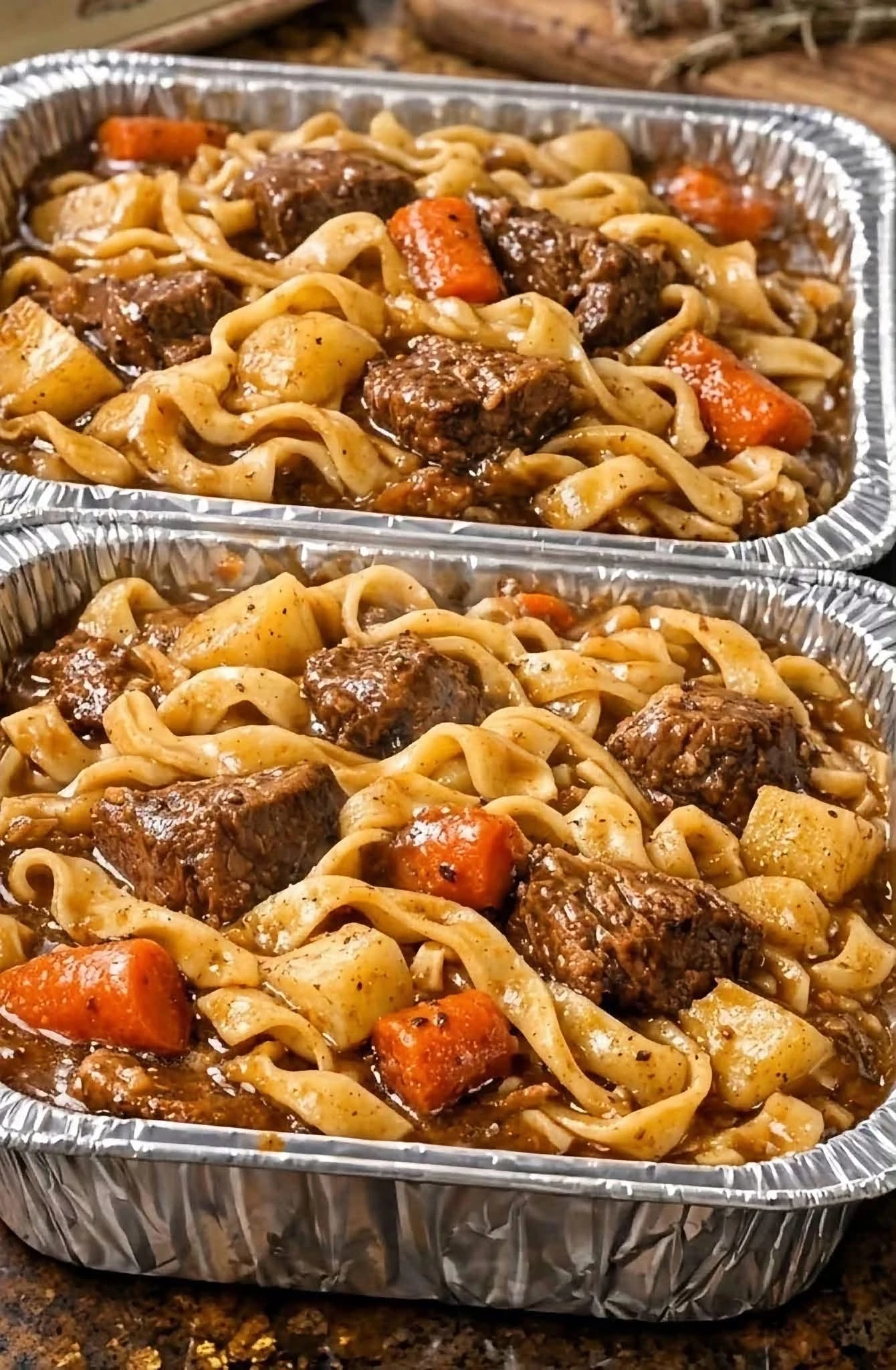
Inspired by the dish shown in the image, this recipe focuses on thick pieces of beef that become fork-tender after slow cooking, chunky potatoes and carrots that absorb the savory broth, and broad egg noodles that soak up the finished gravy without becoming dry.
The sauce is what brings everything together. Beef broth, Worcestershire sauce, onions, garlic, herbs, and the browned bits from the meat create a deep flavor base, while a small amount of flour or cornstarch turns the cooking liquid into a smooth gravy that clings beautifully to the noodles.
What makes this recipe especially satisfying is the combination of textures. The beef is soft and juicy, the potatoes are tender but still hold their shape, the carrots add a little sweetness, and the noodles bring a soft, comforting chew.
It is perfect for cold evenings, Sunday dinner, family meals, meal prep, or anytime you want something warm and filling without needing a complicated list of ingredients.
You can make it on the stovetop, in a Dutch oven, or in a slow cooker. The basic method is the same: brown the beef, build the sauce, cook the meat slowly until tender, add the vegetables, then finish with the noodles once the beef is ready.
Serve it exactly as it is for a complete meal, or add crusty bread, dinner rolls, green beans, or a simple salad on the side.
Recipe Overview
| Detail | Information |
|---|---|
| Recipe Name | Slow-Cooked Beef and Noodles with Potatoes and Carrots |
| Prep Time | 25 minutes |
| Cook Time | 2–2 1/2 hours |
| Total Time | About 3 hours |
| Servings | 6–8 |
| Course | Main Course, Dinner |
| Cuisine | American Homestyle Comfort Food |
| Difficulty | Easy to Intermediate |
| Cooking Method | Braised / Slow-Cooked |
| Main Ingredients | Beef, egg noodles, potatoes, carrots |
| Texture | Tender beef, soft noodles, thick gravy |
| Flavor | Beefy, savory, rich, herby |
| Best For | Family dinners, cold weather, meal prep |
| Make-Ahead Friendly | Excellent |
| Freezer Friendly | Beef base yes |
| Best Served | Hot |
Why You’ll Love This Beef and Noodles Recipe
This meal is hearty enough to stand on its own.
The beef becomes extremely tender.
The noodles absorb the gravy.
The potatoes make the dish more filling.
The carrots add sweetness.
The sauce is rich without needing heavy cream.
Another reason this recipe works so well is that it is flexible. You can make it thinner like a beef noodle soup, or reduce the broth and thicken it more for a gravy-heavy version like the one shown in the image.
It is also an excellent way to turn an affordable beef chuck roast into a meal that feels rich and satisfying.
What Is Beef and Noodles with Potatoes and Carrots?
This dish combines two classic comfort foods:
- Beef stew
- Beef and egg noodles
Traditional beef stew usually includes chunks of beef, carrots, potatoes, and a savory broth.
Beef and noodles usually consists of tender braised beef served with wide egg noodles and gravy.
This recipe brings the two together.
The result is a complete one-pot meal with:
- Beef
- Vegetables
- Noodles
- Rich gravy
Ingredients
For the Beef
| Ingredient | Amount |
|---|---|
| Beef chuck roast, cut into chunks | 2 1/2 lb |
| Salt | 1 1/2 teaspoons |
| Black pepper | 1 teaspoon |
| Garlic powder | 1 teaspoon |
| All-purpose flour | 1/4 cup |
| Neutral oil | 2 tablespoons |
For the Gravy Base
| Ingredient | Amount |
|---|---|
| Yellow onion, diced | 1 large |
| Garlic cloves, minced | 4 |
| Tomato paste | 1 tablespoon |
| Beef broth | 5 cups |
| Worcestershire sauce | 2 tablespoons |
| Soy sauce | 1 tablespoon, optional |
| Dried thyme | 1 teaspoon |
| Dried parsley | 1 teaspoon |
| Bay leaves | 2 |
| Smoked paprika | 1/2 teaspoon |
For the Vegetables
| Ingredient | Amount |
|---|---|
| Yukon Gold or red potatoes | 1 1/2 lb |
| Carrots | 4 large |
| Celery | 2 stalks, optional |
For the Noodles
| Ingredient | Amount |
|---|---|
| Wide egg noodles | 12 oz |
| Butter | 2 tablespoons |
For Thickening the Sauce
Choose one:
Flour Method
- 2 tablespoons flour
- 3 tablespoons water
Cornstarch Method
- 2 tablespoons cornstarch
- 2 tablespoons cold water
Best Beef for This Recipe
The best cut is beef chuck.
Chuck contains enough fat and connective tissue to become tender during slow cooking.
Good options include:
- Chuck roast
- Stew meat cut from chuck
- Boneless beef shoulder
Avoid very lean steak cuts because they can become dry during long cooking.
Why Chuck Roast Works So Well
Chuck starts out firm.
During slow cooking, the connective tissue gradually breaks down into gelatin.
That gelatin gives the gravy extra body and makes the beef feel tender and juicy.
This is why tougher cuts often work better than expensive lean cuts in braised recipes.
How Big Should the Beef Pieces Be?
Cut the beef into chunks about 1 1/2 to 2 inches wide.
Small pieces can dry out or break apart.
Larger chunks stay juicy and look more like the thick beef pieces shown in the image.
Best Potatoes to Use
Yukon Gold
Yukon Gold potatoes are creamy and hold their shape well.
They are one of the best options.
Red Potatoes
Red potatoes also stay firm during simmering.
They work beautifully in stew-style dishes.
Russet Potatoes
Russets can be used, but they soften more quickly.
They may begin breaking apart and naturally thicken the sauce.
Ingredient Notes
Worcestershire Sauce
Worcestershire adds depth and umami.
It makes the broth taste more developed without overpowering the beef.
Tomato Paste
Tomato paste adds a small amount of acidity and richness.
The dish should not taste tomato-heavy.
Soy Sauce
Soy sauce is optional.
A small amount can deepen the savory flavor of the gravy.
Use low-sodium soy sauce if possible.
Bay Leaves
Bay leaves give the braising liquid a subtle savory aroma.
Remove them before serving.
Equipment Needed
| Equipment | Purpose |
|---|---|
| Dutch oven or heavy pot | Main cooking vessel |
| Large skillet | Optional browning |
| Tongs | Turning beef |
| Wooden spoon | Stirring |
| Large pot | Noodles |
| Sharp knife | Cutting beef and vegetables |
| Cutting board | Prep |
| Measuring cups | Broth |
| Measuring spoons | Seasonings |
Step-by-Step Instructions
Step 1: Prepare the Beef
Pat the beef dry.
Season with:
- Salt
- Black pepper
- Garlic powder
Sprinkle lightly with flour.
Toss to coat.
The flour helps with browning and adds a little body to the sauce.
Step 2: Heat the Pot
Place a Dutch oven over medium-high heat.
Add oil.
Let it become hot.
Step 3: Brown the Beef
Add the beef in a single layer.
Do not overcrowd.
Brown for approximately 2–3 minutes per side.
You do not need to cook the beef through.
The goal is color.
Step 4: Work in Batches
Remove browned beef to a plate.
Repeat until all beef is browned.
Crowding the pot causes steaming rather than browning.
Step 5: Cook the Onion
Reduce heat slightly.
Add the diced onion.
Cook for approximately 4–5 minutes.
The onion should soften and begin turning golden.
Step 6: Add Garlic
Add the garlic.
Cook for about 30 seconds.
Step 7: Add Tomato Paste
Add tomato paste.
Cook for about 1 minute.
Stir continuously.
Cooking the paste briefly deepens its flavor.
Step 8: Deglaze the Pot
Pour in approximately 1 cup beef broth.
Scrape the bottom of the pot.
Those browned bits contain a lot of flavor.
Step 9: Return the Beef
Add the beef and any juices back into the pot.
Step 10: Add the Remaining Broth
Pour in the remaining beef broth.
Add:
- Worcestershire sauce
- Soy sauce if using
- Thyme
- Parsley
- Paprika
- Bay leaves
Stir.
Step 11: Simmer Slowly
Bring to a gentle simmer.
Cover.
Reduce heat to low.
Cook for approximately 1 1/4 to 1 1/2 hours.
The beef should begin becoming tender.
Step 12: Prepare the Vegetables
While the beef cooks:
Cut potatoes into large chunks.
Slice carrots into thick pieces.
If using celery, chop into large slices.
Step 13: Add Potatoes and Carrots
After the beef has cooked for about 75–90 minutes, add the potatoes and carrots.
Stir gently.
Step 14: Continue Braising
Cover again.
Cook for another 30–40 minutes.
The vegetables should become tender.
The beef should now be easy to pierce with a fork.
Step 15: Cook the Noodles Separately
Bring a separate pot of salted water to a boil.
Add the egg noodles.
Cook until just tender.
Do not overcook.
Step 16: Drain the Noodles
Drain well.
Toss with butter.
Set aside briefly.
Cooking them separately gives you much better control over texture.
Step 17: Check the Beef
The beef should now be fork-tender.
If it still feels firm, continue cooking.
Do not rush.
Chuck roast becomes tender with time.
Step 18: Thicken the Gravy
If you want the thick glossy gravy shown in the image, mix cornstarch with cold water.
Pour gradually into the simmering broth.
Stir.
Cook for 2–3 minutes.
The sauce should become glossy and lightly thickened.
Step 19: Add the Noodles
Add the cooked egg noodles to the beef mixture.
Fold gently.
Do not stir aggressively because the beef and potatoes are tender.
Step 20: Let Everything Come Together
Simmer for another 2–3 minutes.
The noodles will absorb some of the gravy.
Step 21: Taste and Adjust
Taste the sauce.
Add more:
- Salt
- Black pepper
- Worcestershire
if needed.
Remove the bay leaves.
Step 22: Serve
Spoon into large bowls.
Make sure every serving gets:
- Beef
- Noodles
- Potatoes
- Carrots
- Plenty of gravy
Serve immediately.
How to Get the Thick Glossy Gravy Shown in the Image
The sauce in the image looks rich and glossy rather than watery.
To achieve that:
Brown the beef well.
Use concentrated beef broth.
Let the stew simmer slowly.
Use a small cornstarch slurry near the end.
Allow the noodles to absorb some gravy.
Do not add excessive water.
The Secret to Tender Beef
Time is the most important ingredient.
If beef chuck is still tough, it usually means it needs more cooking—not less.
Continue simmering gently.
Once the collagen breaks down, the texture changes dramatically.
How to Keep the Potatoes from Falling Apart
Use waxy potatoes such as Yukon Gold or red potatoes.
Cut them into large chunks.
Add them later than the beef.
Do not stir constantly.
These simple steps help them hold their shape.
How to Keep the Noodles from Getting Mushy
Cook the noodles separately.
Stop cooking when they are just tender.
Add them to the beef only near the end.
If you cook them in the stew for too long, they continue absorbing liquid and can become extremely soft.
Why Cooking the Noodles Separately Is Better
You get:
- Better texture
- More predictable gravy thickness
- Easier leftovers
- Less starch in the sauce
This is especially useful when making a large batch.
Slow Cooker Method
This recipe works very well in a slow cooker.
Step 1
Brown the beef on the stovetop.
Step 2
Transfer to the slow cooker.
Add onion, garlic, seasonings, broth, Worcestershire, and tomato paste.
Step 3
Cook on:
LOW for 7–8 hours
or
HIGH for 4–5 hours
Step 4
Add potatoes and carrots during the final 2–3 hours on LOW.
Step 5
Cook noodles separately.
Add noodles and thickener shortly before serving.
Instant Pot Version
Brown the beef using SAUTÉ mode.
Add broth and seasonings.
Pressure cook for approximately 35 minutes.
Allow a natural release for about 10–15 minutes.
Add potatoes and carrots.
Pressure cook another 4–5 minutes.
Cook noodles separately and combine at the end.
Beef and Mushroom Noodles
Add:
- 12 oz sliced mushrooms
Brown them after the beef.
Mushrooms deepen the savory flavor.
Creamy Beef and Noodles
For a richer version, add:
- 1/2 cup heavy cream
or
- 1/2 cup sour cream
at the end.
Do not boil aggressively after adding dairy.
Onion Gravy Beef and Noodles
Double the onions.
Cook them until deeply golden.
This creates a sweeter, richer gravy.
Garlic Butter Beef and Noodles
Add extra garlic.
Stir 2 tablespoons butter into the sauce just before serving.
This gives the gravy a glossy finish.
Pepper Beef and Noodles
Increase the black pepper.
Use freshly cracked pepper.
This creates a bolder, steakhouse-style flavor.
Beef Stroganoff-Inspired Version
Remove the potatoes.
Add mushrooms.
Finish with sour cream.
Serve over noodles.
This creates a dish closer to beef stroganoff.
Spicy Beef and Noodles
Add:
- Red pepper flakes
- Cayenne
- Hot sauce
Keep the heat moderate so the beef flavor still comes through.
What to Serve with Beef and Noodles
| Side Dish | Why It Works |
|---|---|
| Dinner rolls | Perfect for the gravy |
| Crusty bread | Excellent for dipping |
| Green beans | Adds freshness |
| Broccoli | Light vegetable side |
| Side salad | Balances the rich meal |
| Peas | Classic comfort-food pairing |
| Roasted Brussels sprouts | Savory contrast |
Best Bread Pairing
Serve with:
- Soft dinner rolls
- French bread
- Rustic bread
- Garlic bread
Use the bread to soak up the gravy.
Family Dinner Serving Idea
Serve generous bowls with:
- Beef
- Noodles
- Potatoes
- Carrots
Add dinner rolls and a green vegetable.
This makes a complete family meal.
Meal Prep Idea
Divide into individual containers.
Keep noodles lightly coated with gravy so they do not dry out.
Refrigerate.
Reheat gently.
Make-Ahead Instructions
The beef and vegetable base can be made one day ahead.
In fact, the flavor often improves overnight.
Cook the noodles separately when ready to serve.
This gives the freshest texture.
Why This Dish Is Even Better the Next Day
As the beef rests in the gravy:
- The flavor deepens
- The sauce becomes richer
- The meat absorbs more seasoning
The main issue is the noodles, which continue absorbing liquid.
For best leftovers, store noodles separately if possible.
Storage
Store in airtight containers.
Refrigerate for up to 3–4 days.
If possible, keep noodles separate from the beef mixture.
Reheating on the Stovetop
Place the beef and noodles in a saucepan.
Add a small amount of broth.
Heat over medium-low.
Stir gently.
Microwave Reheating
Cover loosely.
Heat in short intervals.
Add a splash of broth if the noodles have absorbed too much sauce.
Freezing
The beef, potatoes, carrots, and gravy can be frozen.
Noodles are less ideal because they can become very soft.
For the best freezer meal:
Freeze the beef stew base without noodles.
Prepare fresh noodles after reheating.
Freeze for up to 3 months.
Common Mistakes to Avoid
Using Lean Beef
Very lean beef can become dry.
Chuck roast works better.
Skipping Browning
Browning creates deeper flavor.
Do not skip it if possible.
Adding Potatoes Too Early
They may fall apart.
Add later.
Overcooking Noodles
This creates a mushy texture.
Cook just until tender.
Adding Too Much Thickener
The sauce should coat the noodles, not become paste-like.
Add slurry gradually.
Boiling the Beef Hard
A hard boil can make beef less tender.
Use a gentle simmer.
Troubleshooting Guide
| Problem | Likely Cause | Solution |
|---|---|---|
| Beef is tough | Needs more cooking | Simmer longer |
| Beef is dry | Too lean or overcooked | Use chuck |
| Sauce is thin | Not reduced enough | Add slurry |
| Sauce too thick | Too much thickener | Add broth |
| Potatoes fall apart | Overcooked | Add later |
| Noodles mushy | Overcooked | Cook separately |
| Dish tastes bland | Needs seasoning | Add salt/Worcestershire |
| Gravy tastes flat | Weak broth | Use richer beef broth |
Nutrition Estimate
| Nutrition | Approximate Amount |
|---|---|
| Calories | 550–700 per serving |
| Protein | 35–45 g |
| Carbohydrates | 55–70 g |
| Fat | 20–30 g |
| Fiber | 5–7 g |
| Sodium | 800–1200 mg |
| Serving Size | 1 large bowl |
Nutrition values are approximate and depend on beef, noodles, broth, potatoes, and serving size.
Frequently Asked Questions
What is beef and noodles?
It is a comfort-food dish made with tender beef, wide noodles, and savory gravy.
Why add potatoes and carrots?
They make the dish more like a complete beef stew and add extra texture.
What beef cut works best?
Chuck roast is one of the best choices.
Can I use stew meat?
Yes.
Try to choose stew meat cut from chuck.
Can I use steak?
You can, but expensive tender steaks are not necessary.
Do I have to brown the beef?
No, but browning gives much better flavor.
Why is my beef tough?
It probably needs more time.
Slow-cooked beef often becomes tender only after enough collagen has broken down.
Can I make this in a slow cooker?
Yes.
It works very well.
Can I make it in an Instant Pot?
Yes.
Pressure cooking is a faster alternative.
What kind of noodles should I use?
Wide egg noodles are ideal.
Can I use homemade noodles?
Yes.
Homemade egg noodles are excellent.
Can I use pasta instead?
Yes.
Fettuccine or pappardelle can work.
Should I cook noodles separately?
For the best texture, yes.
Can I cook noodles directly in the stew?
You can, but they will absorb much more liquid and may become soft.
Can I add mushrooms?
Yes.
Mushrooms are one of the best additions.
Can I add peas?
Yes.
Add frozen peas near the end.
Can I add celery?
Yes.
Celery adds classic stew flavor.
Can I add red wine?
Yes.
Add about 1/2 cup after browning the beef and reduce slightly before adding broth.
Can I make the sauce creamy?
Yes.
Add heavy cream or sour cream at the end.
Can I make it spicy?
Yes.
Add chili flakes or hot sauce.
How do I make the gravy darker?
Brown the beef well and use a small amount of soy sauce or dark Worcestershire-rich broth.
How do I make the gravy thicker?
Use cornstarch slurry or flour slurry.
Can I make this ahead?
Yes.
The beef base is excellent made ahead.
How long does it last in the refrigerator?
About 3–4 days.
Can I freeze it?
Yes.
Freeze the beef and vegetable base for best results, then add fresh noodles later.
What goes best with it?
Dinner rolls, green beans, salad, or crusty bread are all excellent.
Final Thoughts
This Slow-Cooked Beef and Noodles with Potatoes and Carrots is the kind of meal that brings together everything people love about classic comfort food.
Tender chunks of beef slowly cook in a rich savory broth until they become soft enough to cut with a fork. Potatoes and carrots absorb that beefy flavor while still adding their own texture, and wide egg noodles pull the entire dish together by soaking up the glossy gravy.
The most important part of the recipe is patience.
Brown the beef well.
Give the chuck enough time to become tender.
Add the potatoes later so they hold their shape.
Cook the noodles separately.
And thicken the sauce only after the beef and vegetables are fully cooked.
Those simple techniques create the thick, glossy, beef-filled noodle dish shown in the finished plate.
Once you master the basic version, you can easily customize it with mushrooms, onions, peas, red wine, cream, garlic butter, or extra herbs.
Serve it steaming hot in a large bowl with plenty of gravy and a piece of crusty bread on the side.
It is hearty, satisfying, freezer-friendly, family-friendly, and exactly the kind of dinner that tastes even better when the weather turns cold.