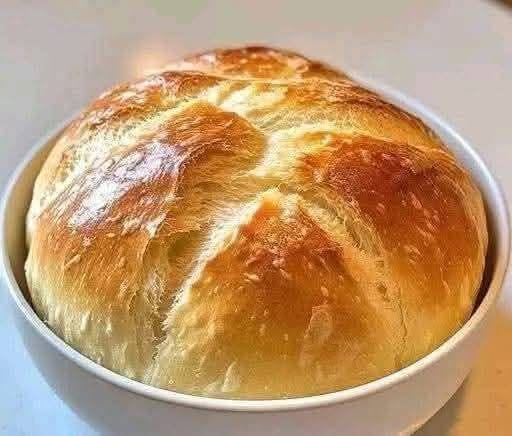
Make this easy homemade bread recipe with simple ingredients for a soft fluffy center and golden crust. A beginner-friendly bread loaf perfect for breakfast, dinner, soup, sandwiches, and family meals.
It is soft inside.
It is golden outside.
It smells amazing.
It uses simple ingredients.
It is perfect for beginners.
This homemade bread has a beautiful golden crust, a tender fluffy center, and a warm fresh-baked flavor that makes any meal feel special. It is the kind of bread you can serve with breakfast, soup, stew, butter, jam, cheese, eggs, roasted meat, or a cozy family dinner.
You do not need fancy equipment.
You do not need complicated baking skills.
You do not need a bread machine.
With a few basic steps, you can make a beautiful round loaf at home that looks rustic, soft, and delicious.
The bread in the image looks like a golden homemade round loaf baked until puffed, shiny, and lightly cracked on top. This style is perfect for people who love simple homemade bread with a soft inside and a beautiful crust.
Recipe Overview
| Detail | Information |
|---|---|
| Recipe Name | Easy Homemade Bread |
| Prep Time | 20 minutes |
| Rise Time | 1 hour 30 minutes |
| Cook Time | 30–35 minutes |
| Total Time | About 2 hours 30 minutes |
| Servings | 1 round loaf |
| Course | Bread, Side Dish |
| Cuisine | Homemade Baking |
| Difficulty | Easy |
| Best Served | Warm or room temperature |
| Main Ingredients | Flour, yeast, water, sugar, salt |
| Texture | Soft inside, golden crust |
| Flavor | Mild, warm, buttery, homemade |
Why You’ll Love This Easy Homemade Bread Recipe
You will love this Easy Homemade Bread Recipe because it is simple, affordable, and satisfying.
It uses basic pantry ingredients.
It does not require a mixer.
It rises beautifully.
It bakes into a golden loaf.
It is perfect for beginners.
It tastes better than store-bought bread.
It makes the kitchen smell wonderful.
Homemade bread is one of the most comforting recipes you can make. The dough starts with only a few ingredients, but after rising and baking, it becomes something warm, soft, and deeply satisfying.
This bread is also very flexible. You can make it plain, buttery, garlicky, herby, cheesy, sweet, or rustic.
You can slice it for sandwiches.
You can toast it for breakfast.
You can serve it beside soup.
You can tear it apart while warm and spread it with butter.
A fresh loaf of bread always feels special, even when the recipe is simple.
What Makes This Homemade Bread So Good?
The secret to good homemade bread is balance.
The yeast helps the dough rise.
The flour gives structure.
The warm water activates the yeast.
The sugar helps feed the yeast and adds a little softness.
The salt gives flavor.
The oil or butter makes the crumb tender.
The rising time allows the dough to become light and airy.
When the bread bakes, the outside becomes golden and slightly crisp while the inside stays soft and fluffy.
This recipe is not complicated, but each step matters.
Mix the dough well.
Let it rise properly.
Shape it gently.
Bake until golden.
Let it cool before slicing.
That is how you get a beautiful homemade loaf with great texture.
Ingredients
Main Ingredients
| Ingredient | Amount |
|---|---|
| All-purpose flour or bread flour | 4 cups |
| Warm water | 1 ½ cups |
| Active dry yeast or instant yeast | 2 ¼ teaspoons |
| Sugar | 2 tablespoons |
| Salt | 1 ½ teaspoons |
| Olive oil or melted butter | 3 tablespoons |
| Extra flour | For dusting |
| Egg wash, optional | 1 egg beaten with 1 tablespoon water |
Optional Add-Ins
| Add-In | Amount |
|---|---|
| Garlic powder | 1 teaspoon |
| Dried rosemary | 1 tablespoon |
| Dried oregano | 1 teaspoon |
| Shredded cheese | ½ cup |
| Honey | 1 tablespoon |
| Sesame seeds | 1 tablespoon |
| Fresh herbs | 2 tablespoons |
| Cinnamon | 1 teaspoon |
| Raisins | ½ cup |
Ingredient Notes
Flour
Flour is the base of the bread.
All-purpose flour works very well and gives the bread a soft texture.
Bread flour can also be used if you want a chewier loaf with more structure.
If you want a rustic flavor, you can replace ½ cup of the white flour with whole wheat flour.
Do not add too much flour at once. Bread dough should be soft and slightly tacky, not dry and stiff.
Too much flour can make the bread heavy and dense.
Yeast
Yeast is what makes the bread rise.
You can use active dry yeast or instant yeast.
If using active dry yeast, dissolve it in warm water with sugar first and let it sit until foamy.
If using instant yeast, you can mix it directly with the flour.
The yeast should be fresh. Old yeast may not rise well.
If your yeast does not foam after a few minutes in warm water, it may be expired or the water may have been too hot or too cold.
Warm Water
Warm water helps activate the yeast.
The water should feel warm, not hot.
If the water is too hot, it can kill the yeast.
If the water is too cold, the yeast will work slowly.
A good temperature is warm like bath water.
The amount of water may need slight adjustment depending on your flour and kitchen humidity.
Sugar
Sugar helps feed the yeast and gives the bread a softer texture.
It does not make the bread overly sweet.
You can use white sugar, honey, or brown sugar.
Honey gives a slightly deeper flavor.
If using honey, mix it into the warm water before adding the flour.
Salt
Salt is important for flavor.
Bread without salt tastes flat.
Salt also helps control the yeast and strengthens the dough.
Do not skip it.
Add salt after the yeast has started activating, especially if you are proofing active dry yeast.
Oil or Butter
Oil or melted butter makes the bread softer and richer.
Olive oil gives a light savory flavor.
Butter gives a richer homemade taste.
You can use either one.
For a softer sandwich-style loaf, butter works beautifully.
For a rustic dinner bread, olive oil is excellent.
Best Flour for Homemade Bread
All-Purpose Flour
All-purpose flour is easy to find and works well for soft homemade bread.
It gives a tender crumb and mild flavor.
Bread Flour
Bread flour has more protein.
It creates a stronger dough and a chewier texture.
It is great if you want a more bakery-style loaf.
Whole Wheat Flour
Whole wheat flour adds flavor and fiber.
Use it in small amounts if you want the loaf to stay soft.
Too much whole wheat can make the bread heavier.
Self-Rising Flour
Self-rising flour is not recommended for yeast bread because it already contains baking powder and salt.
Use regular flour for best results.
Equipment Needed
| Equipment | Purpose |
|---|---|
| Large mixing bowl | Mixing and rising dough |
| Wooden spoon | Stirring |
| Measuring cups | Measuring ingredients |
| Clean towel | Covering dough |
| Baking dish or round pan | Baking the loaf |
| Sharp knife | Scoring the top |
| Pastry brush | Egg wash |
| Cooling rack | Cooling bread |
You can make this recipe without a stand mixer.
Your hands are enough.
If you do have a mixer with a dough hook, you can use it to make the kneading easier.
Step-by-Step Instructions
Step 1: Activate the Yeast
Add warm water to a large mixing bowl.
Stir in the sugar.
Sprinkle the yeast over the water.
Let it sit for 5–10 minutes until foamy.
The foam means the yeast is alive and active.
If the mixture does not foam, start again with fresh yeast.
This step is very important if using active dry yeast.
Step 2: Add Oil and Salt
Add olive oil or melted butter to the yeast mixture.
Add the salt.
Stir gently.
The oil adds softness and flavor to the bread.
The salt gives the dough proper taste.
Step 3: Add the Flour
Add the flour one cup at a time.
Stir after each addition.
At first, the dough will look loose and sticky.
As you add more flour, it will begin to come together.
When the dough becomes thick, use your hands to mix it.
You may not need every bit of flour, or you may need a tablespoon more.
The dough should be soft, smooth, and slightly tacky.
Step 4: Knead the Dough
Place the dough on a lightly floured surface.
Knead for 8–10 minutes.
Push the dough forward with the palm of your hand.
Fold it back.
Turn it.
Repeat.
The dough should become smooth and elastic.
If it sticks too much, sprinkle a little flour.
Do not add too much flour.
A soft dough makes softer bread.
Step 5: First Rise
Place the dough in a lightly oiled bowl.
Turn it once so the surface is coated.
Cover with a clean towel.
Let it rise in a warm place for about 1 hour, or until doubled in size.
If your kitchen is cold, the dough may need more time.
A good place to rise is inside an oven that is turned off with the light on.
Step 6: Shape the Loaf
After the dough has doubled, gently punch it down.
Place it on a lightly floured surface.
Shape it into a round loaf.
Tuck the edges underneath to create a smooth top.
Place the dough into a greased round baking dish, oven-safe bowl, or baking pan.
The shape should look like a rustic round loaf.
Step 7: Second Rise
Cover the shaped dough with a towel.
Let it rise again for 30–40 minutes.
The loaf should become puffy.
Do not let it over-rise too much or it may collapse while baking.
During the last part of rising, preheat your oven to 375°F / 190°C.
Step 8: Brush the Top
For a shiny golden crust, brush the top with egg wash.
Mix one egg with one tablespoon of water.
Brush gently over the dough.
If you do not want egg wash, brush with milk, melted butter, or olive oil.
You can also sprinkle sesame seeds, herbs, or coarse salt on top.
Step 9: Score the Bread
Use a sharp knife to make a shallow cut across the top of the loaf.
This helps the bread expand as it bakes.
It also gives the loaf a beautiful rustic look.
Do not cut too deep.
A simple cross or single slash is enough.
Step 10: Bake the Bread
Place the bread in the preheated oven.
Bake for 30–35 minutes, or until the top is golden brown.
The bread should sound hollow when tapped on the bottom.
If the top browns too quickly, cover loosely with foil during the last 10 minutes.
The inside should be fully baked and soft.
Step 11: Cool Before Slicing
Remove the bread from the oven.
Let it cool in the pan for 10 minutes.
Then transfer it to a cooling rack.
Let it cool at least 30 minutes before slicing.
Warm bread is tempting, but slicing too early can make the inside gummy.
Cooling helps the crumb set properly.
How to Make the Bread Soft and Fluffy
Soft bread depends on moisture, kneading, and proper rising.
Use enough water.
Do not add too much flour.
Knead until smooth.
Let the dough rise until doubled.
Do not overbake.
Brush with butter after baking.
Cover the warm loaf with a clean towel for a softer crust.
If you want extra soft bread, replace ¼ cup of water with milk.
You can also add one extra tablespoon of butter.
How to Get a Golden Crust
A golden crust comes from heat, egg wash, and proper baking.
Brush the top with egg wash for shine.
Use milk for a softer golden crust.
Use butter for rich flavor.
Bake until deeply golden.
Place the bread on the middle oven rack.
Do not underbake.
The top should be golden, not pale.
If you want a crispier crust, bake the bread uncovered and let it cool on a rack.
If you want a softer crust, brush it with butter right after baking.
How to Know When Bread Is Done
Bread is done when the crust is golden and the loaf sounds hollow when tapped.
You can also check with a food thermometer.
The center of the bread should be around 190°F to 200°F / 88°C to 93°C.
If you do not have a thermometer, use the tap test.
Lift the loaf carefully and tap the bottom.
If it sounds hollow, it is ready.
If it sounds dense, bake a few more minutes.
Common Bread Baking Tips
Use fresh yeast.
Measure flour correctly.
Do not rush the rise.
Keep dough slightly soft.
Knead enough.
Do not bake in a cold oven.
Let bread cool before slicing.
Use a sharp knife for clean slices.
Store properly after cooling.
Bread baking becomes easier with practice. Even if your first loaf is not perfect, it will still taste homemade and comforting.
Delicious Variations
Garlic Herb Homemade Bread
Add garlic powder, rosemary, oregano, and parsley to the dough.
Brush the top with garlic butter after baking.
This version is perfect with pasta and soup.
Cheesy Homemade Bread
Add shredded cheddar, mozzarella, or Parmesan to the dough.
You can also sprinkle cheese on top before baking.
This makes a rich savory bread.
Honey Butter Bread
Replace sugar with honey.
Brush the warm loaf with melted butter and honey.
This version is soft and slightly sweet.
Whole Wheat Homemade Bread
Replace 1 cup of white flour with whole wheat flour.
Add a little extra water if the dough feels dry.
This gives a nutty flavor.
Cinnamon Raisin Bread
Add cinnamon and raisins to the dough.
Use a little extra sugar.
Serve with butter for breakfast.
Sesame Seed Bread
Brush the top with egg wash and sprinkle sesame seeds before baking.
This gives a bakery-style finish.
Olive Oil Dinner Bread
Use olive oil in the dough and brush extra olive oil on top.
Add rosemary and sea salt for a rustic flavor.
What to Serve with Homemade Bread
Homemade bread goes with almost everything.
Serve it with butter.
Serve it with jam.
Serve it with honey.
Serve it with cheese.
Serve it with soup.
Serve it with stew.
Serve it with chili.
Serve it with eggs.
Serve it with pasta.
Serve it with roasted chicken.
Serve it with pot roast.
Serve it with salad.
Serve it with olive oil and herbs.
A fresh loaf of bread can turn a simple meal into something special.
Best Meals to Pair with This Bread
This bread is perfect with comforting meals.
Try it with:
Chicken soup.
Beef stew.
Tomato soup.
Pot roast.
Roasted chicken.
Creamy pasta.
Spaghetti.
Meatballs.
Salad.
Scrambled eggs.
Omelets.
Grilled cheese.
Vegetable soup.
It is also excellent for dipping into sauces and gravies.
How to Use Leftover Bread
Leftover homemade bread is very useful.
Use it for toast.
Use it for sandwiches.
Use it for French toast.
Use it for garlic bread.
Use it for croutons.
Use it for breadcrumbs.
Use it for bread pudding.
Use it for breakfast casseroles.
Use it for grilled cheese.
Use it for dipping in soup.
If the bread becomes slightly dry, toast it or turn it into garlic bread.
Nothing has to go to waste.
Make-Ahead Instructions
You can make the dough ahead of time.
After kneading, place the dough in a covered bowl and refrigerate overnight.
The next day, let it come to room temperature.
Shape it.
Let it rise.
Bake as directed.
Cold fermentation gives the bread more flavor.
You can also bake the bread ahead and reheat it before serving.
Storage
Store the bread at room temperature for 2–3 days.
Keep it wrapped in a clean towel, paper bag, or bread box.
Do not refrigerate bread unless necessary because the refrigerator can dry it out faster.
If your kitchen is very humid, store it in a loose bag and use it within a couple of days.
Let the bread cool completely before storing.
Warm bread trapped in a bag can become soggy.
Reheating
To reheat the bread, place slices in a toaster.
For the whole loaf, wrap it in foil and warm at 325°F / 160°C for 10–15 minutes.
For a crisp crust, unwrap it for the last few minutes.
You can also warm slices in a skillet with butter.
This makes the bread taste fresh again.
Freezing
Homemade bread freezes very well.
Let the loaf cool completely.
Slice it if desired.
Wrap tightly in plastic wrap and then foil or a freezer bag.
Freeze for up to 3 months.
To use, thaw at room temperature.
Slices can be toasted directly from frozen.
Freezing is a great way to keep homemade bread fresh longer.
Common Mistakes to Avoid
Using Hot Water
Hot water can kill yeast.
Use warm water, not boiling water.
Adding Too Much Flour
Too much flour makes bread dense.
Keep the dough soft and slightly tacky.
Not Kneading Enough
Kneading develops gluten.
This helps the bread rise and hold its shape.
Skipping the Rise Time
Bread needs time to rise.
Do not rush it.
Overproofing the Dough
If dough rises too much, it can collapse.
Let it double, but do not leave it too long.
Cutting Too Soon
Hot bread needs time to set.
Let it cool before slicing.
Underbaking
A pale loaf may be doughy inside.
Bake until golden and hollow-sounding.
Troubleshooting Guide
My Bread Did Not Rise
The yeast may be old.
The water may have been too hot or too cold.
The room may have been cold.
The dough may need more time.
Use fresh yeast and give it a warm place to rise.
My Bread Is Dense
You may have added too much flour.
You may not have kneaded enough.
The dough may not have risen fully.
Next time, keep the dough softer and allow enough rise time.
My Bread Is Gummy Inside
The bread may be underbaked.
It may have been sliced too soon.
Bake longer and let it cool before cutting.
My Crust Is Too Hard
Brush the bread with butter after baking.
Cover it with a towel while cooling.
This helps soften the crust.
My Bread Is Too Pale
Use egg wash or milk on top.
Bake a few minutes longer.
Make sure the oven is fully preheated.
My Dough Is Too Sticky
Add flour one tablespoon at a time.
Do not add too much.
Sticky dough often becomes soft bread.
Budget-Friendly Tips
Homemade bread is one of the most affordable recipes.
Flour is inexpensive.
Yeast lasts for many loaves.
Salt and sugar are pantry staples.
Water costs almost nothing.
Oil or butter adds flavor without much cost.
One homemade loaf can serve a family and pair with many meals.
It is also cheaper than buying artisan bread from a bakery.
You can make several loaves and freeze extras.
Nutrition Estimate
| Serving | Amount |
|---|---|
| Calories | 140–220 |
| Carbohydrates | 28–38 g |
| Protein | 4–7 g |
| Fat | 2–6 g |
| Fiber | 1–3 g |
| Sodium | 250–450 mg |
| Serving Size | 1 slice |
Nutrition values are approximate and depend on flour type, oil or butter amount, slice size, and toppings.
Frequently Asked Questions
What is homemade bread made of?
Homemade bread is usually made with flour, yeast, warm water, sugar, salt, and oil or butter.
Can I make this bread without a mixer?
Yes.
You can mix and knead this bread by hand.
A mixer is helpful but not necessary.
Can I use all-purpose flour?
Yes.
All-purpose flour works very well and gives a soft homemade loaf.
Can I use bread flour?
Yes.
Bread flour gives the bread a chewier texture and stronger structure.
Why did my bread not rise?
The yeast may be old, the water may have been too hot, or the dough may have needed more time in a warm place.
How long should bread dough rise?
The first rise usually takes about 1 hour, or until doubled.
The second rise usually takes 30–40 minutes.
Can I make this bread ahead of time?
Yes.
You can refrigerate the dough overnight after kneading, then shape and bake the next day.
How do I make the crust shiny?
Brush the top with egg wash before baking.
You can also use milk for a softer golden crust.
How do I make the crust soft?
Brush the bread with butter after baking and cover it with a clean towel while it cools.
Can I add herbs or cheese?
Yes.
Garlic, rosemary, oregano, parsley, cheddar, mozzarella, and Parmesan all work well.
Can I freeze homemade bread?
Yes.
Cool it completely, wrap it well, and freeze for up to 3 months.
How do I store homemade bread?
Store it at room temperature in a bread box, paper bag, or clean towel for 2–3 days.
Can I use this bread for sandwiches?
Yes.
Slice it once cooled and use it for sandwiches, toast, grilled cheese, or breakfast.
Why is my bread dense?
Too much flour, not enough kneading, weak yeast, or not enough rising time can make bread dense.
Can I make this recipe sweeter?
Yes.
Add more sugar or honey and brush the warm loaf with honey butter.
Final Thoughts
This Easy Homemade Bread Recipe is soft, golden, comforting, and perfect for everyday baking.
It uses simple ingredients.
It is easy to make by hand.
It rises beautifully.
It bakes into a warm round loaf with a golden crust and fluffy center.
The secret is to use fresh yeast, keep the dough soft, knead it well, allow enough rising time, and bake until the loaf is fully golden.
Serve it warm with butter, jam, cheese, soup, stew, eggs, pasta, roasted meat, or any family meal.
Homemade bread is simple, affordable, and deeply satisfying.
Once you make it at home, it becomes the kind of recipe you will want to bake again and again.