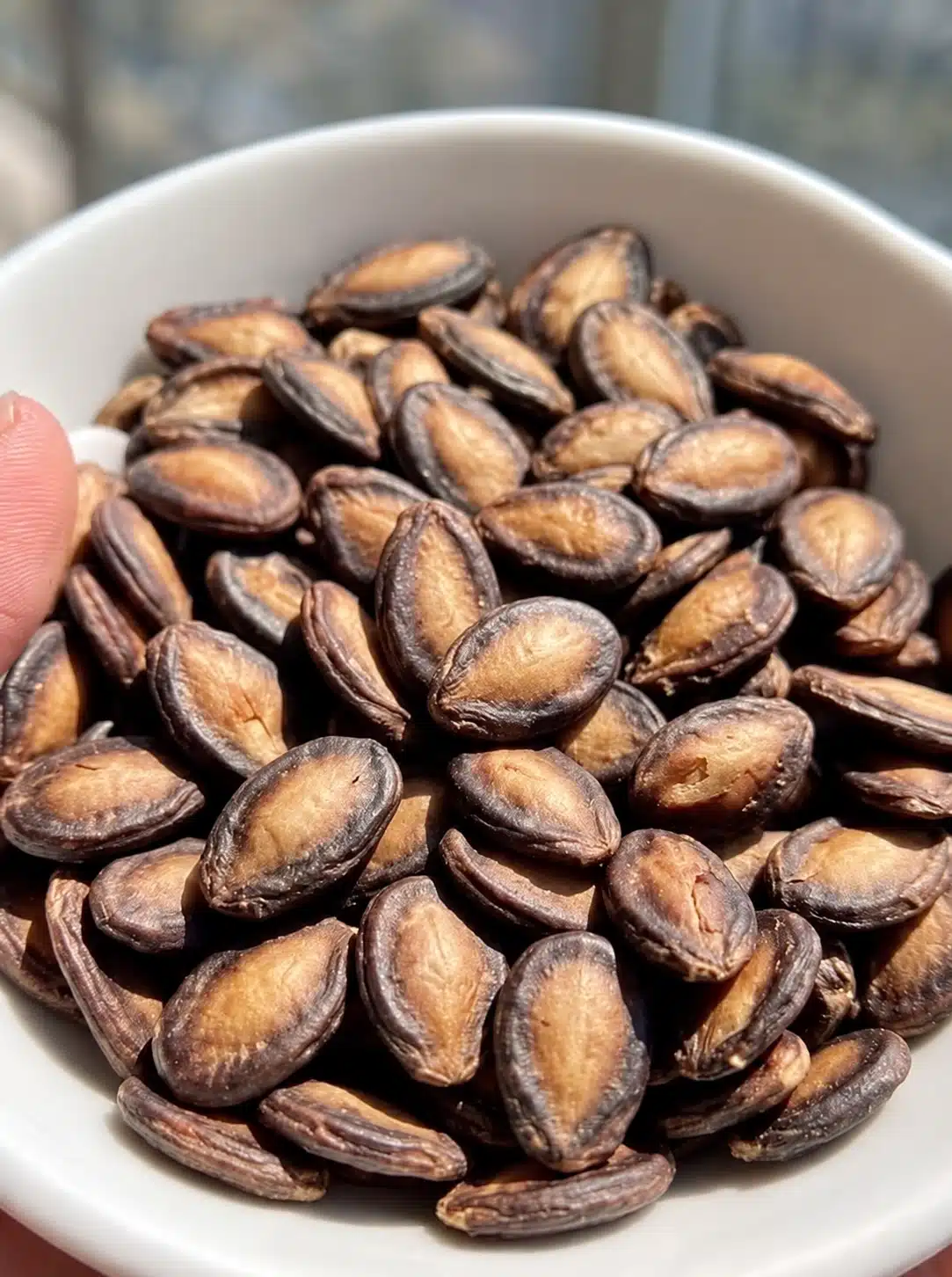
The dark seeds shown in the image appear to be watermelon seeds, a surprisingly nutrient-dense food that many people throw away without realizing they can be cleaned, roasted, seasoned, and eaten as a crunchy snack.
Watermelon seeds can provide plant protein, unsaturated fats, magnesium, zinc, phosphorus, and iron. But it is important to separate those genuine nutritional qualities from the dramatic health claim written on the image. There is no evidence that watermelon seeds—or any single food—can eliminate all cancer cells or prevent blindness. The National Cancer Institute states that no food, vitamin, mineral, supplement, herb, or special diet has been proven to cure cancer or stop it from returning.
That does not make watermelon seeds uninteresting. Quite the opposite. Used as a food rather than a supposed treatment, they can be a flavorful, high-energy addition to snacks, salads, breakfast bowls, trail mixes, and homemade seed blends.
Quick Watermelon Seed Overview
| Detail | Information |
|---|---|
| Food | Watermelon seeds |
| Best Form for Eating | Roasted seeds or shelled kernels |
| Flavor | Mild, nutty, slightly earthy |
| Texture | Crunchy when roasted |
| Main Nutrients | Protein, fat, magnesium, zinc, phosphorus, iron |
| Typical Serving | About 1 ounce / 28 g of kernels |
| Best Uses | Snack, salads, oatmeal, yogurt, trail mix |
| Prep Difficulty | Easy |
| Oven Temperature | About 325°F / 165°C |
| Approximate Roast Time | 15–20 minutes |
| Storage | Airtight container after cooling |
First, a Reality Check About the Claim in the Image
The statement that a seed recipe can “eliminate all cancerous cells” is not supported by clinical evidence.
Cancer is not one single disease, and treatment varies depending on the cancer type, stage, tumor biology, overall health, and many other factors. Nutrition can be important for maintaining strength and overall health, but it should not be presented as a substitute for oncology care.
The National Cancer Institute specifically notes that there is no proof that a particular food, vitamin, mineral, herb, supplement, or dietary pattern can cure cancer or prevent its recurrence. Some supplements and concentrated products can also interact with cancer medications, which is why people receiving treatment are advised to discuss them with their medical team.
The blindness claim should also be treated cautiously. A healthy diet is part of protecting overall eye health, but the National Eye Institute emphasizes regular comprehensive eye exams, management of conditions such as diabetes and high blood pressure, physical activity, not smoking, UV protection, and an overall healthy diet. It does not identify watermelon seeds as a treatment for blindness.
So the useful question is not, “Can these seeds cure serious diseases?”
A better question is:
“What nutrition do watermelon seeds actually provide, and how can we enjoy them as part of a balanced diet?”
Watermelon Seeds Are More Nutritious Than Many People Realize
Dried watermelon seed kernels are concentrated because most of their water has been removed.
According to USDA-linked nutrition data, a 1-ounce serving of dried watermelon seed kernels provides roughly 158 calories, 8 grams of protein, and 13 grams of fat. The same serving provides approximately 146 mg magnesium, 2.9 mg zinc, 2.1 mg iron, and 214 mg phosphorus.
That makes them much closer nutritionally to nuts and other seeds than to the watery watermelon flesh surrounding them.
The majority of their calories come from fat, with a meaningful contribution from protein. USDA-derived data also show that a substantial portion of the fat is polyunsaturated.
Because seeds are calorie-dense, portions matter. A small handful can provide significant nutrition without requiring a huge serving.
Watermelon Seed Nutrition Per 1-Ounce Serving
| Nutrient | Approximate Amount |
|---|---|
| Calories | 158 |
| Protein | 8 g |
| Total Fat | 13.4 g |
| Carbohydrate | 4.3 g |
| Magnesium | 146 mg |
| Phosphorus | 214 mg |
| Potassium | 184 mg |
| Zinc | 2.9 mg |
| Iron | 2.1 mg |
| Calcium | 15 mg |
Values are for dried watermelon seed kernels and can vary by preparation and brand.
Why Magnesium Is Worth Mentioning
Seeds in general are recognized as useful dietary sources of magnesium. The NIH Office of Dietary Supplements explains that magnesium is involved in hundreds of biochemical reactions, including processes related to muscle and nerve function, energy production, blood glucose regulation, blood pressure, protein synthesis, and bone structure.
Watermelon seed kernels are particularly concentrated in magnesium compared with many everyday foods.
That is a legitimate nutritional benefit.
It still does not mean that eating a handful produces a medical treatment effect. Nutrients work within the context of the entire diet and the body’s overall needs.
Watermelon Seeds Also Provide Plant Protein
Approximately 8 grams of protein per ounce is a respectable amount for a small plant food serving.
That makes shelled watermelon seed kernels useful as a topping when you want to add extra texture and some protein to meals.
They work well over oatmeal, yogurt bowls, salads, soups, grain bowls, or roasted vegetables.
They can also be combined with other seeds and nuts to create a homemade trail mix.
What About Zinc?
Watermelon seed kernels also contain zinc.
Zinc is an essential mineral involved in many normal body functions. However, a food containing zinc should not automatically be marketed as a cure for a particular disease.
This distinction matters.
A food can be nutritionally valuable without being medicine.
That is the most accurate way to discuss foods such as watermelon seeds.
Do Watermelon Seeds Prevent Blindness?
There is no good evidence supporting that claim.
Eye health is influenced by genetics, age, disease, smoking, UV exposure, blood pressure, diabetes, nutrition, and other factors.
The National Eye Institute recommends an overall healthy eating pattern and specifically highlights dark leafy greens and fish rich in omega-3 fatty acids as examples of eye-healthy foods. It also emphasizes that comprehensive dilated eye exams are one of the most important ways to detect many eye diseases early.
A handful of seeds cannot replace an eye examination or treatment for an eye condition.
If someone experiences sudden vision loss, new flashing lights, a curtain-like shadow, severe eye pain, or another abrupt visual change, that calls for prompt medical assessment rather than a home remedy.
Can Watermelon Seeds Kill Cancer Cells?
Eating watermelon seeds has not been proven to eliminate cancer cells in people.
This is an important distinction because laboratory studies on isolated plant compounds are sometimes transformed online into claims that a food “kills cancer.”
Laboratory observations do not automatically mean that eating the whole food treats cancer in the human body.
The NCI notes that laboratory and animal research sometimes finds anticancer activity from particular compounds, but evidence in humans is much more complicated, and no individual food has been established as a cancer cure.
Watermelon seeds are food.
Enjoy them for their nutrition and flavor—not as a replacement for cancer treatment.
Roasted Watermelon Seeds Recipe
For the easiest homemade version, you can roast cleaned watermelon seeds with a simple savory seasoning.
Ingredients
- 1 cup cleaned watermelon seeds
- 1 teaspoon olive or avocado oil
- 1/4 teaspoon fine salt
- 1/4 teaspoon smoked paprika, optional
- Pinch of garlic powder, optional
- Pinch of black pepper, optional
Recipe Overview
| Recipe Detail | Information |
|---|---|
| Prep Time | 10 minutes |
| Drying Time | As needed |
| Roasting Time | 15–20 minutes |
| Oven Temperature | 325°F / 165°C |
| Difficulty | Easy |
| Flavor | Toasty and lightly nutty |
| Serving Style | Snack or topping |
| Best Texture | Completely cooled and crisp |
How to Roast Watermelon Seeds
| Step | Instructions |
|---|---|
| 1 | Remove the seeds from the watermelon flesh and rinse them thoroughly in a fine-mesh strainer. |
| 2 | Pick away any remaining fruit pulp. |
| 3 | Spread the seeds over a clean towel and dry them as thoroughly as possible. Moist seeds steam instead of roasting. |
| 4 | Preheat the oven to 325°F / 165°C. |
| 5 | Toss the dry seeds with a small amount of oil, salt, and any optional seasonings. |
| 6 | Spread them in a single layer over a baking sheet. |
| 7 | Roast for about 15–20 minutes, stirring once during cooking. |
| 8 | Remove when the seeds smell toasted and look dry and crisp. Avoid letting them become very dark. |
| 9 | Cool completely before storing. They become crispier as they cool. |
If you are using seeds with hard outer shells, you can crack them and eat the kernels inside, similar to sunflower seeds. Shelled watermelon seed kernels are easier for toppings and recipes.
Three Easy Seasoning Variations
| Style | Seasoning |
|---|---|
| Smoky | Smoked paprika + garlic powder + salt |
| Spicy | Chili powder + cayenne + salt |
| Sweet-Spiced | Cinnamon + a very small amount of sugar + pinch of salt |
Keep seasonings relatively light so the naturally nutty flavor of the seed remains noticeable.
How to Use Roasted Watermelon Seeds
Once roasted, they can be treated much like pumpkin or sunflower seeds.
Try scattering them over yogurt, oatmeal, salads, vegetable bowls, rice dishes, soups, or roasted vegetables. They also work well mixed with almonds, pumpkin seeds, dried fruit, and a small amount of dark chocolate for a homemade snack mix.
Ground shelled kernels can also be stirred into smoothies or blended into seed-based sauces, although the calories add up quickly because the kernels are naturally high in fat.
Whole Seeds vs. Shelled Kernels
These two forms are not exactly the same.
Whole roasted watermelon seeds include the outer shell.
Shelled kernels contain the edible interior and are what most nutrient databases refer to when giving values such as 8 grams of protein per ounce.
If you purchase watermelon seeds commercially, read the package carefully to see whether the listed serving refers to whole seeds or kernels.
That matters when comparing nutrition labels.
Are Watermelon Seeds High in Calories?
They are calorie-dense.
One ounce of dried kernels contains roughly 158 calories. University Hospitals
That is not inherently bad.
Nuts and seeds are naturally energy-dense because they contain substantial amounts of fat.
The practical approach is simply portion awareness.
A small handful is very different from eating a large bowl while distracted.
Are Watermelon Seeds High in Fat?
Yes, but fat is a normal component of seeds.
A 1-ounce serving contains around 13 grams of fat, much of it unsaturated. University Hospitals
Dietary fat helps make seeds satisfying and carries fat-soluble compounds.
The broader quality of your diet matters more than labeling every high-fat whole food as “good” or “bad.”
Can You Eat Watermelon Seeds Straight from the Fruit?
Accidentally swallowing watermelon seeds is generally not a problem for most people.
For a snack, however, roasting them improves flavor and texture.
Fresh seeds are slippery and relatively bland.
Drying and roasting concentrates their nutty flavor and creates the crunch people expect from snack seeds.
Do Watermelon Seeds Grow in Your Stomach?
No.
This is an old joke rather than a biological reality.
Seeds that are swallowed do not turn into watermelon plants inside the digestive system.
The digestive tract does not provide the normal soil, light, and growing conditions required for a watermelon plant.
Are Black Watermelon Seeds Different from White Seeds?
Mature watermelon seeds are generally darker and harder.
The soft white seeds often seen in some watermelons are immature seeds.
If your goal is roasting, mature seeds usually give you the more substantial snack-like texture.
Seedless watermelons can still contain small undeveloped white seed coats.
Can You Eat Watermelon Seeds Every Day?
They can fit into an everyday diet if you enjoy them and portions fit your overall needs.
There is no requirement to eat them daily.
Variety is usually more useful than relying heavily on one “superfood.”
Rotate foods such as watermelon seeds, pumpkin seeds, sunflower seeds, walnuts, almonds, beans, whole grains, fruits, and vegetables.
That gives you a broader mix of nutrients and flavors.
Watermelon Seeds vs. Pumpkin Seeds
| Feature | Watermelon Seed Kernels | Pumpkin Seeds |
|---|---|---|
| Flavor | Mild and nutty | Deeper, earthy-nutty |
| Protein | Relatively high | Relatively high |
| Magnesium | Strong source | Strong source |
| Zinc | Present | Present |
| Best Uses | Snacking, salads, bowls | Snacking, granola, salads |
| Texture | Crunchy when roasted | Crunchy when roasted |
Both can be useful foods.
There is no need to declare one universally “better.”
Choose according to flavor, availability, price, and how you plan to use them.
Watermelon Seeds vs. Sunflower Seeds
Sunflower seeds tend to have a softer, more familiar snack flavor.
Watermelon kernels are a little less common but can be used in many of the same ways.
Both are calorie-dense seed foods.
Both can work in trail mix or as salad toppings.
Rotating between them can make meals more interesting.
Best Ways to Store Roasted Watermelon Seeds
Let the seeds cool completely before storage.
Warm seeds release steam, and trapped moisture reduces crispness.
Transfer cooled seeds to an airtight container.
Keep them somewhere cool and dry.
For longer storage, refrigeration or freezing can help protect the natural oils from becoming stale.
If the seeds develop a noticeably rancid or unpleasant odor, discard them.
Common Roasting Mistakes
| Problem | Likely Cause | Better Method |
|---|---|---|
| Seeds are chewy | Too much moisture | Dry thoroughly before roasting |
| Seeds burn | Oven too hot | Use moderate heat and check early |
| Seasoning falls off | Seeds too dry before seasoning | Toss with a tiny amount of oil |
| Seeds taste greasy | Too much oil | Use only enough to coat lightly |
| Seeds lose crunch | Stored while warm | Cool completely before sealing |
| Seeds taste bitter | Over-roasted or stale | Use fresh seeds and lighter roasting |
A Balanced Way to Think About “Superfoods”
The internet often takes an ordinary nutritious food and gives it extraordinary promises.
That can happen with seeds, spices, teas, vegetables, juices, and herbs.
One post claims a food “detoxes the liver.”
Another says it “melts fat.”
Another says it “kills cancer.”
Those statements can sound exciting, but they often go far beyond what research actually demonstrates.
A more useful approach is to appreciate foods for what they genuinely offer.
Watermelon seeds provide useful nutrients.
They can be part of a balanced eating pattern.
They are inexpensive if you already buy watermelon.
They reduce food waste.
They taste good when roasted.
Those are already worthwhile benefits without attaching unsupported medical claims.
Food Should Support Treatment, Not Replace It
For someone undergoing cancer treatment, nutrition can be extremely important because treatment may affect appetite, taste, weight, digestion, and the ability to eat enough.
The NCI provides nutrition guidance specifically because staying adequately nourished can help patients remain strong enough to continue treatment.
That role is very different from claiming that a food itself eliminates cancer.
Someone with cancer who is considering a concentrated supplement, herb, special diet, or unusual remedy should discuss it with their oncology team because certain products can interact with treatment.
Eye Health Requires More Than One Food
The same principle applies to vision.
There is no single seed, fruit, drink, or supplement that guarantees protection from blindness.
According to the National Eye Institute, healthy habits such as nutritious eating, physical activity, smoking cessation, managing chronic conditions, UV protection, and regular eye exams work together to support eye health.
For many eye diseases, early detection matters because symptoms may not appear until damage has already occurred.
That is why eye examinations are far more important than viral “vision cure” recipes.
Frequently Asked Questions
| Question | Answer |
|---|---|
| Are watermelon seeds edible? | Yes. They can be cleaned, dried, roasted, or eaten as shelled kernels. |
| Are watermelon seeds nutritious? | Yes. Dried kernels contain protein, fat, magnesium, zinc, phosphorus, and iron. |
| Do watermelon seeds cure cancer? | No evidence shows that eating watermelon seeds cures cancer. The NCI states that no single food or special diet has been proven to cure cancer. |
| Can watermelon seeds prevent blindness? | There is no evidence that they prevent blindness. Eye health depends on many factors, and regular eye examinations are important. |
| How much protein is in watermelon seed kernels? | About 8 g per 1-ounce serving of dried kernels. |
| Are they high in magnesium? | Yes. Dried kernels provide about 146 mg per ounce in USDA-linked data. |
| Can I roast seeds directly from a watermelon? | Yes. Clean them thoroughly, dry well, season lightly, and roast until crisp. |
| Do I eat the shell? | Some people crack the shell and eat the kernel. Commercial shelled kernels are easier to use in recipes. |
| Can I add them to salads? | Yes. Roasted kernels add crunch and a mild nutty flavor. |
| Can I store them? | Yes. Cool completely and keep in an airtight container away from heat and moisture. |
| Are they good for weight loss? | They are nutrient-dense but also calorie-dense, so portion size matters. No single food causes weight loss by itself. |
| Can children eat them? | Age-appropriate choking safety matters with whole seeds. For young children, discuss suitable textures and foods with a pediatric professional. |
Final Thoughts
Watermelon seeds deserve more attention—but for the right reasons.
They are a useful food source of plant protein, magnesium, zinc, phosphorus, iron, and unsaturated fats. A small serving can add nutrition and crunch to meals, and roasting seeds that might otherwise be discarded is a practical way to reduce food waste.
What they cannot legitimately be promoted as is a guaranteed cancer cure or a remedy for blindness.
Those claims go far beyond the evidence.
Enjoy watermelon seeds as food.
Roast them.
Season them.
Add them to salads or breakfast bowls.
Mix them into homemade trail mix.
But when serious conditions such as cancer or vision loss are involved, rely on qualified medical care and evidence-based treatment rather than viral food-remedy claims.