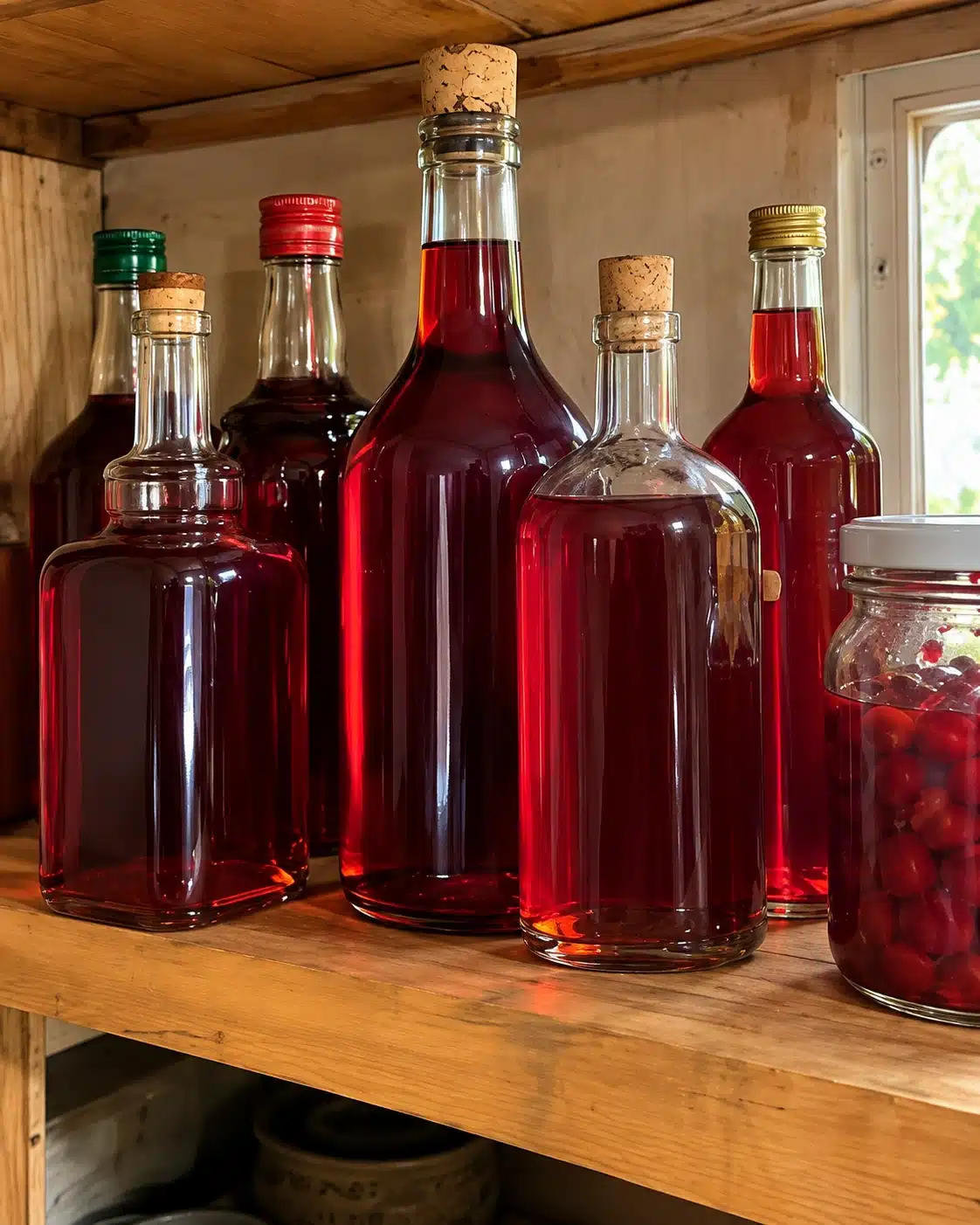
This Homemade Cornelian Cherry Syrup is a beautiful traditional preserve made from ripe red Cornelian cherries, sugar, and water. The finished syrup has a deep ruby color, a naturally tart fruit flavor, and enough sweetness to make it perfect for cold drinks, sparkling water, desserts, pancakes, yogurt, or homemade fruit sodas.
The fruit in the image appears to be Cornelian cherry (Cornus mas), a small red fruit that grows on the Cornelian cherry dogwood tree. Despite the name, it is not the same fruit as ordinary sweet or sour cherries. Cornelian cherries are usually elongated, intensely tart when underripe, and become softer and sweeter as they mature.
The traditional process shown in the image begins with harvesting ripe fruit, washing and sorting it carefully, then combining the fruit with sugar. Some methods allow the berries and sugar to macerate before cooking, while others simmer the fruit immediately to extract the juice.
The result is a concentrated, fragrant syrup that can be bottled and refrigerated for later use. It is one of those old-fashioned recipes that transforms a large harvest into something useful for many weeks.
Recipe Overview
| Recipe Details | Information |
|---|---|
| Recipe Name | Homemade Cornelian Cherry Syrup |
| Focus Keyword | Cornelian Cherry Syrup |
| Prep Time | 20 minutes |
| Maceration Time | 8–12 hours, optional |
| Cook Time | 30–40 minutes |
| Total Active Time | About 1 hour |
| Yield | About 4–5 cups |
| Course | Beverage, Preserves |
| Cuisine | Traditional European / West Asian |
| Difficulty | Easy |
| Main Ingredient | Cornelian cherries |
| Flavor | Sweet, tart, fruity |
| Color | Deep ruby red |
| Best For | Drinks, desserts, yogurt, pancakes |
| Make-Ahead Friendly | Yes |
| Refrigerator Friendly | Yes |
What Are Cornelian Cherries?
Cornelian cherries are the fruit of Cornus mas, a species of dogwood.
The fruit starts green and gradually develops a bright red or dark crimson color as it ripens.
When fully mature, Cornelian cherries become softer, juicier, and noticeably sweeter, although they generally remain pleasantly tart.
They are traditionally used for:
- Syrups
- Jams
- Jellies
- Fruit drinks
- Compotes
- Sauces
- Preserves
- Cordials
Their natural acidity makes them particularly refreshing in drinks.
How to Identify Ripe Cornelian Cherries
For the best syrup, use fruit that is fully colored and ripe.
Ripe Cornelian cherries should be red to dark crimson.
Very firm, pale red fruits can be extremely sour.
Fruit that gives slightly when pressed generally has a better balance of sweetness and acidity.
Avoid fruit that has:
- Visible mold
- Rotten areas
- Fermented odors
- Insect damage
- Severe bruising
Slightly soft ripe fruit is fine for syrup because it will be cooked anyway.
Ingredients
For the Cornelian Cherry Syrup
- 4 pounds ripe Cornelian cherries
- 6 cups water
- 4 cups granulated sugar
- 2 tablespoons fresh lemon juice
- 1 small cinnamon stick, optional
- 2 strips lemon peel, optional
Optional Traditional Flavorings
- 1–2 bay leaves
- Small piece of fresh ginger
- Orange peel
- Whole cloves
- Vanilla bean
Keep additional spices subtle so they do not overpower the fruit.
Why Sugar Is Important
Sugar does more than simply sweeten the syrup.
Cornelian cherries are naturally tart, so sugar balances their acidity and makes the finished drink more pleasant.
Sugar also contributes body.
A properly concentrated syrup should feel slightly thick when cool without becoming sticky like candy.
The amount can be adjusted depending on how tart the fruit is.
If your cherries are extremely ripe and sweet, slightly less sugar may be enough.
Why Lemon Juice Is Added
Lemon juice brightens the flavor.
It also helps balance sweetness and keeps the finished syrup tasting fresh rather than heavy.
You only need a small amount because Cornelian cherries are already naturally acidic.
Fresh lemon juice is preferable when available.
Equipment
| Equipment | Purpose |
|---|---|
| Large stockpot | Cooking fruit |
| Large bowl | Washing cherries |
| Wooden spoon | Stirring |
| Fine-mesh strainer | Straining juice |
| Cheesecloth | Optional extra-clear syrup |
| Potato masher | Crushing fruit |
| Measuring cups | Ingredients |
| Funnel | Filling bottles |
| Clean bottles or jars | Storage |
Step-by-Step Instructions
Step 1: Sort the Fruit
Spread the Cornelian cherries over a tray or clean work surface.
Remove leaves, stems, damaged fruit, and debris.
Discard any fruit showing mold or rot.
Step 2: Wash Thoroughly
Place the berries in a large bowl.
Cover with cool water and gently move them around.
Drain and repeat until the water is clean.
Transfer the washed fruit to a colander.
Step 3: Optional Sugar Maceration
For a richer fruit flavor, place the washed cherries in a large glass bowl or jar.
Layer them with about half of the sugar.
Cover and refrigerate for approximately 8–12 hours.
During this time, the sugar draws juice from the fruit.
This creates a natural syrup before cooking even begins.
If you are short on time, you can skip this step.
Step 4: Transfer to a Pot
Place the cherries and any accumulated juice into a large stockpot.
Add the water.
If using cinnamon, lemon peel, or bay leaves, add them now.
Step 5: Bring to a Gentle Simmer
Heat over medium-high heat until the mixture begins to simmer.
Reduce the heat.
Allow the fruit to cook gently for approximately 20 minutes.
The cherries should become very soft.
Step 6: Mash the Fruit
Use a potato masher or the back of a large spoon to gently crush the softened cherries.
This releases more juice and color.
Do not aggressively crush the pits.
Cornelian cherries contain hard stones that should remain intact.
Step 7: Strain the Juice
Place a fine-mesh strainer over a large clean bowl.
Pour the cooked mixture through the strainer.
Let the liquid drain naturally for several minutes.
For clearer syrup, avoid pressing too aggressively.
For maximum yield, press the fruit lightly with a spoon.
If you want very clear syrup, strain a second time through cheesecloth.
Step 8: Measure the Juice
Measure the strained liquid.
The exact amount varies depending on the fruit.
Return the juice to a clean saucepan.
Step 9: Add the Remaining Sugar
Add the remaining sugar gradually.
Stir over medium heat until completely dissolved.
Do not allow sugar crystals to remain stuck around the sides of the pot.
Step 10: Add Lemon Juice
Stir in the fresh lemon juice.
Taste carefully once the mixture has cooled slightly.
If the fruit is exceptionally tart, you may want a little more sugar.
If it tastes too sweet, a small additional splash of lemon can help.
Step 11: Simmer the Syrup
Bring the liquid to a gentle simmer.
Cook for approximately 10–15 minutes.
Avoid extremely aggressive boiling.
You want the syrup to reduce slightly without developing a cooked or caramelized flavor.
Step 12: Check the Consistency
The syrup will look relatively thin while hot.
Remember that it thickens as it cools.
To test it, place a teaspoon of syrup on a cold plate.
Allow it to cool for a minute.
It should have a light syrup consistency rather than the thickness of jam.
Step 13: Bottle
Pour the hot syrup into clean heat-safe jars or bottles using a funnel.
Leave a little headspace.
Allow the containers to cool according to safe handling practices, then refrigerate.
For ordinary home preparation, refrigeration is the simplest storage method.
How to Make the Beautiful Deep Red Color
The best color comes from very ripe dark-red fruit.
Do not peel the cherries.
Most of the attractive pigment is concentrated in the skin.
Cook gently rather than aggressively boiling the fruit for a long time.
Extended cooking can darken the syrup.
Adding lemon can also help preserve the bright fruit character.
Traditional Cornelian Cherry Drink
One of the easiest ways to enjoy the syrup is as a refreshing drink.
Add:
- 2–3 tablespoons Cornelian cherry syrup
- 1 cup cold water
- Ice
- Lemon slice
- Fresh mint
Stir and taste.
Add more syrup if you prefer a stronger fruit flavor.
Cornelian Cherry Sparkling Soda
For a simple homemade fruit soda, combine:
- 2 tablespoons Cornelian cherry syrup
- 1 cup sparkling water
- Ice
- Fresh lemon
Pour the sparkling water slowly because concentrated fruit syrup can foam.
This makes a bright, refreshing drink without needing commercial soda syrup.
Cornelian Cherry Lemonade
Cornelian cherries and lemon work beautifully together.
Combine:
- 1/2 cup Cornelian cherry syrup
- 1/2 cup fresh lemon juice
- 4 cups cold water
- Ice
- Lemon slices
Taste and adjust sweetness.
Because the cherry syrup is already tart, you may need less lemon than in ordinary lemonade.
Cornelian Cherry Iced Tea
Brew black or green tea.
Allow it to cool.
Add one or two tablespoons of Cornelian cherry syrup to each glass.
Finish with lemon and ice.
The fruit adds both sweetness and acidity, so additional sugar may not be necessary.
Cornelian Cherry Yogurt Topping
Drizzle a small amount of syrup over plain Greek yogurt.
Add:
- Granola
- Walnuts
- Pistachios
- Almonds
- Fresh berries
The tart syrup balances creamy yogurt beautifully.
Cornelian Cherry Pancake Syrup
Warm the syrup slightly.
Pour over pancakes, waffles, crepes, or French toast.
For a thicker breakfast syrup, simmer a small amount separately for several additional minutes.
Do not reduce the entire batch unless you want it very thick.
Cornelian Cherry Dessert Sauce
Cornelian cherry syrup works especially well with:
- Vanilla ice cream
- Cheesecake
- Pound cake
- Panna cotta
- Rice pudding
- Custard
- Chocolate cake
Its acidity helps balance rich desserts.
Cornelian Cherry Jam Variation
If you want jam instead of syrup, cook the fruit until soft and remove the pits.
Pass the fruit pulp through a food mill or sieve.
Combine the pulp with sugar and lemon juice.
Cook until thick.
Because Cornelian cherries contain natural pectin, they can make a beautifully textured preserve.
Cornelian Cherry Compote
For a lighter preserve, cook the fruit with water and less sugar.
Do not mash it completely.
Serve the fruit and liquid together.
Compote can be eaten with breakfast, desserts, yogurt, or oatmeal.
Cornelian Cherry Sauce for Meat
The natural tartness also works in savory dishes.
Simmer Cornelian cherry syrup with:
- Onion
- Black pepper
- Small amount of vinegar
- Herbs
- A little stock
Reduce until lightly thickened.
This creates a sweet-tart sauce that can pair with roasted chicken, turkey, pork, or duck.
Optional Cinnamon Version
Add one cinnamon stick while simmering the fruit.
Remove it before straining.
Cinnamon gives the syrup a warm autumn flavor.
This version is particularly good in warm drinks or over baked apples.
Orange Cornelian Cherry Syrup
Replace part of the lemon peel with orange peel.
Use only the colored outer zest, avoiding too much bitter white pith.
Orange softens the sharpness of the Cornelian cherry and adds a fragrant citrus aroma.
Ginger Cornelian Cherry Syrup
Add several thin slices of fresh ginger during the first simmer.
Remove them before bottling.
Ginger creates a slightly spicy finish.
This variation is especially good mixed with sparkling water.
How Sweet Should Cornelian Cherry Syrup Be?
There is no single correct sweetness level.
Traditional preparations vary greatly.
If the fruit is very sour, you may want a sweeter syrup.
If you plan to use it mostly for cocktails, sparkling water, or desserts, a more concentrated syrup can work well.
If you want an everyday drink, you may prefer less sugar.
Taste is the best guide.
How to Prevent the Syrup from Becoming Too Thick
Remember that hot syrup always appears thinner.
Do not keep boiling just because it looks watery in the pan.
Test a small spoonful after cooling.
If you accidentally reduce it too much, stir in a little hot water until you reach the desired consistency.
How to Make a Clearer Syrup
Avoid crushing the fruit excessively.
After cooking, let the juice drip through the strainer naturally.
For extra clarity, line the strainer with cheesecloth.
You can also refrigerate the strained juice overnight and carefully pour the clearer liquid away from any sediment before adding sugar.
Clarity does not affect the flavor.
A cloudy homemade syrup is perfectly normal.
Make-Ahead Instructions
Cornelian cherry syrup is ideal for preparing when fruit is abundant.
Make one large batch during harvest season and divide it into smaller containers.
Refrigerate what you plan to use soon.
For longer preservation, use a tested preserving method appropriate to your region and verified acidity/sugar levels rather than assuming every homemade syrup is shelf-stable.
Storage
Store the finished homemade syrup in clean tightly sealed containers in the refrigerator.
For best flavor and quality, use refrigerated syrup within several weeks.
Always use a clean spoon when serving.
Discard the syrup if you notice:
- Mold
- Unexpected fermentation
- Swollen lids
- Gas buildup
- Bad or unusual odor
When in doubt, throw it out.
Can You Freeze Cornelian Cherry Syrup?
Yes.
Freezing is an easy way to preserve homemade fruit syrup without relying on shelf-stable canning.
Allow the syrup to cool completely.
Transfer it to freezer-safe containers.
Leave expansion space at the top.
Freeze for several months for best quality.
Thaw overnight in the refrigerator.
Common Mistakes and How to Avoid Them
Using Moldy Fruit
Never use moldy cherries for preserves.
Using Unripe Fruit
Very underripe Cornelian cherries can be intensely sour and less flavorful.
Crushing the Pits
Mash gently and keep the hard stones intact.
Adding Too Much Sugar Immediately
Start with the recipe amount and adjust according to the fruit.
Overcooking
Long aggressive boiling can dull the fresh fruit flavor.
Bottling into Dirty Containers
Use thoroughly cleaned containers.
Assuming Homemade Syrup Is Automatically Shelf-Stable
For routine home preparation, refrigeration or freezing is the safest straightforward option.
Nutrition Estimate
| Nutrition | Approximate Amount |
|---|---|
| Calories | 55–75 |
| Carbohydrates | 14–19 g |
| Sugar | 13–18 g |
| Protein | Less than 1 g |
| Fat | 0 g |
| Serving Size | 1 tablespoon syrup |
Nutrition varies according to fruit, sugar concentration, and serving size.
Frequently Asked Questions
What are Cornelian cherries?
Cornelian cherries are the red fruits of the Cornus mas dogwood tree.
Are they the same as regular cherries?
No. They are not the same species as sweet or sour cherries.
What do Cornelian cherries taste like?
They are tart, fruity, and slightly astringent when underripe. Fully ripe fruit is softer and sweeter.
Can I eat them raw?
Fully ripe fruit can be eaten raw, although many people prefer it cooked because of its tartness.
Do Cornelian cherries have pits?
Yes. Each fruit contains a hard stone.
Should I remove the pits before making syrup?
Not necessarily. You can cook the whole fruit and strain it afterward.
Can I use frozen fruit?
Yes. Frozen Cornelian cherries can be used for syrup.
Should I thaw them first?
You can cook them directly from frozen, although cooking time may increase slightly.
Can I use less sugar?
Yes. Adjust according to taste, but lower sugar also affects preservation, so refrigerated storage becomes especially important.
Can I add cinnamon?
Yes.
Can I add cloves?
Yes, but use only a small amount because cloves can overpower the fruit.
Can I add bay leaves?
A small amount can be used in some traditional preparations, but remove them before bottling.
Can I add ginger?
Yes.
Can I use honey instead of sugar?
You can use honey for some of the sweetness, although it changes both flavor and texture.
Can I make it without sugar?
You can make unsweetened fruit juice, but it will not have the same syrup consistency or storage characteristics.
How do I serve the syrup?
Dilute it with water, sparkling water, tea, or lemonade, or use it over desserts.
Can I use it in yogurt?
Yes.
Can I use it over pancakes?
Absolutely.
Can I freeze it?
Yes.
How long does it keep?
For a straightforward homemade preparation without verified canning parameters, keep it refrigerated and use within several weeks.
Can I make jam from Cornelian cherries?
Yes. They make excellent jam and preserves.
Why is my syrup cloudy?
Natural fruit particles and pectin can cause cloudiness. This is normal.
Why is my syrup too sour?
The fruit may have been underripe or you may need additional sweetener.
Why is my syrup too thick?
It was probably reduced too long. Add a little hot water.
Why is my syrup too thin?
Simmer it gently for a few additional minutes.
Can I bottle it for gifts?
Yes, provided it is stored and transported appropriately and the recipient understands any refrigeration requirements.
Final Thoughts
This Homemade Cornelian Cherry Syrup is a wonderful way to preserve a seasonal harvest of beautiful red fruit.
The basic process is simple: pick ripe cherries, wash them carefully, combine them with sugar, cook gently to release their juice, strain, sweeten, and reduce until lightly syrupy.
The finished ruby-red liquid can be diluted into refreshing drinks, mixed with sparkling water, added to lemonade and tea, poured over yogurt or pancakes, or used as a fruity sauce for desserts.
Cornelian cherries have a naturally sharp flavor, so the best syrup balances sweetness and acidity rather than hiding the fruit beneath excessive sugar.
Whether you harvest the fruit yourself or find it at a local market, this is a traditional preservation recipe worth making when Cornelian cherries are at their peak.