Introduction
This Chinese Red-Braised Pork Belly is rich, glossy, deeply savory, and incredibly tender, with thick pieces of pork belly slowly simmered until the meat becomes soft and the layers of fat turn silky and almost melt into the sauce. It is the kind of dish that looks simple in the bowl but develops remarkable flavor through slow cooking.
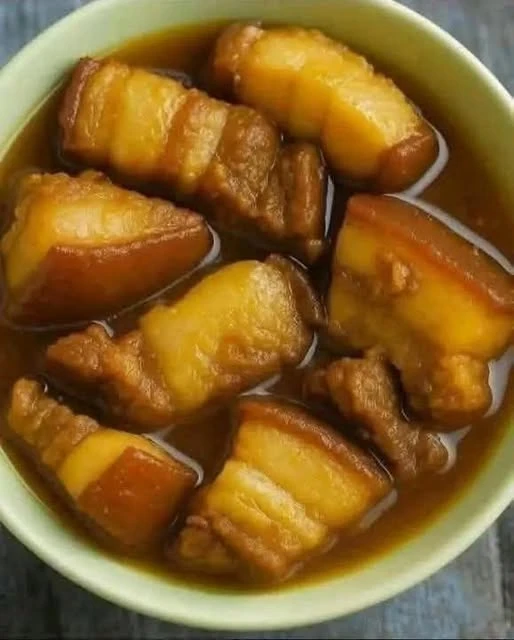
Inspired by the pork belly shown in the image, this recipe creates chunky pieces of pork surrounded by a dark amber-brown braising liquid made with soy sauce, aromatics, sugar, and warm spices. The finished sauce coats the pork with a beautiful shine while soaking into every layer.
What makes this dish special is the balance between savory and sweet. Soy sauce provides saltiness and depth, sugar creates caramel notes and color, ginger and garlic bring warmth, and slow braising transforms the pork belly from firm and fatty into something incredibly tender.
The final texture should not be dry or chewy. The lean meat should pull apart easily, while the fat should feel soft and gelatinous rather than greasy. When cooked correctly, each bite has layers of meat, fat, and sauce working together.
Red-braised pork belly is especially good served over steamed rice because the rice absorbs the rich braising sauce. It also pairs beautifully with bok choy, steamed greens, noodles, pickled vegetables, or simple stir-fried vegetables.
This is not a fast dish, but it is not difficult. Most of the work happens slowly in the pot, and the longer braising time is exactly what creates the luxurious texture.
Recipe Overview
| Detail | Information |
|---|---|
| Recipe Name | Chinese Red-Braised Pork Belly |
| Prep Time | 20 minutes |
| Browning Time | 15 minutes |
| Braising Time | 1 1/2–2 hours |
| Total Time | About 2 hours 30 minutes |
| Servings | 6 |
| Course | Main Course |
| Cuisine | Chinese-Inspired |
| Difficulty | Easy to Intermediate |
| Cooking Method | Braising |
| Main Ingredients | Pork belly, soy sauce, sugar, ginger |
| Texture | Tender meat, silky fat, glossy sauce |
| Flavor | Savory, sweet, aromatic, deeply rich |
| Best For | Family dinner, weekend meal, rice bowls |
| Make-Ahead Friendly | Excellent |
| Freezer Friendly | Yes |
| Best Served | Hot |
Why You’ll Love This Red-Braised Pork Belly
This recipe is all about slow-cooked flavor.
The pork becomes extremely tender.
The sauce turns glossy and concentrated.
The sugar adds caramel depth.
The soy sauce gives the dish its savory backbone.
The ginger and garlic prevent the richness from feeling flat.
Another major advantage is that this dish tastes even better after resting. The pork continues absorbing the sauce, which makes leftovers especially flavorful the next day.
It is also easy to customize.
You can make it sweeter.
You can make it more savory.
You can add eggs.
You can add mushrooms.
You can add daikon radish.
You can serve it over rice or noodles.
What Is Red-Braised Pork Belly?
Red-braising is a Chinese cooking method in which meat is slowly simmered in a seasoned liquid usually containing soy sauce, sugar, and aromatics.
The name refers to the reddish-brown color the sauce develops during cooking.
The braising liquid often contains:
- Soy sauce
- Sugar
- Ginger
- Garlic
- Shaoxing wine
- Star anise
- Cinnamon
As the pork cooks slowly, the sauce reduces and becomes darker, thicker, and more flavorful.
Ingredients
For the Pork
| Ingredient | Amount |
|---|---|
| Pork belly, skin-on if available | 2 lb |
| Neutral cooking oil | 1 tablespoon |
| Fresh ginger, sliced | 6–8 slices |
| Garlic cloves, smashed | 5 |
| Green onions | 3 |
For the Braising Sauce
| Ingredient | Amount |
|---|---|
| Light soy sauce | 1/3 cup |
| Dark soy sauce | 2 tablespoons |
| Shaoxing wine | 1/3 cup |
| Brown sugar or rock sugar | 1/4 cup |
| Water or low-sodium broth | 2 1/2 cups |
| Star anise | 2 |
| Cinnamon stick | 1 small |
| Bay leaf | 1 |
| White pepper | 1/4 teaspoon |
Optional Add-Ins
You can also add:
- Hard-boiled eggs
- Daikon radish
- Shiitake mushrooms
- Tofu
- Dried chilies
- Orange peel
- Five-spice powder
- Bok choy
Best Pork Belly to Use
Choose pork belly with visible layers of both meat and fat.
A good piece should have:
- Thick meat layers
- Even fat distribution
- Firm skin
- Fresh color
Very fatty pork belly can still work, but the finished dish will be richer.
If possible, use skin-on pork belly. The skin becomes soft and gelatinous during braising and helps give the sauce more body.
How to Cut Pork Belly
Cut the pork belly into large chunks about 1 1/2 to 2 inches wide.
Do not make the pieces too small.
Pork belly shrinks while cooking, and larger chunks keep a better shape.
The pieces in the image are thick and substantial, which is ideal for braising.
Ingredient Notes
Light Soy Sauce
Light soy sauce provides most of the salt and savory flavor.
It is thinner and saltier than dark soy sauce.
Dark Soy Sauce
Dark soy sauce is used mainly for color and deeper flavor.
A small amount gives the pork its rich brown-red appearance.
Shaoxing Wine
Shaoxing wine adds complexity and helps balance the richness of pork belly.
If you do not have it, use:
- Dry sherry
or
- Extra broth with a small splash of rice vinegar
The flavor will not be identical, but it will still work.
Sugar
Rock sugar is traditional in many braised dishes because it melts gradually and creates a glossy finish.
Brown sugar also works very well.
Do not use too much.
The dish should taste balanced, not like dessert.
Ginger and Garlic
Both are essential aromatics.
Ginger gives warmth and freshness.
Garlic gives depth.
Together, they help balance the fatty pork.
Equipment Needed
| Equipment | Purpose |
|---|---|
| Dutch oven or heavy pot | Braising |
| Tongs | Turning pork |
| Sharp knife | Cutting pork |
| Cutting board | Prep |
| Wooden spoon | Stirring sauce |
| Small bowl | Mixing sauce |
| Ladle | Serving |
Step-by-Step Instructions
Step 1: Prepare the Pork
Cut the pork belly into large chunks.
Pat dry with paper towels.
Dry pork browns more effectively.
Step 2: Optional Blanching Step
For a cleaner braising sauce, place the pork pieces in a pot.
Cover with cold water.
Bring to a boil.
Simmer for about 3–5 minutes.
Drain and rinse.
Pat dry.
This removes some impurities and excess surface fat.
Step 3: Heat the Pot
Place a Dutch oven over medium heat.
Add the oil.
You only need a small amount because pork belly releases plenty of fat.
Step 4: Brown the Pork
Add the pork belly pieces in a single layer.
Brown on several sides.
Cook in batches if necessary.
This step adds deeper flavor and improves the final color.
Step 5: Remove Excess Fat
Once the pork is browned, spoon out some of the rendered fat.
Leave a small amount in the pot.
Too much fat can make the sauce greasy.
Step 6: Add Ginger and Garlic
Add sliced ginger and smashed garlic.
Cook for about 30–60 seconds.
Stir constantly.
Step 7: Add the Sugar
Add the sugar.
Stir gently.
Let it melt into the fat and begin to caramelize.
Do not let it burn.
Step 8: Add the Pork Back
Return all pork pieces to the pot.
Toss lightly in the caramelized sugar.
Step 9: Add Soy Sauces
Add:
- Light soy sauce
- Dark soy sauce
Stir until the pork pieces are coated.
Step 10: Add Shaoxing Wine
Pour in the Shaoxing wine.
Let it bubble for about 1 minute.
This cooks off some of the harsh alcohol aroma.
Step 11: Add Water and Spices
Add:
- Water or broth
- Star anise
- Cinnamon
- Bay leaf
- White pepper
The liquid should come most of the way up the pork.
Step 12: Bring to a Simmer
Bring everything to a gentle boil.
Then reduce heat to low.
Step 13: Braise Slowly
Cover partially.
Simmer gently for approximately 1 1/2 hours.
Turn the pork occasionally.
Do not let the liquid boil aggressively.
Step 14: Check Tenderness
After about 90 minutes, test one piece.
A fork should slide easily into both the meat and fat.
If still firm, continue cooking for another 20–30 minutes.
Step 15: Reduce the Sauce
When the pork is tender, remove the lid.
Increase heat slightly.
Simmer uncovered for about 15–25 minutes.
The sauce should reduce and become glossy.
Step 16: Turn the Pork in the Sauce
As the sauce thickens, gently turn the pork pieces so every side becomes coated.
Be careful.
The meat may be extremely tender.
Step 17: Taste and Adjust
Taste the sauce.
Adjust with:
- A little soy sauce for salt
- A small amount of sugar for sweetness
- A splash of water if too strong
Step 18: Remove Whole Spices
Remove:
- Star anise
- Cinnamon
- Bay leaf
before serving.
Step 19: Rest Briefly
Let the pork sit in the sauce for about 10 minutes.
This helps the glaze settle onto the meat.
Step 20: Serve
Spoon the pork into bowls.
Pour the rich braising sauce over the top.
Serve hot with rice.
How to Get the Tender Texture Shown in the Image
The pork in the image looks extremely soft and almost spoon-tender.
The key is low, slow cooking.
Do not rush the braise.
Pork belly contains collagen and connective tissue.
Over time, those tissues break down into gelatin.
That process is what gives the meat its soft texture and the sauce its rich body.
How to Get Silky Pork Skin
If using skin-on pork belly, slow braising is essential.
The skin starts firm.
After a long gentle cook, it becomes soft and gelatinous.
Avoid boiling aggressively because hard boiling can make the texture less delicate.
How to Keep the Pork from Falling Apart
Use large chunks.
Do not stir aggressively.
Turn gently with tongs.
Reduce the sauce only after the pork is tender.
If the pieces become extremely soft, remove them while reducing the sauce and return them afterward.
How to Make the Sauce Glossy
Three things create the glossy finish:
Sugar.
Gelatin from the pork.
Reduction.
Do not use too much cornstarch.
A properly reduced braising liquid naturally becomes shiny and thick.
How to Remove Excess Fat
Pork belly releases quite a lot of fat.
You can:
- Spoon fat off during cooking
- Skim it from the surface
- Chill the dish overnight and remove hardened fat the next day
The overnight method is especially effective.
Classic Red-Braised Pork Belly
Keep the recipe exactly as written.
This gives a balanced sweet-savory sauce with warm spices.
Braised Pork Belly with Eggs
Hard-boil several eggs.
Peel them.
Add during the final 30–40 minutes of braising.
The eggs absorb the dark soy sauce and become deeply flavorful.
Pork Belly with Daikon
Cut daikon radish into large pieces.
Add during the final 45 minutes.
The radish absorbs the sauce beautifully and helps balance the richness.
Pork Belly with Shiitake Mushrooms
Add rehydrated dried shiitake mushrooms.
The mushrooms deepen the savory flavor of the braising liquid.
Pork Belly with Tofu
Add firm tofu cubes during the final 30 minutes.
Tofu absorbs the braising sauce and makes the dish stretch further.
Spicy Red-Braised Pork Belly
Add:
- Dried red chilies
- Chili flakes
- Chili crisp
Keep the heat moderate so the sweet-savory balance remains intact.
Five-Spice Pork Belly
Add about 1/2 teaspoon Chinese five-spice powder.
Use sparingly because the flavor is strong.
Honey Soy Pork Belly
Replace part of the sugar with honey.
Add the honey near the end so it does not burn during the long braise.
Ginger-Heavy Version
Double the fresh ginger.
This creates a brighter, warmer sauce that helps cut through the fatty pork.
Garlic-Heavy Version
Increase garlic to 8 cloves.
Smashed whole cloves become sweet and mellow during braising.
What to Serve with Braised Pork Belly
| Side Dish | Why It Works |
|---|---|
| Steamed white rice | Absorbs the rich sauce |
| Jasmine rice | Light aromatic pairing |
| Bok choy | Fresh and slightly bitter |
| Chinese broccoli | Balances richness |
| Steamed cabbage | Simple and mild |
| Noodles | Excellent with braising liquid |
| Pickled vegetables | Adds acidity |
| Cucumber salad | Refreshing contrast |
Best Rice Serving Idea
Add a bowl of hot steamed rice.
Place 2–3 pork belly pieces on top.
Spoon sauce over the rice.
Add green onions or sesame seeds.
This is one of the simplest and best ways to serve the dish.
Bok Choy Serving Idea
Blanch or saute bok choy.
Place alongside the pork belly.
The fresh green vegetable helps balance the rich meat.
Noodle Bowl Version
Serve the pork over:
- Wheat noodles
- Egg noodles
- Rice noodles
Add a little braising liquid.
Finish with green onion.
Rice Bowl with Egg
Serve:
- Rice
- Braised pork belly
- Braised egg
- Bok choy
This makes a complete and filling meal.
Pickled Vegetable Pairing
Serve with:
- Pickled cucumber
- Pickled radish
- Kimchi-style vegetables
The acidity cuts through the richness of the pork.
Make-Ahead Instructions
This dish is excellent made ahead.
In fact, the flavor often improves overnight.
Cook completely.
Cool.
Refrigerate.
The next day, the fat will solidify on top.
Remove as much as you like.
Reheat slowly.
Storage
Store the pork together with its braising liquid.
Refrigerate in an airtight container for up to 3–4 days.
Keeping the pork submerged in sauce helps prevent it from drying out.
Reheating on the Stovetop
Place the pork and sauce in a saucepan.
Heat over low to medium-low heat.
Add a small splash of water if the sauce has become too thick.
Heat gently until hot.
Microwave Reheating
Cover the pork loosely.
Heat in short intervals.
Turn the pieces between intervals if possible.
Freezing
Braised pork belly freezes very well.
Cool completely.
Transfer pork and sauce to freezer-safe containers.
Freeze for up to 3 months.
How to Thaw
Thaw overnight in the refrigerator.
Reheat gently on the stovetop.
The sauce may look separated at first.
Once warm, stir gently and it should come back together.
Common Mistakes to Avoid
Using Pieces That Are Too Small
Small pieces can become dry or fall apart.
Cut large chunks.
Boiling Too Hard
A hard boil can toughen the meat and make the sauce greasy.
Braise gently.
Adding Too Much Soy Sauce
The sauce reduces.
Too much soy sauce at the beginning can become overly salty later.
Burning the Sugar
Caramelized sugar gives wonderful flavor.
Burnt sugar tastes bitter.
Use moderate heat.
Skipping Reduction
The sauce should become concentrated and glossy.
Do not stop while it is still watery.
Not Skimming Fat
Too much rendered fat can make the sauce feel heavy.
Remove excess during or after cooking.
Troubleshooting Guide
| Problem | Likely Cause | Solution |
|---|---|---|
| Pork is tough | Not cooked long enough | Braise longer |
| Pork is dry | Pieces too lean or overcooked | Use fattier belly |
| Sauce is watery | Not reduced enough | Simmer uncovered |
| Sauce is too salty | Reduced too far | Add water |
| Sauce is too sweet | Too much sugar | Add soy or water |
| Sauce is greasy | Too much rendered fat | Skim surface |
| Pork falls apart | Overcooked | Handle more gently |
| Skin is firm | Needs longer braising | Continue cooking |
Nutrition Estimate
| Nutrition | Approximate Amount |
|---|---|
| Calories | 550–750 per serving |
| Protein | 18–25 g |
| Carbohydrates | 15–25 g |
| Fat | 45–60 g |
| Sugar | 8–15 g |
| Sodium | 900–1300 mg |
| Serving Size | 2–3 pork belly pieces with sauce |
Nutrition values are approximate and depend heavily on pork belly fat content, sauce quantity, and serving size.
Frequently Asked Questions
What is red-braised pork belly?
It is pork belly slowly cooked in a soy sauce, sugar, wine, and spice-based braising liquid until very tender.
Is this the same as Hong Shao Rou?
It is inspired by the classic Chinese red-braised pork belly commonly known as Hong Shao Rou.
Recipes vary significantly by region and household.
Do I need skin-on pork belly?
No.
Skin-on pork belly gives a richer and more gelatinous texture, but skinless works too.
Should I blanch the pork first?
It is optional.
Blanching can create a cleaner sauce and remove some surface impurities.
Should I brown the pork?
Yes.
Browning gives deeper flavor.
Can I skip browning?
Yes.
The dish will still work, but the flavor may be slightly lighter.
What soy sauce should I use?
Use both light and dark soy sauce if possible.
Light soy gives seasoning.
Dark soy gives color.
Can I use only regular soy sauce?
Yes.
Use less and adjust carefully because salt levels vary.
Is Shaoxing wine necessary?
It adds authentic depth, but the recipe can still work without it.
Can I use sherry instead?
Dry sherry is a reasonable substitute.
Can I make it without alcohol?
Yes.
Replace the wine with broth and a small splash of rice vinegar.
What kind of sugar works best?
Rock sugar is traditional in many recipes, but brown sugar works very well.
Can I use white sugar?
Yes.
Brown sugar gives deeper caramel flavor.
Why is my pork belly tough?
It needs more time.
Pork belly becomes tender through slow cooking.
Why is my sauce greasy?
Pork belly naturally releases a lot of fat.
Skim excess fat before serving.
Why is my sauce thin?
Reduce it uncovered after the pork is tender.
Can I thicken the sauce with cornstarch?
You can, but it is usually unnecessary.
Natural reduction gives a better texture.
Can I add eggs?
Yes.
Braised eggs are a classic and delicious addition.
Can I add potatoes?
Yes.
Add large potato chunks near the end so they do not fall apart.
Can I add daikon?
Yes.
Daikon is especially good because it absorbs the sauce.
Can I add mushrooms?
Yes.
Shiitake mushrooms work beautifully.
Can I make it spicy?
Yes.
Add dried chili or chili flakes.
What is the best side dish?
Steamed white rice is the classic choice.
Can I make it a day ahead?
Yes.
This dish is often even better the next day.
How long does it keep?
About 3–4 days refrigerated.
Can I freeze it?
Yes.
Freeze for up to about 3 months.
How do I reheat it without drying it out?
Reheat gently in the braising liquid.
Why does pork belly look layered?
Pork belly naturally contains alternating layers of meat and fat.
Long braising softens both layers and creates its signature texture.
Final Thoughts
This Chinese Red-Braised Pork Belly is the kind of slow-cooked dish that turns a simple cut of meat into something incredibly rich and satisfying.
Large chunks of pork belly simmer slowly in soy sauce, sugar, ginger, garlic, wine, and warm spices until the meat becomes fork-tender and the fat transforms into a soft, silky layer.
As the braising liquid reduces, it becomes darker, glossier, and more concentrated, coating the pork with the deep amber sauce seen in the finished dish.
The most important part is patience.
Do not rush the braise.
Do not boil aggressively.
Let the pork cook gently until the connective tissue has enough time to soften.
Then reduce the sauce only after the pork is fully tender.
From there, the recipe is easy to customize. Add eggs, daikon, mushrooms, tofu, chilies, or extra ginger depending on the meal you want.
Serve it over steamed rice with plenty of sauce, add a green vegetable on the side, and you have a deeply comforting meal with very little complicated technique.
Tender meat, silky layers of pork belly, and a rich soy-based sauce make this one of those dishes that gets even better when the leftovers are reheated the next day.