Introduction
This Ultimate Japanese Soufflé Cheesecake is unbelievably light, soft, airy, creamy, and delicate. It has the richness of cheesecake, the lift of a soufflé, and the fine tender crumb of a soft sponge cake, creating a dessert that feels almost weightless when you take the first bite.
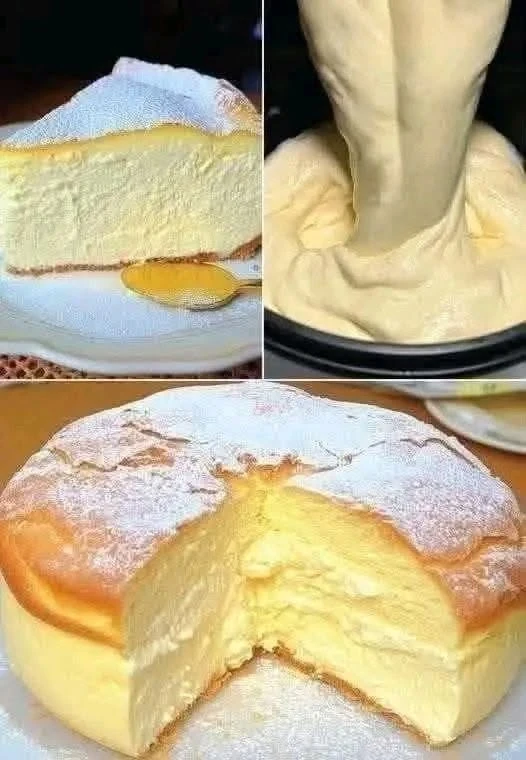
Inspired by the cake shown in the image, this recipe is designed to produce a tall, pale-golden cheesecake with a soft top, fluffy interior, and beautifully delicate structure. When cut, the inside should look smooth and fine rather than dense, and the cake should have that signature gentle jiggle that makes Japanese cheesecake so recognizable.
Unlike dense American-style cheesecake, this version does not rely on a heavy cream cheese filling. Instead, the batter is lightened with carefully whipped egg whites. Those tiny air bubbles expand slowly in the oven and create the cotton-soft texture that makes this dessert so special.
The cream cheese still gives the cake richness, but the overall result feels much lighter. The flavor is mild, creamy, slightly tangy, and gently sweet, with vanilla and lemon balancing the richness rather than overpowering it.
A good Japanese soufflé cheesecake should not feel dry, rubbery, or overly eggy. It should feel moist, soft, smooth, and almost cloud-like. The center should be fully cooked but still delicate, and the top should remain lightly golden without becoming dark or crusty.
The most important part of this recipe is technique. The batter must be smooth, the meringue must be whipped to the right stage, folding must be gentle, and the cake must bake slowly in a moist oven environment. If any one of those elements is rushed, the cake may crack, collapse, or become dense.
But once you understand the process, the recipe becomes much easier.
This is the kind of dessert that works beautifully for birthdays, afternoon tea, family gatherings, dinner parties, holidays, or any time you want something elegant but not overly rich.
Serve it simply with powdered sugar, or add berries, whipped cream, honey, fruit sauce, or a little citrus zest.
Recipe Overview
| Detail | Information |
|---|---|
| Recipe Name | Ultimate Japanese Soufflé Cheesecake |
| Prep Time | 30–35 minutes |
| Bake Time | 65–80 minutes |
| Initial Cooling | 20 minutes in oven |
| Room-Temperature Cooling | About 1 hour |
| Chill Time | 3–4 hours |
| Total Time | About 5–6 hours |
| Servings | 8–10 |
| Course | Dessert |
| Cuisine | Japanese-Inspired |
| Difficulty | Intermediate |
| Cooking Method | Water Bath |
| Main Ingredients | Cream cheese, eggs, milk |
| Texture | Fluffy, jiggly, moist, cotton-soft |
| Flavor | Creamy, vanilla, lightly tangy |
| Best For | Tea time, birthdays, special occasions |
| Make-Ahead Friendly | Excellent |
| Freezer Friendly | Yes |
| Best Served | Chilled or slightly warm |
Why You’ll Love This Japanese Cheesecake
This cake is completely different from heavy cheesecake.
It is soft.
It is airy.
It is creamy.
It is lightly sweet.
It feels delicate rather than dense.
The texture is one of the biggest reasons people love it.
A fork passes through it almost effortlessly.
A fresh slice looks tall and fine-grained.
The cake can wobble slightly when moved, yet still hold together cleanly.
Another major advantage is that it does not need heavy decoration. The cake itself is beautiful enough.
A simple dusting of powdered sugar makes it look finished.
What Makes Japanese Cheesecake Special?
Japanese cheesecake combines two different baking styles.
It starts with a creamy cheesecake base made from:
- Cream cheese
- Milk
- Butter
- Egg yolks
Then whipped egg whites are folded into that base.
Those egg whites transform the batter.
They create lift, volume, and the famous light structure.
The cake is then baked slowly in a water bath.
That keeps the environment humid and gentle.
The result is much softer than a regular baked cheesecake.
Japanese Cheesecake vs. Traditional Cheesecake
| Feature | Japanese Soufflé Cheesecake | Traditional Cheesecake |
|---|---|---|
| Texture | Airy, soft, jiggly | Dense, rich, creamy |
| Sweetness | Mild | Usually sweeter |
| Structure | Meringue-based | Cream cheese-based |
| Crust | Usually none | Often cookie crust |
| Baking | Gentle water bath | Moderate oven |
| Height | Tall and light | Dense and compact |
| Feel | Cotton-soft | Rich and heavy |
Ingredients
Cream Cheese Base
| Ingredient | Amount |
|---|---|
| Full-fat cream cheese | 8 oz / 225 g |
| Whole milk | 1/2 cup |
| Unsalted butter | 4 tablespoons |
| Egg yolks | 6 large |
| Vanilla extract | 1 teaspoon |
| Fresh lemon juice | 1 tablespoon |
| Fine salt | Small pinch |
Dry Ingredients
| Ingredient | Amount |
|---|---|
| Cake flour | 1/2 cup |
| Cornstarch | 2 tablespoons |
Meringue
| Ingredient | Amount |
|---|---|
| Egg whites | 6 large |
| Granulated sugar | 3/4 cup |
| Cream of tartar | 1/4 teaspoon, optional |
For Finishing
- Powdered sugar
- Fresh berries
- Whipped cream
- Honey
- Berry sauce
Ingredient Notes
Cream Cheese
Use block-style full-fat cream cheese.
This gives the best structure.
Spreadable cream cheese can contain extra moisture, which may make the batter too loose.
Let the cream cheese soften slightly before mixing.
Milk
Whole milk works best.
It gives enough richness without making the cake too heavy.
Butter
Butter adds smoothness and richness.
Use unsalted butter so you can control the salt level.
Egg Yolks
Egg yolks add:
- Richness
- Color
- Moisture
- Flavor
They help create the creamy cheesecake base.
Egg Whites
Egg whites are the most important ingredient for structure.
They create the air that gives the cake height.
The way they are whipped matters more than almost anything else in the recipe.
Why Cake Flour Works Better
Cake flour contains less protein than bread flour or all-purpose flour.
That means less gluten forms.
Less gluten means a softer cake.
That is exactly what you want here.
If you use all-purpose flour, the cake can still work, but the crumb may be slightly firmer.
Why Cornstarch Is Added
Cornstarch helps stabilize the batter.
It also creates a finer crumb.
Together, cake flour and cornstarch give the cake enough structure to rise while keeping it tender.
Equipment Needed
| Equipment | Purpose |
|---|---|
| 8-inch round cake pan | Main baking pan |
| Roasting pan | Water bath |
| Large mixing bowls | Batter and meringue |
| Hand or stand mixer | Whipping egg whites |
| Whisk | Cream cheese mixture |
| Rubber spatula | Folding |
| Fine-mesh sieve | Sifting dry ingredients |
| Parchment paper | Lining pan |
| Aluminum foil | Water protection |
| Cooling rack | Cooling |
Preparing the Pan Properly
Line the bottom with parchment paper.
Line the sides as well.
Let the side parchment rise slightly above the rim.
The cake may rise significantly during baking.
If using a springform pan, wrap the outside with several layers of foil.
A solid cake pan is usually easier because there is no risk of water leaking inside.
Step-by-Step Instructions
Step 1: Preheat the Oven
Preheat to 320°F / 160°C.
Prepare a kettle or pot of hot water for the water bath.
Step 2: Combine Cream Cheese, Milk, and Butter
Place cream cheese, milk, and butter in a heatproof bowl.
Set the bowl over gently simmering water.
Stir slowly until everything melts together.
The mixture should become completely smooth.
Do not boil it.
Step 3: Cool Slightly
Remove from the heat.
Let the mixture sit for several minutes.
It should be warm, not hot.
Step 4: Add Egg Yolks
Add the yolks one at a time.
Whisk after each addition.
The mixture should become glossy and creamy.
Step 5: Add Vanilla and Lemon Juice
Add vanilla, lemon juice, and a small pinch of salt.
Whisk gently.
The lemon juice cuts through the richness and gives the cheesecake a fresher flavor.
Step 6: Sift the Dry Ingredients
Sift the cake flour and cornstarch together.
Do not skip this.
Fine dry ingredients blend more easily into the batter.
Step 7: Add the Dry Ingredients
Add them gradually to the cream cheese mixture.
Whisk gently until smooth.
Stop once no flour streaks remain.
Step 8: Prepare the Egg Whites
Place egg whites in a completely clean bowl.
There should be no grease or egg yolk in the bowl.
Even a small amount of fat can prevent the whites from whipping properly.
Step 9: Begin Whipping
Beat on medium speed.
Once foamy, add cream of tartar if using.
Step 10: Add Sugar Slowly
Add sugar in three additions.
Wait a few seconds between each addition.
Continue beating.
The meringue will become thick and glossy.
Step 11: Stop at the Correct Peak
This is critical.
You want soft-to-medium peaks.
Lift the whisk.
The peak should stand but curve slightly at the tip.
If it stands completely stiff and dry, you have gone too far.
Why Soft-to-Medium Peaks Are Better
Very stiff meringue contains larger, tighter air bubbles.
That makes the batter harder to fold.
It can also cause the cake to rise too aggressively and then collapse.
A slightly softer meringue blends better and gives a finer crumb.
Step 12: Lighten the Batter
Add about one-third of the meringue to the cream cheese mixture.
Whisk gently.
This first portion can be mixed more freely.
Its purpose is to make the base lighter.
Step 13: Fold in the Second Portion
Add another third.
Switch to a spatula.
Fold slowly from the bottom upward.
Rotate the bowl as you work.
Step 14: Add the Final Meringue
Fold in the final portion.
Use gentle movements.
Stop as soon as the batter looks even.
How to Fold Properly
Slide the spatula down the side of the bowl.
Move underneath the batter.
Lift upward.
Fold over.
Rotate the bowl.
Repeat.
Do not stir in circles.
Circular stirring deflates the batter.
Step 15: Pour into the Pan
Pour the batter gently into the prepared pan.
Do not pour from too high.
That can destroy air bubbles.
Step 16: Remove Large Air Pockets
Tap the pan very lightly on the counter once or twice.
You want to release only the largest bubbles.
Do not slam the pan.
Step 17: Prepare the Water Bath
Place the cake pan inside a larger roasting pan.
Pour hot water around the cake pan.
The water should reach about halfway up the sides.
Why the Water Bath Is So Important
A water bath slows down the baking process.
It prevents the outer edge from cooking too fast.
It also creates steam.
That steam helps the cake stay moist.
Without it, the surface can crack more easily.
Step 18: Start Baking
Bake at 320°F / 160°C for 20 minutes.
This initial heat helps the cake rise.
Step 19: Lower the Temperature
Reduce the oven to 285°F / 140°C.
Bake for another 45–55 minutes.
Do not open the oven unnecessarily.
Step 20: Check the Cake
The top should be lightly golden.
The edges should look set.
The center should still jiggle slightly when the pan is moved.
The center should not look liquid.
Step 21: Cool Slowly in the Oven
Turn the oven off.
Open the door slightly.
Leave the cake inside for about 15–20 minutes.
This prevents a sudden temperature drop.
Step 22: Remove from the Water Bath
Carefully lift the cake pan out.
Place it on a rack.
Let it cool for another 10–15 minutes.
Step 23: Unmold Gently
Run a thin knife around the edge if necessary.
Turn out carefully.
Remove the parchment.
Place on a serving plate.
Step 24: Cool Completely
Let the cake reach room temperature.
Some shrinking is completely normal.
Soufflé-style cakes naturally settle as they cool.
Step 25: Chill
Refrigerate for at least 3–4 hours.
For the best texture, chill overnight.
Step 26: Dust with Powdered Sugar
Right before serving, dust lightly with powdered sugar.
This gives the cake the simple elegant finish shown in the image.
What the Perfect Texture Should Be Like
A perfect Japanese cheesecake should feel:
- Moist
- Light
- Soft
- Fine-grained
- Creamy
- Slightly springy
It should not feel:
- Dry
- Rubbery
- Gummy
- Wet
- Dense
When sliced, the interior should look even and smooth.
Why the Cake Jiggling Is Normal
The jiggle is not a sign that the cake is raw.
The structure is very delicate.
When properly baked, the whole center should move gently as one piece.
If liquid ripples appear in the middle, it needs more baking.
Why Japanese Cheesecake Shrinks
A small amount of shrinking is normal.
The cake expands because of hot air and steam.
As it cools, those gases contract.
The structure settles.
That natural settling gives the cake its soft texture.
Why It Sometimes Collapses Too Much
Major collapse can happen if:
- The batter was underbaked
- The meringue was overbeaten
- Folding was too aggressive
- Oven temperature changed too quickly
- Cake cooled too fast
The fix is usually better meringue control and slower cooling.
Why the Top Cracks
Cracking usually means the cake rose too aggressively.
Common causes include:
- Oven temperature too high
- Meringue too stiff
- Water bath too shallow
- Too much batter in a small pan
Lower heat and softer peaks usually help.
Why the Bottom Can Be Dense
Dense bottom layers are usually caused by deflated batter.
This may happen if the meringue is not folded evenly.
Heavier batter sinks.
Lighter batter stays above.
That creates separation.
Gentle but thorough folding prevents this.
How to Avoid Large Air Holes
Large holes often come from meringue that was whipped too stiff.
Whip only to medium peaks.
Fold carefully.
Tap the pan lightly once before baking.
How to Avoid an Eggy Flavor
Use fresh eggs.
Do not overbake.
Add vanilla.
Add lemon juice.
Serve chilled.
The cheesecake flavor becomes more balanced after refrigeration.
How to Get a More Golden Top
If the cake is fully baked but very pale, you can slightly increase the oven temperature for the final few minutes.
Watch carefully.
Do not sacrifice texture just to get more color.
Classic Vanilla Version
Keep everything simple.
Use vanilla extract.
Finish only with powdered sugar.
This is the cleanest version.
Lemon Soufflé Cheesecake
Add:
- Extra lemon zest
- Slightly more lemon juice
This gives the cake a fresher flavor.
Orange Soufflé Cheesecake
Use orange zest.
Add a few drops of orange extract if desired.
The citrus works beautifully with cream cheese.
Matcha Japanese Cheesecake
Sift 1–2 tablespoons matcha powder with the dry ingredients.
Matcha gives:
- Green color
- Mild bitterness
- Earthy flavor
Do not add too much or the cake can become bitter.
Chocolate Japanese Cheesecake
Add unsweetened cocoa powder.
Reduce flour slightly.
For a richer version, melt some chocolate into the cream cheese mixture.
Coffee Japanese Cheesecake
Dissolve instant espresso powder in the warm milk.
This creates a mild coffee-flavored cake.
Dust lightly with cocoa before serving.
Vanilla Bean Version
Use vanilla bean paste.
This gives stronger aroma and visible vanilla specks.
Honey Japanese Cheesecake
Use a small amount of honey.
Reduce the granulated sugar slightly.
Honey gives the cake a softer floral sweetness.
Strawberry Serving Version
Keep the cheesecake plain.
Serve with fresh strawberries.
Add a spoonful of strawberry sauce.
This is one of the best combinations.
Homemade Strawberry Sauce
Combine:
- 2 cups chopped strawberries
- 2 tablespoons sugar
- 1 teaspoon lemon juice
Cook over medium heat.
Simmer until slightly thickened.
Cool completely before serving.
Raspberry Sauce
Raspberries add more acidity.
Cook with sugar and lemon.
Strain if you want a seedless sauce.
Blueberry Sauce
Cook blueberries with:
- Sugar
- Lemon
- Small splash of water
Serve chilled.
What to Serve with Japanese Cheesecake
| Pairing | Why It Works |
|---|---|
| Powdered sugar | Classic finish |
| Strawberries | Fresh and sweet |
| Raspberries | Tart contrast |
| Blueberries | Mild fruit flavor |
| Whipped cream | Extra softness |
| Honey | Gentle sweetness |
| Tea | Light pairing |
| Coffee | Balances creaminess |
| Fruit sauce | Adds color and acidity |
Best Tea Pairings
Serve with:
- Green tea
- Jasmine tea
- Earl Grey
- Black tea
The light flavor of the cheesecake works well with tea.
Best Coffee Pairings
Try:
- Espresso
- Cappuccino
- Americano
Coffee provides a stronger bitter contrast.
Serving Warm vs. Chilled
Slightly Warm
The texture is extra soft.
It feels more like a soufflé.
Room Temperature
The cake is still delicate but more stable.
Chilled
The texture becomes:
- Creamier
- Slightly firmer
- Easier to slice
Chilled is usually best for presentation.
How to Cut Perfect Slices
Use a thin sharp knife.
Dip it in hot water.
Dry it.
Slice gently.
Wipe the blade.
Repeat after each cut.
This protects the delicate crumb.
Make-Ahead Instructions
This cake is excellent made one day ahead.
Bake.
Cool.
Chill overnight.
Dust with powdered sugar just before serving.
The flavor actually improves after resting.
Storage
Store covered in the refrigerator.
Keep for up to 3–4 days.
Avoid pressing plastic wrap directly onto the top.
That can damage the delicate surface.
Freezing
Freeze only after the cake is completely cooled.
Wrap individual slices tightly.
Freeze for up to 1 month.
Thaw overnight in the refrigerator.
Reheating
Japanese cheesecake does not need reheating.
If you prefer it slightly warm, leave a slice at room temperature for a short period.
Avoid microwaving too aggressively because it can alter the delicate texture.
Common Mistakes to Avoid
Overbeating the Meringue
One of the biggest mistakes.
Stop at soft-to-medium peaks.
Using a Dirty Mixing Bowl
Fat prevents egg whites from whipping properly.
Use a perfectly clean bowl.
Overmixing the Batter
This deflates the meringue.
Fold gently.
Undermixing
Large white streaks create uneven texture.
Fold until just uniform.
Baking Too Hot
High heat causes cracking and dramatic rising.
Bake gently.
Opening the Oven Too Early
Sudden heat loss can cause collapse.
Leave the oven closed.
Skipping the Water Bath
This increases the chance of cracking and drying.
Cooling Too Quickly
Gradual cooling gives a more stable result.
Troubleshooting Guide
| Problem | Likely Cause | Best Solution |
|---|---|---|
| Major collapse | Underbaked | Bake longer |
| Cracked top | Oven too hot | Lower temperature |
| Dense bottom | Batter separated | Fold more evenly |
| Large holes | Meringue too stiff | Stop at medium peaks |
| Dry texture | Overbaked | Reduce bake time |
| Wet center | Underbaked | Bake longer |
| Pale top | Low heat | Add brief final heat |
| Eggy smell | Overbaked | Reduce bake time |
| Water inside pan | Poor sealing | Use solid pan or more foil |
Nutrition Estimate
| Nutrition | Approximate Amount |
|---|---|
| Calories | 220–310 per slice |
| Protein | 6–8 g |
| Carbohydrates | 24–33 g |
| Fat | 11–17 g |
| Sugar | 17–25 g |
| Serving Size | 1 slice |
Nutrition values are approximate and depend on ingredient brands and slice size.
Frequently Asked Questions
What is Japanese Soufflé Cheesecake?
It is a light cream cheese cake made with whipped egg whites that create a soft and airy texture.
Why is it called cotton cheesecake?
Because the inside is soft, fine, and light like cotton.
Is it supposed to jiggle?
Yes.
A gentle jiggle is normal.
Is a jiggly cake underbaked?
Not necessarily.
The center should move as one piece rather than look liquid.
Is Japanese cheesecake very sweet?
No.
It is usually milder than traditional American cheesecake.
Does it have a crust?
Usually no.
Can I add a crust?
Yes, but that changes the classic style.
Why did my cake shrink?
Some shrinking is normal.
Large collapse can mean underbaking or meringue problems.
Why did the top crack?
The oven may have been too hot.
Why did my cake come out dense?
The meringue may have deflated.
What peak should the egg whites reach?
Soft-to-medium peaks.
Why shouldn’t I use stiff peaks?
Very stiff meringue can create an unstable rise and rougher crumb.
Can I use all-purpose flour?
Yes.
Cake flour gives a softer texture.
Can I make homemade cake flour?
Yes.
You can replace part of all-purpose flour with cornstarch and sift thoroughly.
Can I use low-fat cream cheese?
Full-fat cream cheese gives more reliable structure.
Can I use spreadable cream cheese?
Block cream cheese is better because it contains less water.
Can I use skim milk?
Whole milk gives better richness.
Do I have to use lemon juice?
No.
It mainly balances the richness.
Can I use lemon zest?
Yes.
It adds excellent flavor.
Is cream of tartar required?
No.
It simply helps stabilize the whites.
Can I use vinegar instead?
A tiny amount of mild vinegar can help stabilize meringue too.
Can I use a springform pan?
Yes, but seal it carefully.
Is a solid cake pan better?
Usually yes for a water bath because it cannot leak.
Do I need a water bath?
It is strongly recommended.
Can I bake without a water bath?
You can, but the cake is more likely to crack and dry.
Why does the water bath help?
It keeps the oven environment humid and moderates heat.
How do I know the cake is finished?
The edges should be set, the top lightly golden, and the center slightly jiggly.
Can I make it the day before?
Yes.
It is often even better the next day.
How long does it last?
About 3–4 days refrigerated.
Can I freeze it?
Yes.
Freeze for about 1 month.
Can I serve it warm?
Yes.
Warm gives the softest soufflé-style texture.
Can I serve it cold?
Yes.
Cold gives a creamier, cleaner slice.
What topping works best?
Powdered sugar is the classic choice.
What fruit works best?
Strawberries, raspberries, and blueberries are all excellent.
Final Thoughts
This Ultimate Japanese Soufflé Cheesecake is one of those desserts where texture matters just as much as flavor.
The cream cheese gives it richness, the milk and butter keep it smooth, and the whipped egg whites create the lift that transforms the batter into a soft, cloud-like cake.
The recipe is not difficult because of complicated ingredients.
It is all about control.
Control the meringue.
Control the folding.
Control the oven temperature.
Control the cooling.
If the egg whites reach the right peaks, the batter is folded gently, and the cake bakes slowly in a proper water bath, the result can be beautifully tall, soft, moist, and delicate.
Do not worry if the cake shrinks slightly after baking. That is natural for soufflé-style cakes.
What matters is the final crumb.
It should be fine.
It should be moist.
It should feel creamy yet airy.
And when you press it lightly with a fork, it should almost spring back like a soft sponge.
Serve it chilled with powdered sugar for the classic version, or pair it with strawberries, berry sauce, tea, or coffee.
It is elegant enough for a celebration, light enough for afternoon tea, and memorable enough that the texture alone can make people ask for another slice.