Introduction
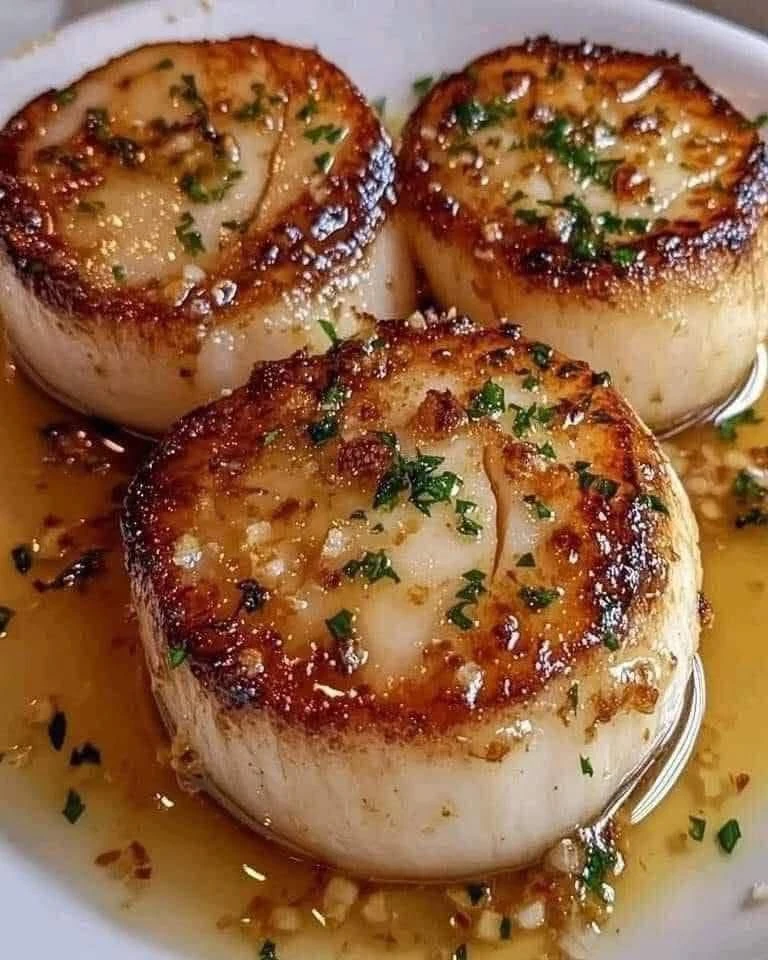
These Ultimate Garlic Butter Seared Scallops are golden and deeply caramelized on the outside, tender and buttery in the center, and finished with a glossy garlic-herb pan sauce that makes every bite feel restaurant-worthy.
Inspired by the scallops shown in the image, this recipe is built around one goal: creating thick, beautifully browned scallops with a rich amber crust while keeping the inside soft, juicy, and delicate. The finished scallops are coated with melted butter, toasted garlic, lemon, parsley, and the flavorful browned bits left behind in the skillet.
Scallops are one of those ingredients that can look intimidating because they are often associated with expensive seafood restaurants, but the actual cooking method is surprisingly simple. They require only a few minutes in a very hot pan, and once you understand how to control moisture and heat, they become one of the quickest elegant dinners you can make at home.
The secret is not a complicated sauce or a long ingredient list. It is technique.
The scallops need to be very dry.
The skillet needs to be hot.
The pan cannot be overcrowded.
The scallops must remain undisturbed long enough to form a crust.
And once they are beautifully browned, they need to come out of the pan before they overcook.
After that, the garlic butter sauce takes only a minute or two. Butter melts into the hot skillet, garlic becomes fragrant, lemon adds brightness, and fresh parsley gives the sauce color and freshness.
The result is rich without being heavy, elegant without being difficult, and fast enough to make even on a weeknight.
Serve these seared scallops over creamy mashed potatoes, Parmesan risotto, buttered pasta, rice, polenta, or simply with crusty bread and vegetables to soak up every drop of the garlic butter sauce.
Recipe Overview
| Detail | Information |
|---|---|
| Recipe Name | Ultimate Garlic Butter Seared Scallops |
| Prep Time | 15 minutes |
| Drying Time | 10–20 minutes, optional but recommended |
| Cook Time | 8–10 minutes |
| Total Time | About 30 minutes |
| Servings | 4 |
| Course | Main Course, Seafood |
| Cuisine | American / Restaurant-Style |
| Difficulty | Easy to Intermediate |
| Cooking Method | High-Heat Pan Searing |
| Main Ingredients | Sea scallops, butter, garlic, lemon |
| Texture | Caramelized crust, tender juicy center |
| Flavor | Buttery, garlicky, savory, lightly citrusy |
| Best For | Date night, dinner parties, seafood dinner |
| Make-Ahead Friendly | Prep only |
| Best Served | Immediately |
Why You’ll Love This Recipe
This is one of those recipes where a few ingredients create a surprisingly luxurious result.
The scallops cook in minutes.
The crust becomes beautifully golden.
The center stays tender.
The garlic butter sauce is rich and glossy.
The lemon keeps everything balanced.
Fresh parsley gives the dish brightness.
Another reason this recipe works so well is how versatile it is. The same scallops can be served over mashed potatoes for comfort food, risotto for a more elegant dinner, or vegetables and salad for something lighter.
The recipe is also easy to scale.
You can make three scallops per person for a first course or four to five large scallops per person for a full main dish.
What Perfectly Seared Scallops Should Look Like
A properly seared scallop should have:
- Deep golden-brown tops
- Caramelized edges
- A moist, opaque interior
- A slightly springy texture
- No excess water around the plate
- A thin glossy layer of butter sauce
The outside should look almost crusted.
The middle should remain delicate.
If scallops are pale, they were probably too wet or the pan was not hot enough.
If they are tough and rubbery, they were probably cooked too long.
Ingredients
For the Scallops
| Ingredient | Amount |
|---|---|
| Large dry sea scallops | 1 1/2 lb |
| Avocado oil or neutral high-heat oil | 1 1/2 tablespoons |
| Fine sea salt | 1 teaspoon |
| Freshly ground black pepper | 1/2 teaspoon |
For the Garlic Butter Pan Sauce
| Ingredient | Amount |
|---|---|
| Unsalted butter | 4 tablespoons |
| Garlic cloves, finely minced | 4–5 |
| Fresh lemon juice | 1 tablespoon |
| Lemon zest | 1/2 teaspoon, optional |
| Fresh parsley, finely chopped | 2 tablespoons |
| Fresh thyme leaves | 1 teaspoon, optional |
| Red pepper flakes | Pinch, optional |
| Black pepper | To taste |
Optional Finishing Ingredients
You can also add:
- Flaky sea salt
- Chives
- Parmesan
- White wine
- Shallots
- Chili flakes
- Extra lemon wedges
- Brown butter
Choosing the Best Scallops
The type of scallop you buy has a major effect on the final result.
For a dish like the one in the image, use large sea scallops rather than tiny bay scallops.
Large scallops are thick enough to develop a dark golden crust while the center remains tender.
Look for scallops that appear:
- Plump
- Slightly translucent
- Firm
- Moist but not soaking wet
They should smell clean and mildly sweet, not strongly fishy.
Dry-Packed vs. Wet-Packed Scallops
This is one of the most important details.
Dry-Packed Scallops
Dry-packed scallops have not been treated with excess soaking solution.
They usually:
- Brown more easily
- Release less water
- Taste cleaner
- Develop a better crust
Wet-Packed Scallops
Wet-packed scallops can contain extra liquid.
When placed in a hot pan, that liquid comes out and creates steam.
Instead of browning, the scallops can become pale and watery.
If wet-packed scallops are your only option, dry them extremely thoroughly before cooking.
How Many Scallops Per Person?
For an appetizer:
- 2–3 large scallops per person
For a main course:
- 4–5 large scallops per person
If serving with rich sides like risotto or mashed potatoes, four large scallops are usually enough.
Ingredient Notes
High-Heat Oil
Use oil for the initial sear rather than butter.
Butter can burn before the scallops develop enough crust.
Good choices include:
- Avocado oil
- Canola oil
- Grapeseed oil
Butter is added later for flavor.
Butter
Butter forms the base of the sauce.
It also gives the finished scallops the glossy appearance seen in the image.
Use unsalted butter so you can season more accurately.
Garlic
Fresh garlic is essential for the pan sauce.
Do not add it during the initial high-heat searing stage because it can burn.
Add it only after the scallops are removed and the heat is reduced.
Lemon
Lemon cuts through the richness of the butter.
A small amount is enough.
Too much can overpower the sweetness of the scallops.
Parsley
Fresh parsley provides color and freshness.
It is best added at the end so it stays bright green.
Equipment Needed
| Equipment | Purpose |
|---|---|
| Heavy stainless-steel or cast-iron skillet | Searing |
| Tongs | Turning scallops |
| Paper towels | Drying |
| Small knife | Removing side muscle |
| Spoon | Basting |
| Plate | Resting scallops |
| Microplane | Lemon zest |
| Cutting board | Prep |
Step-by-Step Instructions
Step 1: Inspect the Scallops
Look for the small side muscle attached to some scallops.
It feels firmer than the rest of the scallop.
Peel it away with your fingers.
It is edible, but it can be slightly tough.
Step 2: Dry the Scallops Very Thoroughly
Place the scallops on several layers of paper towel.
Cover with another layer.
Press gently.
The surfaces should feel dry rather than slippery.
For an even better crust, place the dried scallops uncovered in the refrigerator for 15–20 minutes.
This allows additional surface moisture to evaporate.
Step 3: Bring Them Out Shortly Before Cooking
Remove the scallops from the refrigerator while the skillet heats.
You do not need to bring them fully to room temperature.
Just avoid leaving them sitting in liquid.
Step 4: Season at the Last Minute
Season both sides with salt and black pepper.
Do this right before cooking.
Salt can draw moisture from the surface if it sits too long.
Step 5: Preheat the Skillet Properly
Place a heavy skillet over medium-high heat.
Let it heat for several minutes.
The pan should be properly hot before the scallops go in.
Add the oil.
The oil should shimmer immediately.
Step 6: Arrange the Scallops
Place the scallops flat-side down.
Leave space between each one.
They should not touch.
Overcrowding lowers the temperature and traps steam.
If necessary, cook in two batches.
Step 7: Leave Them Completely Alone
Do not move them.
Do not shake the pan.
Do not repeatedly check them.
Cook for approximately 2–3 minutes.
This uninterrupted contact is what creates the crust.
Step 8: Check One Scallop
Carefully lift one edge.
If the surface is still pale, leave it alone for another 20–30 seconds.
When properly seared, the bottom should be a deep golden brown.
Step 9: Flip Once
Turn each scallop with tongs.
Cook the second side for approximately 1 1/2–2 minutes.
Very thick scallops may need slightly longer.
Step 10: Remove Immediately
Transfer the scallops to a warm plate.
Do not leave them in the skillet while making the sauce.
Residual heat can quickly overcook them.
Step 11: Reduce the Heat
Turn the burner to medium-low.
Allow the skillet to cool slightly.
Step 12: Add Butter
Add the butter.
Let it melt into the browned bits in the pan.
Swirl gently.
Step 13: Add Garlic
Add minced garlic.
Cook for only 20–30 seconds.
The garlic should smell fragrant.
Do not let it become dark brown.
Step 14: Add Lemon
Add the lemon juice.
If using lemon zest, add it now.
Stir gently.
Step 15: Add Herbs
Add parsley and thyme.
Add red pepper flakes if desired.
Stir.
Step 16: Return the Scallops
Place the scallops back into the pan for about 20–30 seconds.
Spoon the garlic butter over the tops.
This coats them without continuing to cook them for too long.
Step 17: Finish and Serve
Transfer to plates immediately.
Spoon the remaining garlic butter around the scallops.
Finish with:
- Fresh parsley
- Black pepper
- Tiny pinch of flaky salt
- Lemon wedge
Serve hot.
The Most Important Secret: Moisture Control
If you remember only one thing from this recipe, remember this:
Dry scallops brown. Wet scallops steam.
Even the best skillet and highest heat cannot compensate for a wet surface.
Take the extra few minutes to dry them carefully.
That step alone can completely change the result.
How to Get the Dark Caramelized Edges Shown in the Image
For deep color:
Use dry-packed scallops.
Pat them dry.
Heat the skillet properly.
Use enough oil to lightly coat the bottom.
Leave space between scallops.
Do not move them early.
Let the crust develop fully before flipping.
This creates the dark amber edge that makes scallops look restaurant-quality.
Why Scallops Sometimes Release So Much Water
Possible causes include:
- Wet-packed scallops
- Insufficient drying
- Overcrowded pan
- Low skillet temperature
- Frozen scallops not fully thawed
If the pan suddenly fills with liquid, the scallops will steam.
Remove excess liquid if necessary and increase heat before continuing.
Why Scallops Stick to the Skillet
Fresh scallops often stick initially.
That is normal.
Once a crust develops, they naturally release more easily.
If a scallop feels firmly attached, wait another 15–30 seconds.
Do not force it.
How to Avoid Rubber-Like Scallops
Scallops cook very quickly.
Once overcooked, they become firm and chewy.
The best approach is to remove them slightly earlier rather than later.
They continue cooking briefly from residual heat after leaving the pan.
How to Tell When Scallops Are Cooked
Look for:
- Opaque edges
- Tender center
- Slight spring when pressed
- Golden crust
- No raw translucent center
They should not feel hard.
Brown Butter Garlic Scallops
For deeper flavor, let the butter cook slightly longer after removing the scallops.
When it smells nutty and turns golden, add the garlic.
Keep the heat moderate.
Brown butter adds a toasted, almost hazelnut-like flavor.
Lemon Garlic Butter Scallops
Increase the lemon slightly.
Add fresh zest.
Finish with lemon wedges.
This variation is brighter and especially good with rice or vegetables.
White Wine Garlic Scallops
After removing the scallops, add:
- 1/4 cup dry white wine
Scrape up the browned bits.
Reduce by half.
Then add butter, garlic, lemon, and parsley.
The sauce becomes more complex and restaurant-like.
Creamy Garlic Scallops
After cooking garlic in the butter, add:
- 1/2 cup heavy cream
Simmer gently until slightly thickened.
Add a little Parmesan if desired.
Return the scallops only briefly.
This version is excellent over pasta.
Parmesan Garlic Scallops
Add a small amount of finely grated Parmesan to the butter sauce.
Keep the amount moderate.
Parmesan should enhance the sauce rather than cover the natural scallop flavor.
Spicy Garlic Butter Scallops
Add:
- Red pepper flakes
- Cayenne
- Chili crisp
A little heat works very well with the sweetness of scallops.
Cajun Seared Scallops
Before cooking, season lightly with Cajun seasoning.
Reduce additional salt.
Finish with garlic butter and lemon.
This creates a bolder, spicier version.
Herb Butter Scallops
Combine:
- Parsley
- Chives
- Thyme
- Small amount of dill
Fresh herbs keep the dish bright and aromatic.
Honey Garlic Scallops
Add about 1 teaspoon honey to the finished garlic butter sauce.
Use only a small amount.
The slight sweetness works well with caramelized scallops.
Garlic Butter Scallops with Mushrooms
Sear scallops first.
Remove.
Cook sliced mushrooms in the same skillet until browned.
Add butter and garlic.
Return scallops briefly.
The mushrooms add a deeper savory flavor.
What to Serve with Seared Scallops
| Side Dish | Why It Works |
|---|---|
| Parmesan risotto | Creamy and elegant |
| Mashed potatoes | Rich comfort-food pairing |
| Garlic pasta | Absorbs the butter sauce |
| Jasmine rice | Light and simple |
| Creamy polenta | Smooth contrast |
| Roasted asparagus | Fresh and classic |
| Sauteed spinach | Quick and elegant |
| Green beans | Simple vegetable side |
| Crusty bread | Perfect for the sauce |
| Side salad | Fresh contrast |
Restaurant-Style Mashed Potato Plate
Add creamy mashed potatoes to the center of a plate.
Arrange scallops around or over the potatoes.
Spoon garlic butter around the plate.
Finish with parsley and black pepper.
This creates an elegant presentation while still feeling comforting.
Parmesan Risotto Serving Idea
Prepare creamy Parmesan risotto.
Spoon it into a shallow bowl.
Arrange 3–4 scallops on top.
Drizzle garlic butter around the risotto.
Finish with herbs and lemon zest.
This is one of the most classic restaurant-style pairings.
Garlic Butter Pasta with Scallops
Cook linguine, spaghetti, or angel hair.
Reserve some pasta water.
Toss the pasta with:
- Garlic butter
- Lemon
- Parsley
- Parmesan
- Small amount of pasta water
Add scallops on top rather than stirring them aggressively through the noodles.
Rice Bowl Version
Serve over:
- Jasmine rice
- Basmati rice
- Garlic butter rice
Add steamed vegetables.
Spoon sauce over everything.
This is simple and filling.
Low-Carb Serving Idea
Serve scallops with:
- Cauliflower puree
- Asparagus
- Zucchini
- Green beans
- Sauteed spinach
The garlic butter provides enough richness to make a vegetable-based plate satisfying.
Date-Night Dinner Menu
Serve:
- Garlic butter scallops
- Parmesan risotto
- Roasted asparagus
- Simple salad
Finish with a light dessert.
This gives you a full restaurant-style dinner without complicated preparation.
Dinner Party Presentation
Serve three large scallops per guest as a first course.
Place them over a small spoonful of puree or risotto.
Add garlic butter around the plate rather than flooding the scallops.
Finish with herbs.
This keeps the presentation clean.
Make-Ahead Instructions
Scallops themselves should be cooked immediately before serving.
However, you can prepare everything else ahead.
Several hours before dinner:
- Mince garlic
- Chop parsley
- Zest lemon
- Measure butter
- Prepare side dishes
Keep scallops cold and dry until cooking time.
Can You Season Scallops in Advance?
It is better to season them shortly before cooking.
Salt can draw moisture to the surface.
That extra moisture works against the crust you are trying to create.
Storage
Store cooked leftovers in an airtight container.
Refrigerate promptly.
For best texture, eat within 1–2 days.
Scallops are much better freshly cooked than reheated.
Best Way to Reheat Scallops
Use a skillet over low heat.
Add a small amount of butter.
Warm gently for about a minute per side or just until heated.
Do not re-sear aggressively.
The goal is warming, not cooking again.
Can You Microwave Them?
You can, but it is not ideal.
Use reduced power and short intervals.
High microwave heat can make scallops rubbery very quickly.
Can You Freeze Cooked Scallops?
Yes, but the texture may become softer after thawing.
For the best quality, freeze raw scallops and cook them fresh whenever possible.
How to Cook Previously Frozen Scallops
Thaw completely in the refrigerator.
Drain.
Pat very dry.
Then dry again.
Frozen scallops often hold extra moisture, so this step is especially important.
Common Mistakes to Avoid
Mistake 1: Skipping the Drying Step
This gives you steamed scallops instead of seared scallops.
Mistake 2: Using a Cold Pan
The crust will be pale.
Preheat thoroughly.
Mistake 3: Crowding the Skillet
Steam gets trapped between the scallops.
Cook in batches.
Mistake 4: Moving Them Constantly
Leave them alone.
The crust needs uninterrupted contact with the pan.
Mistake 5: Adding Garlic Too Early
Garlic burns at the high temperature needed for searing.
Add it after the scallops come out.
Mistake 6: Overcooking
This is one of the fastest ways to ruin scallops.
Use a short cooking time.
Mistake 7: Leaving Them in the Sauce Too Long
Once they return to the pan, they only need a few seconds.
Do not simmer them in the butter sauce.
Troubleshooting Guide
| Problem | Likely Cause | Best Fix |
|---|---|---|
| Scallops are pale | Surface too wet | Dry more thoroughly |
| Pan fills with water | Wet-packed scallops | Pat dry and cook in batches |
| Crust sticks | Flipped too early | Wait until it releases |
| Scallops are chewy | Overcooked | Reduce cooking time |
| Center looks raw | Too thick / undercooked | Cook slightly longer |
| Garlic tastes bitter | Garlic burned | Lower heat before adding |
| Sauce is too oily | Butter separated | Add lemon and whisk gently |
| Scallops browned unevenly | Uneven contact | Use flat, heavy skillet |
Nutrition Estimate
| Nutrition | Approximate Amount |
|---|---|
| Calories | 260–360 per serving |
| Protein | 25–30 g |
| Carbohydrates | 4–7 g |
| Fat | 16–24 g |
| Sugar | Less than 2 g |
| Serving Size | About 4–5 large scallops |
Nutrition values are approximate and depend on scallop size, oil, butter, and serving size.
Frequently Asked Questions
What is the secret to perfectly seared scallops?
Dry them extremely well, use a very hot skillet, and do not move them until a crust forms.
What kind of scallops should I buy?
Large dry-packed sea scallops are the best choice for pan searing.
Are bay scallops good for this recipe?
They can be cooked in garlic butter, but they are too small to create the thick restaurant-style sear shown here.
Why are dry scallops better?
They release less liquid and caramelize more easily.
Should I rinse scallops?
If necessary, rinse briefly, but dry them extremely thoroughly afterward.
What is the side muscle?
It is a small firmer strip attached to some scallops.
It can be pulled off before cooking.
Can I leave the side muscle on?
Yes, but it may be slightly tougher.
When should I salt scallops?
Right before cooking.
What pan is best?
A heavy stainless-steel or cast-iron skillet.
Can I use nonstick?
Yes, but stainless steel or cast iron usually creates better browning.
What oil is best?
Avocado oil, grapeseed oil, or another high-heat neutral oil.
Can I use butter for the initial sear?
It can burn at high heat.
Oil first and butter later usually works better.
How hot should the pan be?
Hot enough that the oil shimmers immediately before the scallops are added.
How long should the first side cook?
Usually around 2–3 minutes.
How long should the second side cook?
Usually around 1 1/2–2 minutes.
Why shouldn’t I move the scallops?
Moving them prevents the crust from forming evenly.
How do I know when to flip?
The bottom should be deep golden and release fairly easily from the pan.
Why did my scallops turn rubbery?
They cooked too long.
How do I know the center is cooked?
It should be opaque and tender without becoming hard.
Can I cook scallops from frozen?
Thaw them completely first for the best sear.
Can I add garlic?
Yes.
Garlic butter is one of the best sauces for scallops.
Can I add lemon?
Yes.
A small amount balances the butter beautifully.
Can I add white wine?
Yes.
It creates a more complex pan sauce.
Can I make creamy scallops?
Yes.
Add heavy cream to the finished garlic butter sauce.
Can I add Parmesan?
Yes.
Use it lightly so the scallops remain the main flavor.
Can I make them spicy?
Yes.
Chili flakes, cayenne, or Cajun seasoning all work well.
What vegetables go best with scallops?
Asparagus, spinach, green beans, zucchini, and broccoli are all excellent.
What starch goes best with scallops?
Risotto, mashed potatoes, rice, pasta, and polenta are all very good choices.
Can I cook them ahead for a party?
It is better to prepare everything else ahead and sear the scallops immediately before serving.
How long do cooked scallops keep?
For best quality, about 1–2 days refrigerated.
Can I freeze leftovers?
Yes, although the texture may change.
What is the best way to reheat them?
Very gently in a skillet with a little butter.
Final Thoughts
These Ultimate Garlic Butter Seared Scallops are one of the fastest ways to create a dinner that feels genuinely special.
The ingredients are simple: scallops, oil, butter, garlic, lemon, herbs, salt, and pepper. But when those ingredients are handled correctly, the result is dramatically better than the ingredient list might suggest.
The real secret is controlling moisture and heat.
Dry scallops develop crust.
A hot skillet creates caramelization.
Enough space prevents steaming.
Leaving the scallops undisturbed gives the surface time to brown.
And removing them promptly keeps the center tender.
Once they come out of the pan, the garlic butter sauce takes only moments. The butter picks up every flavorful browned bit in the skillet, the garlic adds warmth, lemon brings freshness, and parsley gives the finished dish its bright restaurant-style appearance.
From there, you can keep the dish completely classic or take it in dozens of directions.
Add white wine for a more elegant pan sauce.
Add cream for pasta.
Use brown butter for nuttiness.
Add Cajun seasoning for heat.
Serve them over mashed potatoes for comfort food or Parmesan risotto for a dinner-party plate.
The recipe may look luxurious, but once the technique becomes familiar, it is also one of the quickest seafood dinners you can make.
Golden outside, tender inside, coated in garlic butter, and ready in minutes—this is exactly how restaurant-style scallops should be.